
Why Solar Rails Depend on Precision Aluminum Profiles?
2026-09-28
After a storm event, a solar farm can show two very different outcomes across adjacent arrays. One array has panels that have shifted a few millimeters, with clamps that have lost torque. The other array is completely intact. The difference is rarely the clamp design or the bolt grade. It is the dimensional consistency of the Aluminum Profiles that form the rails. A rail that is 0.3 mm undersized in the clamp channel will not grip the panel frame properly. A rail with a twisted cross-section will not sit flat on the purlin. These small deviations accumulate across hundreds of meters of rail and thousands of clamps. This guide explains why precision extrusion matters for solar rail performance and how to verify it during procurement.
1. What Dimensional Tolerances Matter Most in Solar Rail Aluminum Profiles?
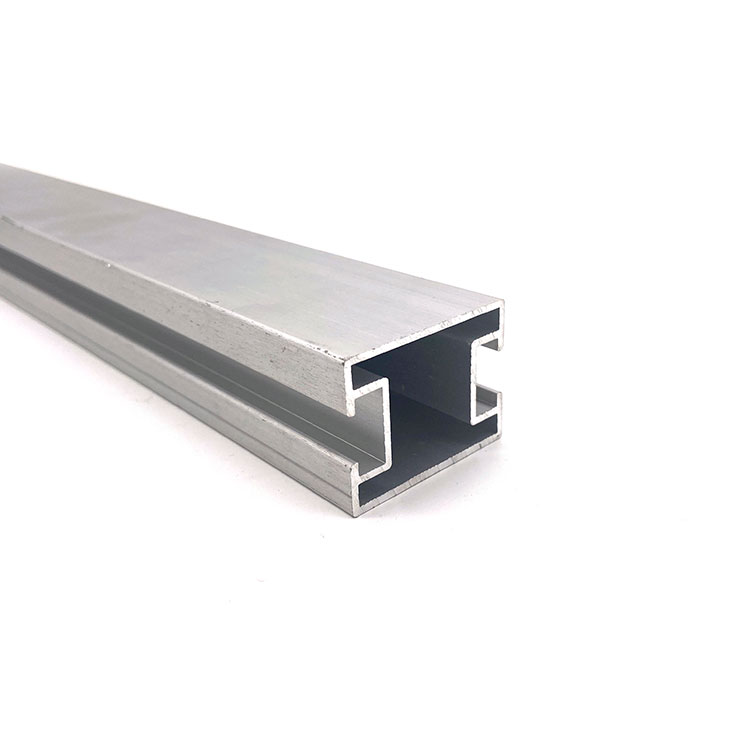
Solar rails are not structural beams in the traditional sense. They are precision mounting channels that must interface with clamps, bolts, and panel frames. The critical dimensions are the channel width, the channel depth, the wall thickness, and the straightness. The channel width determines whether the clamp fits properly. If the channel is too wide, the clamp will not grip the rail and will slide under load. If the channel is too narrow, the clamp will not seat fully. The wall thickness determines the pull-out strength of the bolt. A wall that is 0.2 mm thinner than specified can reduce the pull-out strength by 15 percent. The table below shows the critical tolerances for solar rail profiles.
| Dimension | Typical specification | Acceptable tolerance | Consequence of deviation |
| Channel width | 20.0 mm | ±0.15 mm | Clamp fit and grip strength |
| Channel depth | 30.0 mm | ±0.20 mm | Clamp engagement and bolt length |
| Wall thickness | 2.0 mm | ±0.10 mm | Pull-out strength and thread engagement |
| Straightness (per meter) | ≤ 1.0 mm | ≤ 1.5 mm | Panel alignment and stress distribution |
| Twist (per meter) | ≤ 1.0 degree | ≤ 1.5 degrees | Clamp seating and load transfer |
In our factory, we measure the channel width and wall thickness on every production batch using a coordinate measuring machine. The straightness is checked on a granite surface plate with a dial indicator. Ningbo Gangtong Zheli Fasteners Co.,Ltd. supplies Aluminum Profiles that meet these tolerances and provides dimensional inspection reports with each shipment.
2. How Does Alloy Grade and Temper Affect Rail Performance?
The alloy grade and temper determine the mechanical properties of the Aluminum Profiles. The most common alloys for solar rails are 6005-T5 and 6063-T6. Alloy 6005-T5 has a higher yield strength (260 MPa) than 6063-T6 (215 MPa), which allows a thinner wall for the same load capacity. The temper also affects the corrosion resistance and the weldability. A rail made from 6005-T5 can be used in higher wind and snow load areas. A rail made from 6063-T6 is adequate for moderate load areas. The table below compares the mechanical properties of these alloys.
| Property | 6005-T5 | 6063-T6 | 6061-T6 |
| Yield strength (MPa) | 260 | 215 | 275 |
| Tensile strength (MPa) | 290 | 240 | 310 |
| Elongation (%) | 8 | 12 | 10 |
| Corrosion resistance | Good | Good | Very good |
| Relative cost | Moderate | Low | High |
Gangtong Zheli Fasteners produces Aluminum Profiles in both 6005-T5 and 6063-T6. Our factory recommends 6005-T5 for high-load applications and 6063-T6 for standard residential and commercial installations. We also provide mill certificates that document the alloy composition and the mechanical properties of each batch.
3. What Role Does Surface Treatment Play in Long-Term Reliability?
Solar rails are exposed to weather for 25 years or more. The surface treatment determines how well the rail resists corrosion and how well it maintains its appearance. The standard treatment is anodizing, which creates a protective oxide layer on the aluminum surface. The thickness of the anodized layer is measured in microns. For outdoor applications, the anodized layer should be at least 15 microns thick. A thicker layer (20 to 25 microns) provides better corrosion resistance in coastal or industrial environments. An alternative treatment is powder coating, which provides a thicker barrier but can chip during installation. The table below compares the two treatments.
| Treatment | Typical thickness | Corrosion resistance | UV resistance | Impact resistance |
| Anodizing (standard) | 15 microns | Good | Excellent | Good |
| Anodizing (marine grade) | 25 microns | Excellent | Excellent | Good |
| Powder coating | 60 – 80 microns | Very good | Good | Moderate (can chip) |
Our factory applies anodizing in a vertical line that ensures uniform coating on all surfaces, including the inside of the channel. We test the coating thickness with an eddy current gauge and perform a salt spray test according to ASTM B117. The anodized rails pass 1,000 hours of salt spray with no visible corrosion.
4. How Should Precision Aluminum Profiles Be Verified During Procurement?
Verification should include three steps. First, request a dimensional inspection report for the batch. The report should include measurements of the channel width, wall thickness, straightness, and twist. Second, request a mill certificate for the alloy. The certificate should show the chemical composition and the mechanical properties. Third, perform a fit test with the clamps that will be used on the project. The clamp should slide into the channel without force and should not rotate when tightened. If the clamp fits loosely or requires force, the rail is out of tolerance. In our factory, we provide a pre-shipment sample for fit testing. We also welcome customer inspections at our facility.
Field verification tip: During installation, check the first 10 rails for straightness and clamp fit. If any rail is out of tolerance, stop the installation and quarantine the batch. A small dimensional error in the rail can cause a large alignment problem across a 100-meter array.
Frequently Asked Questions About Precision Aluminum Profiles for Solar Rails
Summary for Structural Engineers and Procurement Specialists
Precision Aluminum Profiles are the foundation of a reliable solar rail system. The dimensional tolerances, alloy grade, and surface treatment determine whether the rails will perform as designed for 25 years. A rail that is out of tolerance will cause clamp slippage, panel misalignment, and eventual failure. Verification during procurement should include dimensional inspection reports, mill certificates, and a fit test with the actual clamps. Ningbo Gangtong Zheli Fasteners Co.,Ltd. has been producing precision Aluminum Profiles for solar applications for over 12 years and supplies to projects worldwide.
Ningbo Gangtong Zheli Fasteners Co.,Ltd. manufactures Aluminum Profiles in 6005-T5 and 6063-T6 with anodized or powder-coated finishes. We provide full dimensional inspection reports and mill certificates for all of our products.