
Why Is Lubrication Critical for Deep Groove Ball Bearing Life?
2026-09-21
A Deep Groove Ball Bearings that fails after 8,000 hours of service is not a manufacturing defect. It is a lubrication problem. This is the conclusion that maintenance engineers reach in the majority of premature bearing failures. The bearing itself is often undamaged—the raceways are smooth, the balls are round, and the cage is intact. But the lubricant has degraded, or it was the wrong type, or it was contaminated, or it was never replenished. The result is metal-to-metal contact, which generates heat, which accelerates wear, which leads to failure. This guide is written for engineers who need to understand the lubrication mechanism and make better decisions about grease selection and maintenance intervals.
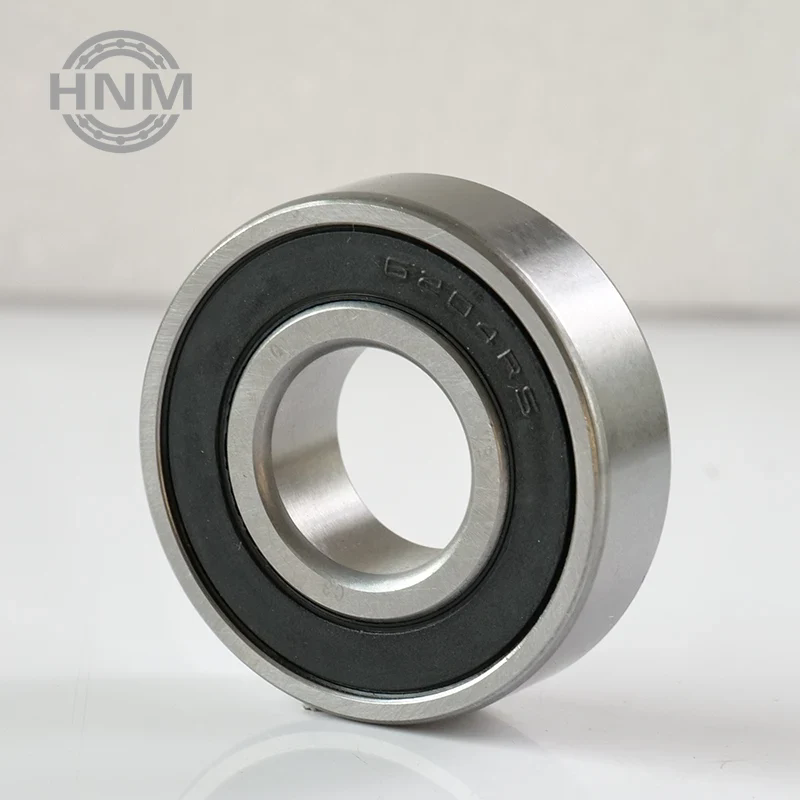
1. What Happens Inside a Deep Groove Ball Bearings When Lubrication Fails?
The primary function of lubricant in a Deep Groove Ball Bearings is to separate the rolling elements from the raceways with a thin film of oil. The film thickness is typically 0.1 to 0.5 microns—thinner than a human hair. If the film is maintained, the bearing operates in the elastohydrodynamic lubrication regime, and the fatigue life is measured in millions of revolutions. If the film breaks down, the asperities on the ball and raceway surfaces contact each other, and the bearing enters the boundary lubrication regime. In this regime, the wear rate increases by a factor of 100 to 1,000. The table below shows the relationship between lubricant film thickness and bearing life.
| Lubrication regime | Film thickness (microns) | Relative wear rate | Relative bearing life |
| Full film (elastohydrodynamic) | 0.2 – 0.5 | 1 (baseline) | 1 (baseline) |
| Mixed film | 0.05 – 0.2 | 10 – 50 | 0.2 – 0.5 |
| Boundary film | < 0.05 | 100 – 1,000 | 0.01 – 0.1 |
In our factory, we have conducted endurance tests on Deep Groove Ball Bearings with different lubricant film thicknesses. The data confirms that a bearing operating with a film thickness of 0.3 microns achieves its full L10 life. A bearing operating with a film thickness of 0.05 microns achieves only 20 percent of its L10 life. The difference is not in the bearing—it is in the lubrication.
2. What Are the Three Most Common Lubrication Failures?
There are three primary ways that lubrication fails in a Deep Groove Ball Bearings. The first is starvation. This occurs when there is insufficient lubricant in the bearing. The causes include over-greasing (which causes the grease to channel and not reach the raceways), under-greasing, and grease leakage past the seals. The second is degradation. Grease degrades over time due to oxidation, thermal aging, and mechanical shearing. When the grease degrades, it loses its ability to form a film. The third is contamination. Water, dust, and metal particles enter the bearing and displace the lubricant or act as abrasives. The table below shows the contribution of each failure mode to premature bearing failure.
| Lubrication failure mode | Contribution to premature failure | Visible symptom | Prevention |
| Starvation (under-greasing or over-greasing) | 35 – 45% | Discolored raceways, no grease residue | Correct grease quantity and replenishment interval |
| Degradation (oxidation, thermal aging) | 25 – 35% | Hard, dark grease; varnish on races | High-quality grease with proper base oil |
| Contamination (water, dust, particles) | 20 – 30% | Rust, pitting, abrasive wear marks | Effective seals, clean handling |
Cixi Hengji Bearing Co., Ltd. manufactures Deep Groove Ball Bearings with a range of seal options, including metal shields and rubber seals. Our factory can provide bearings with the correct initial grease fill for the application. We also provide a grease selection guide that matches the grease type to the operating temperature and speed.
3. How Does Grease Selection Affect Bearing Life?
The choice of grease is not a matter of convenience. It is a critical design decision. The grease must have the correct base oil viscosity, the correct thickener type, and the correct base oil type. The base oil viscosity determines the film thickness. If the viscosity is too low, the film is too thin, and wear occurs. If the viscosity is too high, the bearing torque increases, and the grease may not flow into the raceways. The thickener type determines the grease's ability to stay in place. Lithium complex thickeners are the most common, but polyurea and calcium sulfonate thickeners offer better performance at high temperatures. The table below shows the recommended grease specifications for different operating conditions.
| Operating condition | Base oil viscosity (cSt at 40°C) | Thickener type | Base oil type |
| Low speed, high load | 150 – 220 | Lithium complex | Mineral |
| Medium speed, medium load | 68 – 100 | Lithium complex or polyurea | Mineral or PAO |
| High speed, low load | 32 – 46 | Polyurea or diurea | PAO or ester |
| High temperature (> 120°C) | 100 – 150 | Polyurea or calcium sulfonate | PAO or silicone |
| Water exposure | 100 – 150 | Calcium sulfonate | Mineral or PAO |
In our factory, we recommend that customers specify the operating conditions when ordering Deep Groove Ball Bearings. We can then supply the bearing with the correct grease fill and provide a maintenance schedule for replenishment.
4. How Do You Determine the Correct Relubrication Interval?
The relubrication interval depends on the operating speed, the operating temperature, and the grease type. The most common method is to use the bearing manufacturer's formula, which is based on the speed factor (n × dm, where n is the speed in rpm and dm is the bearing mean diameter in mm). For a Deep Groove Ball Bearings with a speed factor of 100,000 mm/min, the relubrication interval is typically 6,000 to 8,000 hours for lithium complex grease at 70°C. For higher temperatures, the interval is reduced by half for every 15°C increase above 70°C. The table below shows the recommended relubrication intervals for different speed factors and temperatures.
| Speed factor (n × dm, mm/min) | Relubrication interval at 70°C (hours) | Relubrication interval at 100°C (hours) |
| 50,000 | 12,000 | 4,000 |
| 100,000 | 8,000 | 2,500 |
| 200,000 | 4,000 | 1,200 |
| 400,000 | 2,000 | 600 |
Cixi Hengji Bearing Co., Ltd. provides a relubrication calculator on our website that allows customers to input their specific speed, temperature, and grease type to determine the optimal interval. We also offer a maintenance kit that includes the correct grease and a grease gun adapter for our bearing sizes.
Frequently Asked Questions About Lubrication and Deep Groove Ball Bearing Life
Summary for Maintenance Engineers
Lubrication is the single most important factor determining the life of a Deep Groove Ball Bearings. The lubricant film separates the rolling elements from the raceways and prevents metal-to-metal contact. When the film breaks down, the bearing life drops by a factor of 10 to 100. The three most common lubrication failures are starvation, degradation, and contamination. The choice of grease and the relubrication interval must be matched to the operating conditions. Cixi Hengji Bearing Co., Ltd. has been manufacturing Deep Groove Ball Bearings for over 15 years and provides full lubrication support to our customers.
Cixi Hengji Bearing Co., Ltd. manufactures Deep Groove Ball Bearings with a range of seals, greases, and internal clearances. We provide grease selection guides, relubrication calculators, and maintenance kits for all of our products.