
Why is a Stainless Steel Slip On Flange Preferred Over Weld Neck Flanges in Certain Applications
2026-03-24
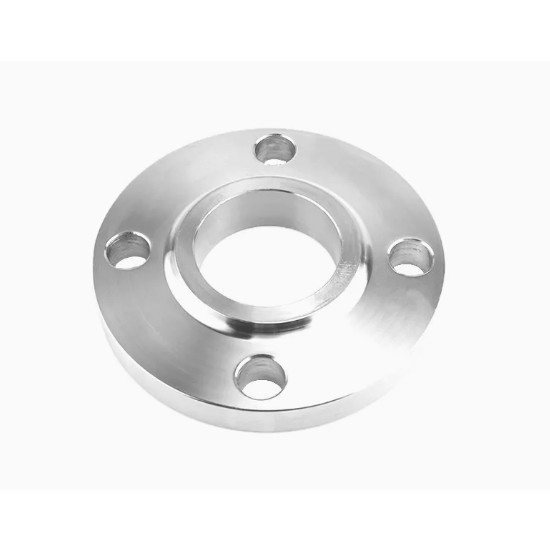
When selecting components for industrial piping systems, engineers and procurement specialists often face a critical decision: choosing between a Stainless Steel Slip On Flange and a weld neck flange. While both serve the fundamental purpose of connecting pipes, valves, and equipment, the Stainless Steel Slip On Flange frequently emerges as the preferred solution in applications where space constraints, installation efficiency, and cost optimization are paramount. At HengDi, we have spent decades manufacturing high-performance flanges that help clients navigate these exact decisions with confidence.
Understanding the Core Advantages
The preference for a Stainless Steel Slip On Flange over weld neck alternatives is rooted in several distinct engineering and operational benefits. Unlike weld neck flanges, which require precise butt welding and extensive dimensional accuracy, slip-on flanges slide easily over the pipe end, simplifying alignment and reducing installation time. This characteristic makes them particularly advantageous in projects with tight schedules or where skilled welding labor is limited.
Below is a comparative overview of key differentiators:
| Criteria | Stainless Steel Slip On Flange | Weld Neck Flange |
|---|---|---|
| Installation Complexity | Low – slides over pipe, fillet weld both sides | High – requires butt weld preparation and precise alignment |
| Space Requirements | Compact design, ideal for confined areas | Longer neck, requires more clearance |
| Cost Efficiency | Lower material and labor costs | Higher due to increased material and welding time |
| Stress Distribution | Moderate – suitable for low to medium pressure | Excellent – ideal for high pressure and cyclic loading |
| Inspection Ease | Simple visual inspection of fillet welds | Radiographic testing often required |
Why Certain Applications Favor the Slip On Design
In industries such as HVAC, water treatment, food processing, and general manufacturing, the Stainless Steel Slip On Flange is frequently specified because these environments prioritize corrosion resistance, installation speed, and maintainability. Stainless steel grades such as 304 and 316L provide exceptional resistance to oxidation and chemical exposure, while the slip-on configuration allows for easier disassembly during routine maintenance.
Furthermore, when retrofitting existing piping systems, the dimensional flexibility of a Stainless Steel Slip On Flange proves invaluable. Minor misalignments that would complicate a weld neck installation can be accommodated without compromising joint integrity. HengDi supplies these flanges with precision-bored dimensions to ensure a consistent fit across all standard pipe schedules.
Frequently Asked Questions About Stainless Steel Slip On Flanges
What are the main limitations of using a stainless steel slip on flange compared to a weld neck flange?
The primary limitations involve pressure handling and fatigue resistance. A Stainless Steel Slip On Flange relies on fillet welds that do not provide the same structural reinforcement as the full-penetration butt weld used on a weld neck flange. In high-pressure applications above 300 psi or in systems subject to continuous vibration and thermal cycling, the weld neck design offers superior stress distribution. Additionally, slip-on flanges have a slightly lower initial strength under bending loads, which is why they are typically selected for low to medium pressure environments where installation simplicity and cost control are prioritized over extreme mechanical demands.
How do you ensure a proper seal when installing a stainless steel slip on flange?
Ensuring a leak-tight seal requires attention to three critical factors: flange alignment, gasket selection, and welding procedure. First, the pipe must be cut squarely and deburred before sliding the Stainless Steel Slip On Flange into position. A small gap—typically 1/16 inch—should be maintained between the pipe end and the flange face to prevent weld stress from distorting the sealing surface. Second, selecting the correct gasket material compatible with the media and temperature is essential; spiral wound or PTFE gaskets are common choices. Third, welding must follow a sequence of tack welding, then completing the interior fillet weld before the exterior fillet weld to minimize distortion. HengDi provides detailed technical datasheets with each flange to guide proper installation procedures.
What stainless steel grades are most commonly available for slip on flanges and how do I choose the right one?
The most widely used grades are ASTM A182 F304/F304L and F316/F316L. The Stainless Steel Slip On Flange in grade 304/L offers excellent general corrosion resistance and is suitable for water, steam, and mild chemical applications. Grade 316/L contains molybdenum, providing enhanced resistance to chlorides and acidic environments, making it the preferred choice for marine environments, chemical processing, and pharmaceutical applications. When selecting, consider operating temperature, fluid composition, and potential for pitting or crevice corrosion. HengDi offers both standard and specialized grades, with full material traceability to support compliance with project specifications.
Conclusion
Selecting the right flange type directly impacts system reliability, installation costs, and long-term maintenance. The Stainless Steel Slip On Flange delivers unmatched advantages in applications where efficient installation, compact design, and reliable corrosion resistance are required. With decades of manufacturing expertise, HengDi provides precision-engineered flanges that meet international standards while supporting clients with technical guidance tailored to their specific operating conditions.
For assistance in selecting the optimal Stainless Steel Slip On Flange for your next project, or to request a quote with detailed material certifications, contact us today to speak with a HengDi engineering specialist.