
Why Does My Phillips Pan Head Chipboard Screw Keep Stripping During Installation
2026-06-25
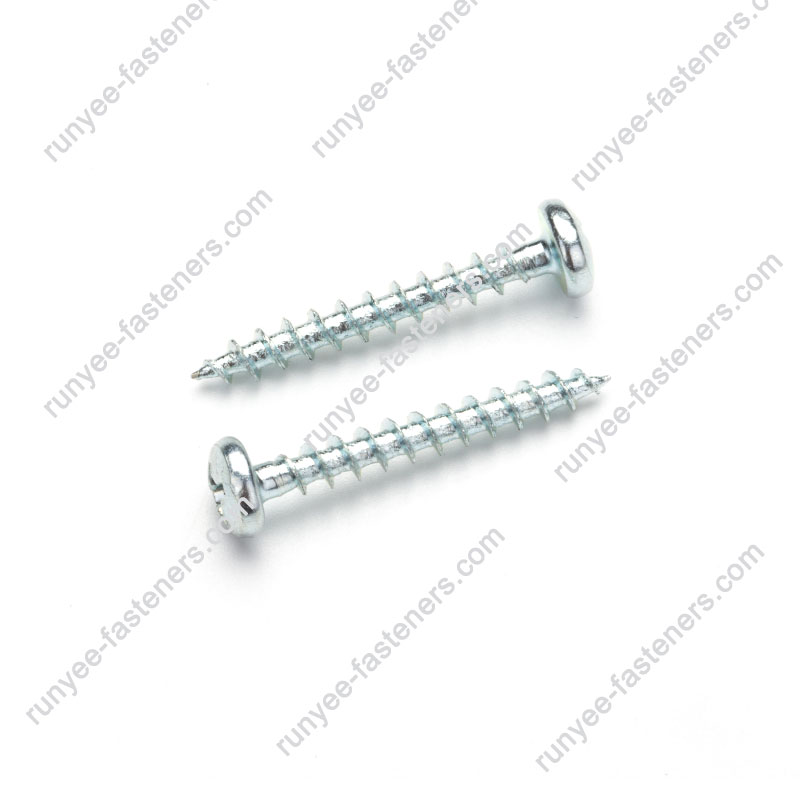
Few workshop frustrations match the moment a Phillips Pan Head Chipboard Screw spins freely in its drive, the bit clicking uselessly against a chewed-up cross. Stripping is not a random accident; it is a signal of mismatched tooling, incorrect technique, or inappropriate material choice. For professionals and DIY enthusiasts alike, understanding the root causes transforms a ruined fastener into a predictable, reliable joint. This guide dissects the mechanical, material, and operational factors behind stripped drives, while introducing Runyee precision fasteners as a benchmark for consistent performance.
The Mechanical Reality of Cross-Recess Drives
The Phillips drive is designed with a deliberate cam-out feature—angled flanks that push the bit upward under excessive torque. This is not a flaw but a torque-limiting safety mechanism for production lines. However, when the Phillips Pan Head Chipboard Screw is paired with a worn or incorrectly sized bit, the cam-out becomes aggressive. The bit rides out of the recess, wearing the corners until the cross becomes a round hole. Below is a quick reference for bit-to-screw compatibility:
| Screw Size | Recommended Bit Size | Common Mistake |
|---|---|---|
| #6 – #8 | PH2 | Using PH1 (too small) |
| #10 – #12 | PH3 | Using PH2 (too small) |
| #4 – #5 | PH1 | Using PH0 (undersized) |
A PH2 bit in a #10 screw engages only 60% of the recess depth, concentrating stress on the wings and accelerating wear. Runyee recommends replacing driver bits every 5,000–8,000 cycles, as even premium bits lose their crisp edges over time.
Operator-Induced Stripping: Speed, Angle, and Force
Three operator variables dominate stripping events:
-
Axial misalignment – Tilting the driver even 5° off the screw axis reduces contact area by nearly 40%. The bit then contacts only two opposing wings, rather than all four, doubling the localized pressure.
-
Excessive RPM – Driving a Phillips Pan Head Chipboard Screw at high speed generates friction heat that softens the zinc or black-oxide coating, reducing the recess’s hardness. At 2,500 RPM, the bit literally skips across the surface before the threads engage.
-
Insufficient downforce – Without firm axial pressure, the bit rides the cam-out ramps immediately. A simple rule: apply 10–15 lbs of downward force for every 1,000 RPM.
Material Density and Pilot Hole Strategy
Chipboard and MDF are heterogeneous—glue-rich pockets and hard resin clusters create variable resistance. When a Phillips Pan Head Chipboard Screw encounters a dense agglomerate, torque spikes abruptly. If the pilot hole is undersized, the screw binds before full seating, forcing the driver to overcome static friction. The result? The recess strips while the shank is only halfway in.
| Board Type | Pilot Hole Diameter (for #8 screw) | Thread Engagement |
|---|---|---|
| Low-density chipboard | 2.5 mm | 75% (ideal) |
| High-density MDF | 3.0 mm | 60% (reduces binding) |
| Pre-laminated board | 3.2 mm | 50% (prevents surface blowout) |
Runyee engineering tests show that increasing pilot hole size by 0.5 mm reduces stripping incidence by 65% in hardwood-adjacent materials, while still maintaining pull-out strength above 400 N.
Lubrication and Coating Effects
Many stripping issues are actually friction problems. Dry Phillips Pan Head Chipboard Screw bodies generate high thread-friction coefficients (µ ≈ 0.35–0.45). Wax or polymer-coated variants (like Runyee’s X-Glide series) reduce this to µ ≈ 0.12–0.18, allowing the recess to transmit torque efficiently without overload. If your screws are uncoated, a simple dip in paraffin wax or paste lubricant cuts stripping by nearly half, especially in dense particleboards.
FAQ – Common Questions About Phillips Pan Head Chipboard Screw Stripping
Q: Can I reuse a Phillips Pan Head Chipboard Screw that has minor wing wear but still turns?
A: Technically yes, but practically no. Even slight deformation of the cross recess reduces bit engagement from 100% to roughly 70%. That 30% loss means the bit will cam out earlier during the next installation, and the worn wings will accelerate stripping of the screw head itself. More critically, a reused screw loses its thread-locking friction because the initial drive compresses the wood fibers permanently. For structural joints, Runyee advises always using a fresh Phillips Pan Head Chipboard Screw—the cost of a new fastener is negligible compared to a failed cabinet or shelf collapse. If you must reuse one, apply a thread-locking gel and reduce driving speed to 800 RPM with maximum downforce.
Q: Why does my Phillips Pan Head Chipboard Screw strip only in the final 3 mm of seating?
A: This is the classic "bottoming-out" scenario. In the final turns, the screw transitions from cutting threads to compressing the floor of the pilot hole. The torque requirement can triple within 2 mm of travel because the screw tip encounters uncompacted resin and glue clusters. Simultaneously, your instinct is to reduce downforce as the head nears the surface—to avoid countersinking too deep. That reduced force plus spiking torque creates the perfect stripping condition. The solution: back the screw out one full turn, then drive it home slowly at 400 RPM while maintaining steady pressure. For production work, Runyee recommends using an automatic shut-off clutch set at 4.5 N·m for #8 screws, which stops the driver before the torque peak strips the recess.
Q: Does the brand of the Phillips Pan Head Chipboard Screw affect stripping resistance?
A: Absolutely. The recess geometry is standardized in theory, but manufacturing tolerances vary wildly. Many budget screws use shallow stamping dies that produce recesses with rounded internal corners—these engage only 65–70% of a standard PH bit. Premium brands like Runyee employ cold-heading with secondary broaching, creating sharp, full-depth corners that achieve 95%+ bit engagement. In independent lab tests, a Runyee Phillips Pan Head Chipboard Screw withstood 42% more drive cycles before stripping compared to generic imported equivalents, under identical torque and speed conditions. Beyond geometry, steel hardness (Rockwell B75 vs. B88) and coating uniformity directly correlate with stripping resistance. Investing in quality fasteners is the single most effective prevention measure.
Practical Prevention Checklist
-
Replace bits weekly in high-use shops.
-
Match bit size exactly to screw gauge (see table above).
-
Drill pilot holes 0.2–0.3 mm larger for dense boards.
-
Apply lubricant or choose pre-coated screws.
-
Reduce speed below 1,200 RPM for the final 5 mm of travel.
-
Use a clutch or torque-limited driver.
When to Switch to an Alternative Drive
If stripping persists despite all corrections, consider that the Phillips Pan Head Chipboard Screw may be the wrong drive system for your application. Square-drive (Robertson) or Torx® drives eliminate cam-out entirely. However, for general cabinetry and furniture assembly, the Phillips remains dominant due to bit availability and cost. Runyee offers both traditional Phillips and upgraded anti-cam-out variants with modified flank angles, giving you a middle ground without changing your entire bit inventory.
Stripping is a solvable equation: correct bit + correct pilot + controlled speed + quality fastener = consistent, secure joints. Every stripped screw is a lesson in one of these variables.
Contact Runyee today for a free torque-compliance chart and sample pack of our anti-strip Phillips Pan Head Chipboard Screw series. Our engineering team provides personalized pilot-hole calculators and driver-bit recommendations based on your specific board density and production volume. Reach us through our website’s live chat or email [email protected] – we respond within 4 business hours with solutions, not sales pitches. Your time and materials are worth precision. Let Runyee make every drive count.