
Why Does a Stainless Steel Weld Neck Flange Require a Scheduled Pipe Match for Proper Fit-Up
2026-06-22
In the world of industrial piping, the Stainless Steel Weld Neck Flange is widely regarded as the gold standard for high-integrity connections. However, even the finest Stainless Steel Weld Neck Flange will fail prematurely if it is not matched with the correct pipe schedule. At HengDi, we have witnessed countless field failures caused by ignoring this fundamental rule. This blog explains why schedule matching is non-negotiable for proper fit-up, backed by engineering principles and practical shop-floor experience.
The Core Reason: Wall Thickness and Bore Alignment
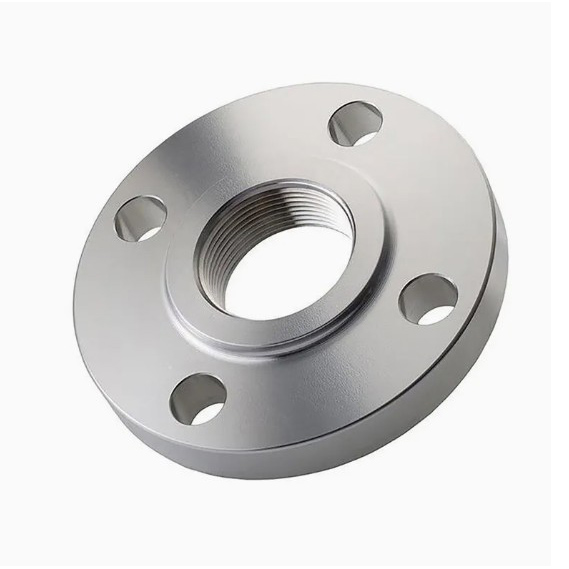
The neck (or hub) of a Stainless Steel Weld Neck Flange is designed with a specific inside diameter (I.D.) that corresponds to the pipe’s outside diameter (O.D.) and wall thickness. Pipe schedules (e.g., Sch 40, Sch 80, Sch 160) define the wall thickness. When you mate a Stainless Steel Weld Neck Flange designed for Sch 80 with a Sch 40 pipe, the bore diameters do not align. This misalignment creates an internal step or gap, which disrupts flow, traps debris, and creates stress concentration points during welding.
Proper fit-up ensures the flange bore and pipe bore are flush. This flush transition minimizes turbulence, reduces erosion-corrosion, and allows for a full-penetration butt weld without excessive filler metal or back-bead defects.
Why "Scheduled Pipe Match" Is a Technical Imperative
| Aspect | Impact of Mismatched Schedule | Benefit of Correct Match |
|---|---|---|
| Weld Joint Design | Incomplete penetration or burn-through | Uniform root gap and consistent weld pool |
| Stress Distribution | Point loading at the hub-to-pipe junction | Smooth load transfer across the joint |
| Thermal Expansion | Differential expansion causes cracking | Matched mass ensures uniform heat dissipation |
| NDT Inspection | False indications or missed defects | Clear ultrasonic and radiographic readings |
| Hydrostatic Test Integrity | Leakage at the root pass | Zero leakage at rated pressure |
When HengDi produces a Stainless Steel Weld Neck Flange, every dimension—from the hub length to the bore taper—is calculated based on the nominal pipe size (NPS) and schedule. Using a pipe with a different schedule changes the moment of inertia and the stiffness ratio, which directly affects the flange’s ability to handle bending moments and external loads.
The Welding Procedure: Why Fit-Up Dictates Success
Fit-up is not just about alignment; it governs the welding procedure specification (WPS). For a Stainless Steel Weld Neck Flange, the root pass must achieve 100% fusion. If the pipe I.D. is larger than the flange bore, the root face becomes too wide, causing the welder to "wash" the puddle, which leads to lack of fusion. Conversely, if the pipe I.D. is smaller, the root opening is too narrow, preventing proper electrode manipulation and resulting in a cold lap.
HengDi strongly recommends verifying the pipe schedule before welding. A simple ultrasonic wall thickness measurement on both the pipe and the flange hub will confirm compatibility. This step is especially critical when using duplex or super-austenitic Stainless Steel Weld Neck Flange grades, where heat input control is extremely tight.
3 Essential FAQs About Stainless Steel Weld Neck Flange Fit-Up
FAQ 1: Can I Bore Out a Stainless Steel Weld Neck Flange to Fit a Different Pipe Schedule?
Answer: Technically, yes, but HengDi advises against it. Boring out the flange increases the hub I.D. beyond the design limits, which reduces the hub wall thickness and weakens the neck’s resistance to internal pressure and external bending. This modification also voids the flange’s ASME B16.5 rating and may alter the hub’s stress intensification factor (SIF). If you must adapt, use a reducing coupling or a swage nipple instead of machining the flange itself. Always consult the flange manufacturer’s dimensional data sheet before any modification.
FAQ 2: What Happens If I Weld a Sch 40 Pipe to a Sch 80 Stainless Steel Weld Neck Flange?
Answer: The immediate problem is an internal mismatch of approximately 2–3 mm in wall thickness, depending on the pipe size. During welding, the thicker flange hub draws heat faster than the thinner pipe wall, creating uneven thermal gradients. This can cause solidification cracking in the heat-affected zone (HAZ). In service, the mismatch acts as a stress raiser, accelerating fatigue crack initiation under cyclic loading. Over time, the joint may develop pinhole leaks or outright fracture at the toe of the weld. The only safe solution is to grind an internal taper transition, but this is labor-intensive and rarely field-approved.
FAQ 3: Does Schedule Matching Affect the Flange’s Pressure Rating and Leak-Tightness?
Answer: Absolutely. The pressure rating of a Stainless Steel Weld Neck Flange is certified based on its hub geometry and the mating pipe’s wall thickness. A mismatched schedule changes the stiffness of the bolted connection. When you torque the bolts, the flange rotates slightly (flange rotation effect). If the pipe schedule is lighter, the pipe deforms more, reducing the gasket stress and causing a leak path. For critical services—such as high-pressure steam or toxic fluids—this loss of gasket load can be catastrophic. HengDi always provides a certified material test report (MTR) and a dimensional inspection report that explicitly states the matching pipe schedule for warranty validation.
Best Practices for Field Fit-Up
-
Always check the flange hub I.D. and pipe O.D. with calibrated calipers.
-
Verify the schedule stamp on both the flange and the pipe.
-
For butt-weld ends, ensure the bevel angle (typically 37.5°) matches between the flange and pipe.
-
Use internal alignment clamps to maintain concentricity within 0.5 mm.
-
Perform a dye penetrant test on the tack welds before final welding.
Why HengDi Stands Out
HengDi manufactures each Stainless Steel Weld Neck Flange with laser-engraved schedule information and traceable heat numbers. Our quality control includes a 100% bore-gauge check to guarantee that every flange matches the specified pipe schedule. We also provide custom machining services for non-standard schedules, complete with updated stress calculations. Choosing HengDi means choosing a partner who understands that fit-up is not a suggestion—it is a requirement.
Contact Us
Ready to source reliable Stainless Steel Weld Neck Flange with guaranteed schedule matching? HengDi offers factory-direct pricing, fast lead times, and full technical support from our in-house engineers. Visit our website or email our sales team to request a quote, a dimensional drawing, or a welding procedure recommendation. Let HengDi help you build piping systems that stay leak-free for decades. Contact us today and speak directly with a flange specialist who will ensure your next project is fit for purpose—from the first pass to the last bolt.