
Why Does a CNC Carbon Steel JIS Flange Differ from a Toilet Flange?
2026-11-04
Flanges are essential connection components in industrial piping and plumbing systems. However, not every component called a flange serves the same purpose. A CNC carbon steel JIS flange is designed for industrial pipeline connections, while a toilet flange is specifically developed to connect a toilet outlet to a drainage pipe and secure the fixture to the floor.
Understanding their differences is important for engineers, contractors, distributors, and industrial buyers. Selecting an unsuitable flange can lead to installation problems, leakage, poor connection performance, and unnecessary maintenance expenses.
This guide explains the differences between CNC carbon steel JIS flanges and toilet flanges, covering their materials, structures, manufacturing processes, standards, applications, and purchasing considerations.
- Understand the fundamental purpose of industrial and plumbing flanges.
- Compare their structural characteristics, materials, and manufacturing requirements.
- Explore the role of CNC machining and JIS dimensional standards.
- Identify important technical details before purchasing industrial flanges.
- Learn how to work with a qualified flange manufacturer.
1. What Is a CNC Carbon Steel JIS Flange?
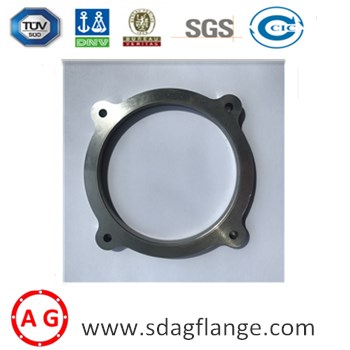
A CNC carbon steel JIS flange is an industrial connection component manufactured from carbon steel and machined to meet specified dimensional requirements. It is designed to connect pipes, valves, pumps, fittings, and other equipment in industrial piping systems.
The term includes three important characteristics:
Carbon Steel Material
Carbon steel is widely used in industrial flange manufacturing because of its mechanical strength, machinability, availability, and cost-effectiveness. Depending on the required grade and application, different carbon steel materials can be selected to meet project specifications.
Common considerations include tensile strength, yield strength, toughness, weldability, and resistance to the operating environment. Surface protection, such as painting, galvanizing, or other specified coatings, may also be necessary depending on exposure conditions.
JIS Standard Compatibility
JIS refers to Japanese Industrial Standards. For industrial steel pipe flanges, JIS B2220 is an important standard covering relevant flange dimensions, pressure classifications, materials, and other technical requirements.
Common JIS pressure designations include 5K, 10K, and 16K. The appropriate designation must be selected according to the applicable standard, temperature, material, and operating conditions rather than treated as a universal pressure value.
CNC Machining Precision
Computer Numerical Control (CNC) machining uses programmed equipment to produce accurate dimensions and surface features. For industrial flanges, machining operations may include turning, facing, drilling, boring, and finishing.
These processes help achieve the required outside diameter, bore size, bolt-hole positioning, thickness, and sealing-face geometry.
A flange should not be selected based on its nominal diameter alone. Standard, pressure class, facing type, material grade, bolt-hole arrangement, and mating component dimensions must all be checked before installation.
2. What Is a Toilet Flange?
A toilet flange, commonly called a closet flange, is a plumbing fitting installed at the connection between a toilet and the drainage pipe. It provides a mounting interface that helps position and secure the toilet while maintaining a reliable connection to the waste system.
Unlike an industrial pipe flange, a toilet flange is not primarily designed for high-pressure industrial fluid transportation. Its main purpose is to provide a stable plumbing connection and prevent wastewater and sewer gases from escaping around the toilet outlet.
Typical Toilet Flange Components
- Flange body: Connects the toilet outlet area to the drain pipe.
- Mounting ring: Provides attachment points for securing the toilet to the floor.
- Wax ring or sealing gasket: Creates a seal between the toilet outlet and the flange.
- Drain connection: Connects the fitting to the plumbing waste pipe.
- Fasteners: Help hold the toilet in the correct position.
Common Toilet Flange Materials
Toilet flanges are available in several materials, depending on the plumbing system and installation requirements.
- PVC: Commonly used in residential drainage systems because it is lightweight and corrosion-resistant.
- ABS: Used in compatible drainage installations and offers convenient installation characteristics.
- Cast iron: Found in certain traditional and heavy-duty plumbing systems.
- Stainless steel or metal-reinforced designs: Used in selected products where additional structural support is required.
The material and connection design must be compatible with the existing drainage pipe and local plumbing requirements.
3. Key Differences Between CNC Carbon Steel JIS Flanges and Toilet Flanges
Although both products provide connection functions, their engineering requirements are significantly different. Understanding these differences prevents incorrect purchasing decisions and installation failures.
| Comparison Factor | CNC Carbon Steel JIS Flange | Toilet Flange |
|---|---|---|
| Primary Purpose | Industrial pipeline and equipment connections | Toilet-to-drainage pipe connection |
| Typical Material | Carbon steel and other specified industrial metals | PVC, ABS, cast iron, and selected metal designs |
| Applicable Standards | JIS B2220 or other specified industrial standards | Applicable plumbing codes and product specifications |
| Operating Environment | Industrial piping and process systems | Residential and commercial sanitary drainage |
| Connection Method | Bolted flange connections and specified pipe joints | Drain-pipe connection and toilet mounting |
| Sealing Method | Compatible gaskets between mating flange faces | Wax rings or dedicated sealing gaskets |
| Machining Requirements | Controlled dimensions, drilling, facing, and finishing | Product-specific molded or machined features |
| Pressure Considerations | Designed for specified industrial pressure and temperature conditions | Designed for sanitary drainage service, not industrial pressure piping |
| Installation | Industrial piping installation procedures | Plumbing installation and toilet mounting |
| Typical Buyers | Industrial distributors, EPC contractors, and pipeline manufacturers | Plumbers, plumbing contractors, and sanitary ware distributors |
3.1 Different Structural Designs
Industrial JIS flanges are manufactured with specific dimensions and connection features. Depending on the flange type, they may include a raised face, flat face, bolt holes, a central bore, or a welding connection area.
Toilet flanges, on the other hand, are designed around the geometry of a toilet outlet and drainage pipe. Their mounting rings and sealing interfaces are intended for plumbing installation rather than industrial bolted pipeline connections.
3.2 Different Sealing Requirements
Industrial flanges commonly use gaskets positioned between two mating flange faces. The sealing performance depends on factors such as gasket selection, flange surface condition, bolt loading, and installation procedures.
Toilet flanges generally rely on wax rings or purpose-designed elastomeric seals. These sealing components accommodate the connection between the toilet outlet and the drainage system.
3.3 Different Performance Expectations
Industrial flange selection requires careful consideration of pressure, temperature, fluid characteristics, mechanical loading, and corrosion conditions. Toilet flange selection focuses more on drainage compatibility, installation height, structural support, and leakage prevention.
Therefore, these two products should never be considered interchangeable simply because they share the word flange.
4. Why Does CNC Machining Matter for Industrial Flanges?
Precision machining is an important part of producing dependable industrial flange connections. Even a flange made from suitable carbon steel can cause installation difficulties if its dimensions do not match the specified requirements.
4.1 Accurate Bolt-Hole Positioning
Bolt-hole alignment directly affects the installation of a bolted flange connection. Incorrect hole spacing or positioning may make assembly difficult and can introduce unwanted installation stress.
CNC drilling and machining help maintain the specified bolt-hole arrangement and improve manufacturing consistency.
4.2 Controlled Sealing-Face Geometry
The flange face provides the contact surface for the gasket. Surface finish, flatness, and facing dimensions should comply with the relevant technical specification.
Inadequate face quality can contribute to uneven gasket compression and leakage. Appropriate machining helps produce the required sealing surface for the selected gasket system.
4.3 Consistent Dimensional Accuracy
Industrial projects often require multiple flanges with matching dimensions. CNC machining supports repeatable manufacturing and helps reduce dimensional variations between production batches.
This is especially valuable for distributors and project contractors purchasing larger quantities of standard or drawing-based flange products.
4.4 Flexible Custom Manufacturing
Not every industrial pipeline uses a standard flange configuration. Some projects require special dimensions, modified bolt-hole patterns, or non-standard connection structures.
CNC equipment can support these requirements when the manufacturer has suitable drawings, material information, and machining capabilities.
When requesting a CNC flange quotation, provide the engineering drawing and identify all critical dimensions. Ask the manufacturer to confirm achievable tolerances and inspection requirements before production.
5. How Do JIS Standards Affect Flange Selection?
Standard compatibility is one of the most important considerations when purchasing industrial flanges. A JIS flange should be selected according to the specific standard and connection requirements of the pipeline system.
5.1 Understanding JIS B2220
JIS B2220 is a widely referenced Japanese Industrial Standard for steel pipe flanges. It specifies important technical requirements used to establish compatibility between flanges and related piping components.
Depending on the product type and applicable edition, buyers should verify dimensions, nominal size, pressure designation, material, facing, and other relevant requirements.
5.2 Common JIS Flange Types
- Plate Flange: A relatively simple flange design commonly used in suitable piping connections.
- Slip-On Flange: Designed to fit over a pipe and be attached using specified welding procedures.
- Blind Flange: Used to close or isolate a pipeline opening.
- Welding Neck Flange: Features a tapered hub and is designed for butt-weld connections.
- Threaded Flange: Uses internal threads to connect with compatible threaded piping.
- Socket Weld Flange: Designed for specific socket-weld piping connections.
The correct design depends on the pipe system, operating conditions, installation requirements, and engineering specifications.
5.3 Avoid Assuming Different Standards Are Interchangeable
One common purchasing mistake is assuming that JIS, ANSI/ASME, DIN, and EN flange dimensions are identical because they have the same nominal pipe size.
However, different standards can specify different bolt-hole patterns, outside diameters, thicknesses, facing dimensions, and pressure classifications.
Before connecting components from different standards, engineers should verify the complete dimensional and pressure compatibility. A matching nominal diameter alone does not guarantee a safe connection.
6. Material and Performance Considerations
Material selection affects the service life, mechanical performance, and maintenance requirements of an industrial flange.
6.1 Why Is Carbon Steel Widely Used?
Carbon steel offers several practical advantages for industrial flange applications:
- Good mechanical strength for many industrial connection requirements.
- Broad availability in different material grades.
- Suitable machinability for common flange manufacturing operations.
- Cost-effective production compared with some specialty alloys.
- Compatibility with a wide range of industrial piping designs when properly specified.
6.2 Corrosion Protection
Carbon steel can corrode when exposed to moisture, oxygen, chemicals, or aggressive operating environments. Therefore, buyers should evaluate the environmental conditions before selecting the material and surface treatment.
Possible protection methods include painting, galvanizing, protective coatings, and other treatments specified by the project.
6.3 Match Material to Operating Conditions
Choosing carbon steel solely because of its lower initial cost may create problems if the operating environment requires greater corrosion resistance or special mechanical properties.
Buyers should confirm the material grade, operating temperature, pressure requirements, fluid characteristics, and applicable material certification requirements.
| Selection Factor | What Buyers Should Verify |
|---|---|
| Material Grade | Specified carbon steel grade and relevant material standard |
| Pressure Rating | Compatibility with the actual operating conditions |
| Temperature | Allowable operating temperature for the material and design |
| Corrosion Resistance | Environmental exposure and required surface protection |
| Machining Quality | Dimensions, tolerances, and sealing-face finish |
| Inspection | Required dimensional checks, material records, and testing |
7. Common Applications and Installation Environments
The application environment is another major distinction between industrial JIS flanges and toilet flanges.
7.1 Industrial Applications of CNC Carbon Steel JIS Flanges
Carbon steel JIS flanges are used in various industrial piping and equipment systems where the applicable design and material requirements are satisfied.
- Petrochemical facilities: Pipeline connections and associated equipment installations.
- Water treatment plants: Suitable water transportation and process piping systems.
- Power generation: Specified piping and auxiliary equipment connections.
- Shipbuilding: Marine piping systems designed around compatible flange standards.
- Manufacturing facilities: Industrial fluid transportation and process equipment connections.
- Oil and gas projects: Pipeline components selected according to project-specific specifications.
7.2 Typical Toilet Flange Applications
Toilet flanges are mainly used in residential, commercial, and public sanitary installations.
- Residential bathroom renovation.
- Commercial office restroom installations.
- Hotels and hospitality facilities.
- Public restroom plumbing systems.
- Toilet replacement and drainage connection repairs.
7.3 Why Application Matching Is Important
Using a plumbing toilet flange in an industrial pipeline is inappropriate because it does not provide the standardized pressure-bearing connection required for industrial service.
Similarly, an industrial steel flange is not a direct substitute for a toilet flange. Its dimensions and connection geometry are not designed to secure a toilet or interface with a standard sanitary drainage installation.
Correct application matching protects equipment, reduces installation problems, and improves long-term system reliability.
8. How to Choose the Right Industrial JIS Flange
For industrial buyers, selecting a suitable flange involves more than comparing prices. A systematic purchasing process can help prevent technical misunderstandings and unnecessary costs.
Step 1: Confirm the Applicable Standard
Identify whether the project requires JIS B2220 or another specified flange standard. Do not assume that a product complying with one standard will automatically fit another system.
Step 2: Identify the Nominal Size
Confirm the nominal pipe size and the actual connection dimensions. Check the pipe outside diameter and flange bore requirements where applicable.
Step 3: Select the Pressure Classification
Identify the required JIS pressure designation and verify that the flange is suitable for the design pressure and operating temperature.
Step 4: Specify the Material Grade
Provide the required carbon steel grade or approved equivalent. If the project requires material certificates or additional inspection documents, communicate these requirements before ordering.
Step 5: Confirm the Flange Type and Facing
Specify whether the application requires a plate, blind, slip-on, welding neck, threaded, or other flange design. Also identify the required facing type and gasket interface.
Step 6: Provide Technical Drawings
For custom CNC flanges, engineering drawings help the manufacturer understand the required dimensions, tolerances, bolt-hole positions, and machining details.
Step 7: Evaluate the Manufacturer
Consider the supplier's production experience, equipment, quality control procedures, material sourcing, inspection capabilities, and delivery arrangements.
- Applicable JIS standard and edition.
- Nominal size and flange dimensions.
- Pressure designation.
- Material grade.
- Flange type and facing.
- Quantity and delivery destination.
- Technical drawings for special products.
- Inspection and documentation requirements.
9. Common Purchasing Mistakes to Avoid
Even experienced buyers can encounter problems when flange specifications are incomplete. The following mistakes should be avoided during procurement.
9.1 Purchasing Based Only on Nominal Diameter
Two flanges with the same nominal diameter may have different bolt-hole arrangements, thicknesses, and outside dimensions. Always verify the applicable standard and complete dimensions.
9.2 Ignoring the Material Specification
Different carbon steel grades have different mechanical properties. Buyers should confirm the exact material requirement instead of accepting a general description such as carbon steel without further verification.
9.3 Overlooking Facing Compatibility
The flange facing must match the intended gasket and mating flange. Incorrect facing selection may compromise sealing performance.
9.4 Failing to Confirm Custom Dimensions
For non-standard products, vague descriptions can result in manufacturing misunderstandings. Provide clear drawings and request confirmation of critical dimensions before production begins.
9.5 Choosing a Supplier Based Only on Price
A low quotation does not necessarily represent the best purchasing value. Consider material quality, manufacturing accuracy, inspection, packaging, and delivery reliability when evaluating suppliers.
10. Why Work with an Experienced Flange Manufacturer?
Industrial flange procurement requires a supplier that understands material selection, applicable standards, manufacturing processes, and project-specific technical requirements.
Shandong Aiguo Forging Co.,Ltd. is a China-based flange manufacturer established in 1992, with export experience dating back to 2011. The company focuses on standard and non-standard flanges, including carbon steel forging flanges, blind flanges, plate flanges, and welding neck flanges.
Its product range covers multiple international flange standards, including JIS, ANSI/ASME, EN, DIN, BS, GOST, and other specifications.
Manufacturing Experience and Production Capacity
According to its company information, Shandong Aiguo Forging Co.,Ltd. has:
- More than 30 years of manufacturing history.
- A workforce of approximately 260 employees.
- A workshop area of approximately 30,000 square meters.
- A stated monthly production capacity of approximately 1,500 tons.
- Experience supplying flange products to international markets.
Standard and Customized Flange Solutions
Different projects may require different flange configurations. In addition to standard products, customized manufacturing based on technical drawings can help buyers obtain components that match specific installation requirements.
When discussing a custom CNC carbon steel JIS flange, buyers can provide drawings, material requirements, pressure classifications, dimensions, and surface treatment specifications for technical evaluation.
Quality and Delivery Considerations
Reliable flange manufacturing depends on appropriate raw material selection, controlled production processes, dimensional inspection, and effective order management.
For international procurement, buyers should also confirm packaging requirements, shipping arrangements, production lead times, and the availability of requested quality documents before placing an order.
Learn more about the company and its manufacturing background on the Shandong Aiguo Forging Co.,Ltd. company profile.
11. Frequently Asked Questions
Q1: What is the main difference between a CNC carbon steel JIS flange and a toilet flange?
A CNC carbon steel JIS flange is an industrial piping component designed for standardized pipeline connections. A toilet flange connects a toilet to a drainage pipe and provides mounting support. They have different materials, structures, standards, and applications.
Q2: Can a toilet flange be used in an industrial piping system?
No. A toilet flange is designed for sanitary drainage applications and is not a substitute for an industrial pressure-rated pipe flange. Industrial systems require components that meet the applicable engineering and pressure specifications.
Q3: What is JIS B2220?
JIS B2220 is a Japanese Industrial Standard covering steel pipe flanges. It provides relevant technical requirements, including dimensions and pressure classifications, for compatible flange applications.
Q4: Why is CNC machining important for carbon steel flanges?
CNC machining helps achieve accurate flange dimensions, bolt-hole positioning, bore sizes, and sealing-face geometry. It also supports repeatable manufacturing for standard and customized flange products.
Q5: Which carbon steel materials are commonly used for industrial flanges?
Common material choices depend on the applicable standard and project specifications. Different carbon steel grades may be selected according to mechanical properties, welding requirements, temperature, and operating conditions. Buyers should always confirm the specified grade with the manufacturer.
Q6: Are JIS flanges interchangeable with ANSI or DIN flanges?
Not automatically. Different standards may have different dimensions, bolt-hole patterns, pressure classifications, and facing configurations. Full compatibility must be verified before connecting components from different standards.
Q7: What information is needed to order a customized CNC flange?
Buyers should provide technical drawings, nominal size, outside diameter, bore diameter, thickness, bolt-hole dimensions, material grade, flange facing, pressure requirements, quantity, and any special inspection requirements.
Q8: How can I select a reliable JIS flange manufacturer?
Evaluate the manufacturer's production experience, material sourcing, machining capabilities, quality control, dimensional inspection, technical communication, and delivery arrangements. Reviewing product specifications and requesting relevant documentation can also help reduce procurement risks.
Q9: Does carbon steel require surface protection?
It depends on the operating environment. Carbon steel may require painting, galvanizing, or other protective treatments when exposed to moisture, corrosive substances, or outdoor conditions. The appropriate treatment should be determined by project requirements.
Q10: Can Shandong Aiguo Forging Co.,Ltd. supply non-standard flanges?
Shandong Aiguo Forging Co.,Ltd. provides standard and non-standard flange products. Buyers can submit drawings and detailed technical requirements for evaluation and customized manufacturing discussions.
12. Conclusion: Choosing the Right Flange Starts with Understanding Its Application
CNC carbon steel JIS flanges and toilet flanges may share a similar name, but they serve fundamentally different engineering purposes. Industrial JIS flanges are designed for pipeline and equipment connections, with particular attention to material properties, dimensional accuracy, pressure requirements, and standard compatibility. Toilet flanges are plumbing fittings intended to connect and secure sanitary fixtures to drainage systems.
For industrial buyers, selecting the right flange requires a clear understanding of the applicable standard, material grade, dimensions, pressure classification, facing type, and installation environment. CNC machining further supports dimensional consistency and customized manufacturing where required.
Working with an experienced manufacturer can simplify technical communication, improve procurement efficiency, and help ensure that the supplied components meet project specifications.
Looking for a Reliable CNC Carbon Steel JIS Flange Manufacturer?
Shandong Aiguo Forging Co.,Ltd. provides a range of industrial flange solutions for international customers. Whether you need standard JIS flanges, carbon steel pipe flanges, CNC-machined components, or customized flange products based on engineering drawings, our team is ready to discuss your requirements.
Share your drawings, material specifications, dimensions, and order quantity with us. Let us help you find a suitable flange solution for your project.
Contact us today to discuss your flange requirements and request a competitive quotation!
Contact Shandong Aiguo ForgingTechnical note: Always verify the latest applicable standards, engineering drawings, material specifications, and project requirements before purchasing or installing industrial flange components.