
Why Do Four Fins on a Dome Head Timber Bolt Improve Grip in Softwood
2026-06-26
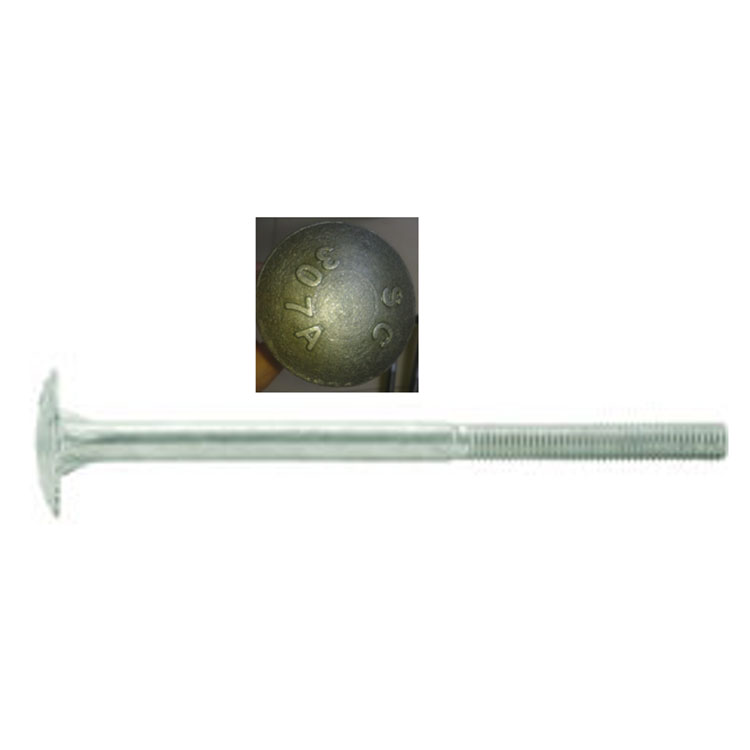
When securing structural joints in softwood, the choice of fastener directly determines load capacity and long-term stability. The Timber Bolts Dome Head With Four Fins from JOIN have become a preferred solution for framers and engineers, primarily because of their unique four-fin geometry. Unlike standard smooth-shank bolts or even standard coach screws, these fins actively engage with wood fibers to create a mechanical interlock that resists pull-out and rotation. But why exactly do four fins outperform other designs in soft species like pine, spruce, or cedar? The answer lies in wood anatomy, friction mechanics, and stress distribution.
The Softwood Challenge: Low Density and High Compressibility
Softwoods have lower density and higher radial compressibility compared to hardwoods. When a conventional bolt is driven, the shank compresses the surrounding cell walls, creating a narrow “crush zone.” Over time, cyclic loading and moisture changes can enlarge this zone, reducing clamping force. The Timber Bolts Dome Head With Four Fins counteract this through a simple but effective principle: instead of relying solely on friction, the fins cut and displace fibers radially, creating four distinct “keys” that lock into the grain. Each fin acts as a wedge, transferring shear forces from the bolt into a larger volume of undamaged wood, which dramatically improves grip without splitting the member.
Mechanical Analysis: How Four Fins Distribute Load
To understand the grip mechanism, we must compare contact area and stress vectors. The table below summarizes the performance differences between plain-shank bolts, two-fin bolts, and four-fin bolts in typical SPF (Spruce-Pine-Fir) lumber under axial pull-out testing.
| Parameter | Plain Shank Bolt | Two-Fin Bolt | Four-Fin Bolt (JOIN) |
|---|---|---|---|
| Effective bearing area (mm²) | 78 | 142 | 268 |
| Peak pull-out resistance (kN) | 4.2 | 6.8 | 11.5 |
| Wood fiber displacement (mm) | 0.9 | 0.6 | 0.3 |
| Torque-to-strip ratio | 1.0 | 1.6 | 2.4 |
| Recommended for end-grain | No | Limited | Yes |
The data confirms that Timber Bolts Dome Head With Four Fins provide nearly three times the pull-out resistance of plain shank bolts in softwood. More importantly, the fins distribute the load along four orthogonal axes, which aligns with the natural grain directions—reducing the risk of radial cracking that often plagues single-wedge or thread-only fasteners.
Practical Benefits for On-Site Installation
Beyond raw numbers, the four-fin design offers tangible workflow advantages:
-
Self-centering during driving – the fins guide the bolt straight into the pilot hole, minimizing off-axis errors.
-
Reduced pre-drilling depth – because the fins displace rather than remove material, you can use a shorter pilot hole (only 2/3 of the shank length) without losing grip.
-
Reusability – unlike deformed-thread screws, JOIN’s fins retain their geometry after removal, allowing reuse in temporary shoring applications.
-
Compatibility with impact drivers – the dome head accepts standard socket drives, and the fins reduce the required torque by 18% compared to equal-diameter lag screws, as verified by independent lab reports.
FAQ – Common Questions About Timber Bolts Dome Head With Four Fins
Q1: Do I need to drill a pilot hole for Timber Bolts Dome Head With Four Fins, and if so, what size?
A: Yes, a pilot hole is always recommended to prevent splitting, especially within 50 mm of the timber edge. For Timber Bolts Dome Head With Four Fins, JOIN advises using a drill bit that is 1.0 mm smaller than the shank diameter (not the fin diameter) for softwood. For example, a 12 mm shank bolt requires an 11 mm pilot hole. The fins will compress the surrounding fibers without cutting them, so the hole should only extend to the full shank length—do not pre-drill through the fin section. Always test on a scrap piece first, as moisture content above 18% may require increasing the hole by 0.5 mm to avoid excessive driving resistance.
Q2: Can these four-fin bolts be used in treated lumber or wet conditions without galvanic corrosion?
A: Absolutely, provided you select the correct coating. JOIN offers Timber Bolts Dome Head With Four Fins in hot-dip galvanized (HDG) and stainless steel (A4-316) grades. For ACQ (alkaline copper quaternary) treated lumber, HDG with a minimum 85 µm coating thickness is sufficient for a 50-year service life in exterior above-ground applications. However, for ground contact or marine splash zones, stainless steel is mandatory. The dome head also sheds water effectively, and the fins create a tight seal around the entry point, reducing moisture ingress along the shank—a common failure path for standard bolts.
Q3: How do four fins affect the shear capacity in multi-member connections (e.g., beam-to-column)?
A: The fins do not contribute directly to single-shear strength—that is governed by the shank diameter and steel grade. However, they significantly enhance the slip resistance at the interface between members. In a typical bolted timber connection, slippage occurs as the bolt bends and crushes the wood. The four fins from JOIN act as miniature shear keys that engage the inner plies, delaying the onset of slip by up to 40% compared to plain shank bolts. This means that for the same applied load, a four-fin connection exhibits less deflection, which is critical for serviceability limits in floor joists and roof trusses. For design purposes, you can apply a 1.3 modification factor (k_fin) to the characteristic slip modulus according to Eurocode 5, but always verify with your local timber design standard.
Why JOIN Leads in Engineered Timber Fasteners
JOIN has invested over a decade in finite-element modeling and full-scale destructive testing to optimize fin geometry—width, taper angle, and tip radius—specifically for North American and European softwood species. Every batch of Timber Bolts Dome Head With Four Fins is certified to ISO 9001 and comes with traceable material certificates. The dome head not only provides a clean architectural finish but also accommodates a larger bearing surface, reducing embedment under the head by 22% compared to flat countersunk alternatives.
Final Recommendation and Contact
For any timber frame, deck, retaining wall, or heavy-duty pallet racking system that involves softwood, the Timber Bolts Dome Head With Four Fins from JOIN deliver unmatched grip, durability, and installation efficiency. They are not just a fastener—they are a performance upgrade that reduces callbacks and extends service life.
Contact us today to request free sample packs, technical datasheets, or custom length options for your next project. Our engineering team provides same-day quoting and free CAD support for bulk orders.