
Why Are Stainless Steel Investment Casting Parts Essential for High-Performance Industrial Components?
2026-10-15
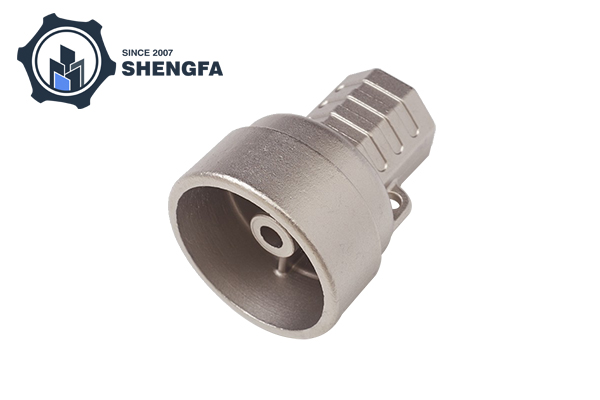
Stainless steel investment casting is a reliable manufacturing process for producing complex metal components with precise dimensions, smooth surfaces, and excellent corrosion resistance. Across industries such as automotive, machinery, marine equipment, and fluid control, Stainless Steel Investment Casting Parts help manufacturers achieve a balance between structural strength, design flexibility, and long-term performance. For businesses seeking dependable metal components, NINGBO SHENGFA HARDWARE FACTORY offers a manufacturing partner to support industrial component sourcing and customized casting requirements.
What Makes Stainless Steel Investment Casting Parts Different?
Investment casting, also known as lost-wax casting, uses a wax pattern to create a ceramic mold. After the wax is removed, molten stainless steel is poured into the mold to form the required component. This process is particularly suitable for intricate geometries and parts that require detailed features.
Unlike conventional machining, which removes material from a solid workpiece, investment casting forms components close to their final shape. This can reduce material waste and minimize subsequent machining, depending on the component's design and dimensional requirements.
Key advantages include:
-
Complex geometries: Suitable for components with intricate contours, internal passages, and thin sections.
-
Dimensional accuracy: Helps achieve consistent component dimensions and reduce unnecessary machining.
-
Surface quality: Produces relatively smooth surfaces compared with many conventional casting methods.
-
Material versatility: Supports different stainless steel grades selected according to strength, corrosion resistance, and operating conditions.
-
Design flexibility: Allows manufacturers to consolidate multiple features into a single component.
These characteristics make Stainless Steel Investment Casting Parts suitable for applications where both functional performance and manufacturing efficiency matter.
How Do Stainless Steel Investment Casting Parts Improve Industrial Performance?
The performance of a metal component depends on its material composition, geometry, manufacturing quality, and operating environment. Investment casting offers several practical benefits when these factors are properly controlled.
1. Corrosion Resistance for Longer Service Life
Stainless steel contains chromium, which forms a protective oxide layer on the material's surface. This layer helps resist corrosion in many environments, including humid conditions and certain chemical-processing applications.
For marine equipment, pumps, valves, and industrial fluid systems, selecting an appropriate stainless steel grade can help reduce corrosion-related maintenance and premature component replacement. However, resistance varies with the alloy, temperature, chemical concentration, and exposure conditions.
2. Strength and Structural Reliability
Stainless steel investment castings can provide the mechanical properties required for demanding industrial applications. Proper material selection and process control help manufacturers produce components capable of withstanding specified loads, vibration, and operating stresses.
For safety-critical or pressure-containing applications, appropriate testing, inspection, and compliance with applicable standards remain essential.
3. Greater Design Freedom
Some components have complex shapes that are difficult or expensive to manufacture through machining alone. Investment casting can accommodate detailed profiles, curved surfaces, and integrated structural features.
This design freedom can help engineers simplify assemblies, reduce the number of separate parts, and improve production efficiency when the component design is suitable for casting.
Which Industries Benefit Most from Stainless Steel Investment Casting Parts?
Stainless steel castings serve a wide range of industrial markets. Their value depends on matching the alloy and manufacturing process to the intended application.
| Industry | Typical Components | Main Benefits |
|---|---|---|
| Automotive | Brackets, housings, and mechanical components | Design flexibility and dimensional consistency |
| Pumps and valves | Valve bodies, impellers, and connectors | Corrosion resistance and complex geometry |
| Marine equipment | Hardware, fittings, and structural components | Resistance to many moisture-related corrosion conditions |
| Industrial machinery | Machine parts and precision fittings | Strength and manufacturing flexibility |
| Food processing | Equipment fittings and product-contact components | Cleanable surfaces and suitable corrosion resistance |
| General engineering | Custom metal components | Part consolidation and design adaptability |
For food processing and other hygiene-sensitive applications, the alloy, surface finish, cleanability, and applicable regulatory requirements must be evaluated carefully rather than assuming that every stainless steel casting is suitable.
Stainless Steel Investment Casting vs. Other Manufacturing Methods
Choosing the right production method affects tooling costs, material utilization, dimensional accuracy, and total manufacturing cost.
| Manufacturing Method | Key Strength | Main Consideration |
|---|---|---|
| Investment casting | Complex shapes and detailed features | Requires pattern and mold preparation |
| CNC machining | High precision and flexible prototyping | Material removal can increase waste and processing time |
| Sand casting | Suitable for many larger components | Surface finish and dimensional accuracy may require additional work |
| Forging | Strong mechanical properties in suitable designs | Complex geometries may require additional machining |
Investment casting is often attractive for small to medium-sized components with intricate shapes and repeat production requirements. CNC machining may be preferable for very tight tolerances or low-volume parts, while forging can be advantageous when specific mechanical properties are the primary concern.
The best option depends on part geometry, production volume, material requirements, and the acceptable level of post-processing.
What Should Buyers Check Before Ordering Stainless Steel Investment Casting Parts?
B2B buyers should evaluate more than the unit price. A well-defined technical specification helps reduce communication errors, production delays, and quality risks.
Consider the following factors before selecting a supplier:
-
Material grade: Confirm the required stainless steel grade based on corrosion resistance, strength, and service conditions.
-
Technical drawings: Provide dimensions, tolerances, critical features, and machining requirements.
-
Surface finish: Specify whether the part requires polishing, passivation, or another finishing process.
-
Quality inspection: Clarify dimensional inspection, material verification, and any required non-destructive testing.
-
Production capacity: Evaluate whether the supplier can support the required quantity, lead time, and repeat orders.
-
Customization capability: Confirm that the manufacturer can accommodate the component's geometry and technical specifications.
-
Total cost: Consider tooling, machining, finishing, inspection, packaging, and transportation rather than comparing unit prices alone.
Clear specifications allow buyers and manufacturers to establish realistic expectations before production begins.
Why Choose NINGBO SHENGFA HARDWARE FACTORY for Your Casting Requirements?
For industrial buyers, selecting a manufacturing partner involves balancing product quality, technical communication, production efficiency, and long-term supply reliability.
NINGBO SHENGFA HARDWARE FACTORY can be considered for Stainless Steel Investment Casting Parts sourcing when evaluating customized metal component requirements. Buyers should communicate their application, material specifications, annual demand, and quality expectations to determine whether the factory's capabilities match their project.
A structured quotation process can help clarify:
-
Component design and manufacturing feasibility
-
Material and finishing options
-
Tooling and production costs
-
Inspection requirements and quality documentation
-
Estimated lead times and order quantities
Providing complete technical information at the beginning of a project makes it easier to assess feasibility and develop a cost-effective manufacturing solution.
Conclusion
Stainless Steel Investment Casting Parts combine design flexibility, corrosion resistance, and the potential for efficient near-net-shape manufacturing. They are valuable for applications ranging from pumps and valves to automotive components and industrial machinery. However, achieving reliable results requires appropriate material selection, controlled production processes, and clearly defined quality standards.
For businesses sourcing customized stainless steel components, the right manufacturing partner can help translate engineering requirements into practical production solutions. Contact NINGBO SHENGFA HARDWARE FACTORY to discuss your component drawings, material requirements, and project specifications, and explore a suitable solution for your next manufacturing project.