
Why Are Non-standard Copper Tube Terminals Essential for Customized Marine Connections?
2026-08-07
In modern electrical and marine engineering, standard terminals cannot always satisfy the requirements of complex installation environments. Different vessels, electrical systems, cable layouts, and connection spaces may require different terminal dimensions, hole positions, wall thicknesses, connection structures, or installation methods. This is where Non-standard Copper Tube Terminals become particularly valuable. Designed according to specific technical requirements, these terminals can provide reliable electrical connections while adapting to specialized equipment and confined installation spaces. For marine applications especially, the ability to customize terminals according to different ship types gives manufacturers and shipbuilders greater flexibility in system design. Wenzhou Zenko Metal Co., Ltd. provides customized metal terminal solutions designed to meet diverse industrial and marine connection requirements.
What Makes Non-standard Copper Tube Terminals Different?
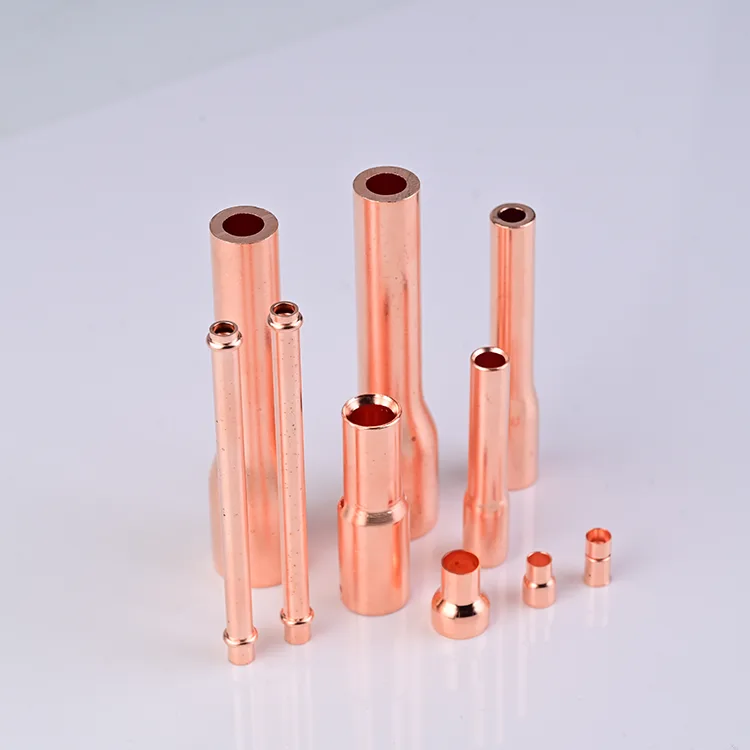
Non-standard Copper Tube Terminals are copper connection components manufactured according to customer-specific drawings, dimensions, materials, electrical requirements, or installation conditions rather than being limited to conventional standardized specifications.
Unlike off-the-shelf terminals, customized terminals can be adjusted in several important areas:
-
Tube diameter and length
-
Wall thickness
-
Cable entry dimensions
-
Mounting hole size and position
-
Terminal plate shape
-
Connection angle
-
Overall terminal dimensions
-
Surface treatment
-
Material grade
-
Compression or connection structure
This flexibility is especially important when a terminal must fit an existing electrical assembly, customized cable system, marine control cabinet, battery system, or power distribution structure.
Standard Terminals vs. Non-standard Terminals
| Feature | Standard Copper Terminals | Non-standard Copper Tube Terminals |
|---|---|---|
| Dimensions | Fixed specifications | Customized dimensions |
| Mounting | Standard installation | Adapted to specific equipment |
| Cable size | Limited standard ranges | Designed for specific cable requirements |
| Shape | Conventional | Customized structure |
| Ship applications | General applications | Adaptable to different ship types |
| Engineering flexibility | Moderate | High |
| Special projects | May require modification | Designed around project requirements |
For projects where space, cable routing, or connection requirements are unusual, customization can significantly simplify installation.
Why Is Copper Widely Used for Tube Terminals?
Copper is one of the most practical materials for electrical terminal manufacturing because of its excellent electrical conductivity and mechanical properties.
A properly designed copper tube terminal helps create a stable conductive path between cables, electrical equipment, busbars, batteries, and other components. Copper also offers good thermal conductivity, allowing heat generated during current transmission to dissipate efficiently when the connection is correctly designed and installed.
The main advantages include:
Excellent conductivity: Copper provides efficient current transmission and helps reduce unnecessary electrical losses.
Good mechanical performance: Properly manufactured copper terminals can withstand the mechanical forces associated with installation and operation.
Reliable connection: A suitable terminal design can provide a secure interface between the cable and electrical equipment.
Manufacturing flexibility: Copper tubing can be processed into different dimensions and configurations to meet specialized requirements.
Broad application range: Copper tube terminals can be used in industrial machinery, power equipment, transportation systems, renewable energy equipment, and marine electrical systems.
How Do Customized Terminals Improve Marine Electrical Systems?
Marine electrical environments are more complicated than many conventional industrial installations. Different vessels have different electrical architectures, cable routing systems, available installation spaces, power requirements, and equipment configurations.
A cargo vessel, passenger ship, fishing vessel, yacht, offshore service vessel, or specialized engineering ship may require completely different connection solutions.
This makes ship-type customization a major advantage of Non-standard Copper Tube Terminals.
Customization for Different Ship Types
For example, terminals used on a compact yacht may need to prioritize small dimensions and flexible installation. A large commercial vessel may require larger current-carrying capacity and heavy-duty connection structures. Offshore vessels may require connection components designed around demanding operating conditions and specialized equipment layouts.
A customized terminal supplier can adjust the product according to:
-
Ship type and vessel structure
-
Electrical system configuration
-
Cable specifications
-
Installation space
-
Current requirements
-
Connection direction
-
Equipment interface
-
Mounting method
-
Customer drawings and samples
This approach allows the terminal to be designed around the vessel instead of forcing the vessel's electrical system to accommodate an unsuitable standard component.
The Importance of Precise Dimensional Control
For a terminal, small dimensional differences can affect installation quality and connection reliability.
For example, an unsuitable tube diameter may result in poor cable fitting, while an incorrect mounting hole can create alignment problems during assembly. Excessive or insufficient wall thickness may also affect the mechanical performance of the component.
Therefore, the manufacturing process of Non-standard Copper Tube Terminals should pay close attention to dimensional accuracy.
Important dimensions may include:
-
Inner diameter – determines compatibility with the cable or conductor.
-
Outer diameter – affects installation clearance.
-
Tube length – influences the available crimping or connection area.
-
Terminal plate dimensions – determine equipment compatibility.
-
Mounting hole diameter – ensures proper fastening.
-
Hole position – maintains accurate alignment.
-
Wall thickness – contributes to mechanical strength and current-carrying performance.
For customized projects, technical drawings, samples, cable specifications, and application conditions can help establish the correct design before production.
What Are the Main Applications?
The versatility of customized copper tube terminals makes them suitable for many industries.
Marine Electrical Systems
Marine applications are one of the most important areas because vessels frequently contain customized electrical architectures. Terminals can be designed for different ship types, equipment configurations, and cable systems.
Power Distribution Equipment
Customized terminals can be used in electrical distribution cabinets, busbar systems, power connection assemblies, and other high-current applications.
Industrial Machinery
Complex machines may have limited installation space or unique cable connection requirements. Non-standard components can be manufactured to match the equipment structure.
Battery and Energy Systems
Energy storage systems, battery assemblies, charging equipment, and power conversion systems may require customized connection components to accommodate specific cable sizes and installation arrangements.
Transportation Equipment
Specialized vehicles and transportation equipment may also benefit from customized terminals where conventional products cannot provide the required dimensions or connection configuration.
How Does Customization Improve Installation Efficiency?
A major benefit of custom-made terminals is that they can be designed according to the actual installation environment.
Instead of modifying equipment to accommodate an unsuitable standard terminal, engineers can specify the required terminal dimensions from the beginning.
This can provide several practical benefits:
-
Better dimensional compatibility
-
Reduced installation adjustments
-
More efficient cable routing
-
Improved connection consistency
-
Easier equipment assembly
-
Reduced risk of incorrect component selection
-
Greater flexibility for specialized projects
For shipbuilders, this is particularly useful because electrical systems are often integrated into limited spaces where every component must fit accurately.
Why Choose Wenzhou Zenko Metal Co., Ltd.?
Wenzhou Zenko Metal Co., Ltd. focuses on metal connection components and customized terminal solutions for industrial applications. For customers requiring Non-standard Copper Tube Terminals, customization is not simply about changing one dimension. It involves understanding the complete connection requirement and developing a terminal configuration that matches the application.
The company can support customized requirements involving dimensions, shapes, connection structures, and other specifications according to customer drawings, samples, or technical requirements.
Key Customization Advantages
-
Customized dimensions
-
Flexible structural design
-
Support for customer drawings and samples
-
Solutions for different cable specifications
-
Adaptation to specialized installation spaces
-
Support for different ship types
-
Suitable for customized marine electrical systems
-
B2B-oriented production support
The ability to support different ship types is particularly valuable for marine engineering projects. Rather than offering only one fixed terminal configuration, customized solutions can be developed around the electrical and mechanical requirements of a specific vessel.
A Better Approach to Selecting Copper Tube Terminals
When purchasing customized terminals, buyers should consider more than price.
A practical selection process should include:
1. Define the cable specification
Confirm conductor size, cable construction, and connection requirements.
2. Determine the installation dimensions
Measure the available space and identify mounting limitations.
3. Confirm electrical requirements
Current, voltage, connection structure, and operating conditions should be considered during product selection.
4. Provide drawings or samples
Detailed technical information helps manufacturers understand the required geometry and tolerances.
5. Consider the vessel type
For marine projects, identify whether the application involves a yacht, cargo vessel, fishing vessel, passenger ship, offshore vessel, or another specialized vessel.
6. Evaluate production consistency
For repeated orders, stable dimensional accuracy and consistent manufacturing quality are essential.
What Results Can Customers Expect?
When properly designed and manufactured, customized copper tube terminals can deliver a more practical connection solution than forcing standard components into specialized systems.
The expected benefits include:
-
Better equipment compatibility
-
Stable electrical connections
-
More efficient installation
-
Improved assembly flexibility
-
Reduced design compromises
-
Better adaptation to marine applications
-
Greater freedom in equipment design
For engineering teams, the real value of customization is not simply obtaining a different-shaped terminal. It is obtaining a component that works naturally within the complete system.
Final Thoughts
The growing complexity of marine and industrial electrical systems makes customized connection components increasingly important. Non-standard Copper Tube Terminals provide engineers with the flexibility to address unusual cable dimensions, restricted installation spaces, specialized connection structures, and vessel-specific electrical requirements.
For marine applications, the ability to customize terminals according to different ship types can be especially valuable. Whether the project involves a yacht, commercial vessel, fishing boat, offshore vessel, or specialized marine platform, the terminal can be developed around the actual application instead of relying entirely on standard specifications.
With professional customization capabilities, Wenzhou Zenko Metal Co., Ltd. can support customers looking for practical and application-oriented copper terminal solutions.
If you are looking for Non-standard Copper Tube Terminals with customized dimensions, structures, or marine applications, contact us to discuss your drawings, samples, cable specifications, and project requirements. Wenzhou Zenko Metal Co., Ltd. can work with you to develop a copper terminal solution that fits your equipment and ship-specific application.