
Why Are Mechanical Connections Preferred for PEX-AL-PEX Pipes?
2026-10-12
A plumbing contractor is installing a hydronic heating system in a 12-story building. The riser shafts are narrow, the working temperature is 38°C, and the schedule allows only three days for the main pipe runs. The contractor has a choice: use heat fusion fittings or mechanical press fittings. The fusion method requires a clean, dry environment and a skilled technician with a fusion machine. The press method requires a calibrated press tool and a set of jaws. The contractor chooses the press method for PEX-AL-PEX Pipe Fittings. The installation is completed in two days, and every joint passes the pressure test on the first attempt. This guide explains why mechanical connections are the preferred choice for multilayer pipe systems.
1. Why Do Mechanical Connections Perform Better in Field Conditions?
PEX-AL-PEX pipes are often installed in conditions that are not ideal for fusion welding. The pipe may be wet, the ambient temperature may be low or high, and the working space may be tight. Fusion methods, such as heat fusion or electrofusion, require the pipe surface to be clean and dry. Moisture or contamination at the fusion interface causes weak joints that fail under pressure. Mechanical connections, such as press fittings, do not rely on fusion. They use a mechanical crimp or compression to create a seal. The seal is formed by an O-ring or a compression sleeve that is not affected by moisture. The table below compares the performance of mechanical and fusion connections in different field conditions.
| Field condition | Mechanical connection (press) | Fusion connection (heat or electrofusion) |
| Wet pipe surface | No effect | Weak joint; requires drying |
| Ambient temperature below 5°C | No effect | Extended heating time; risk of incomplete fusion |
| Ambient temperature above 40°C | No effect | Cooling time extended; risk of deformation |
| Tight working space | Press tool requires 100 mm clearance | Fusion machine requires 300 mm clearance |
| Operator skill requirement | Moderate (tool calibration) | High (temperature, time, pressure) |
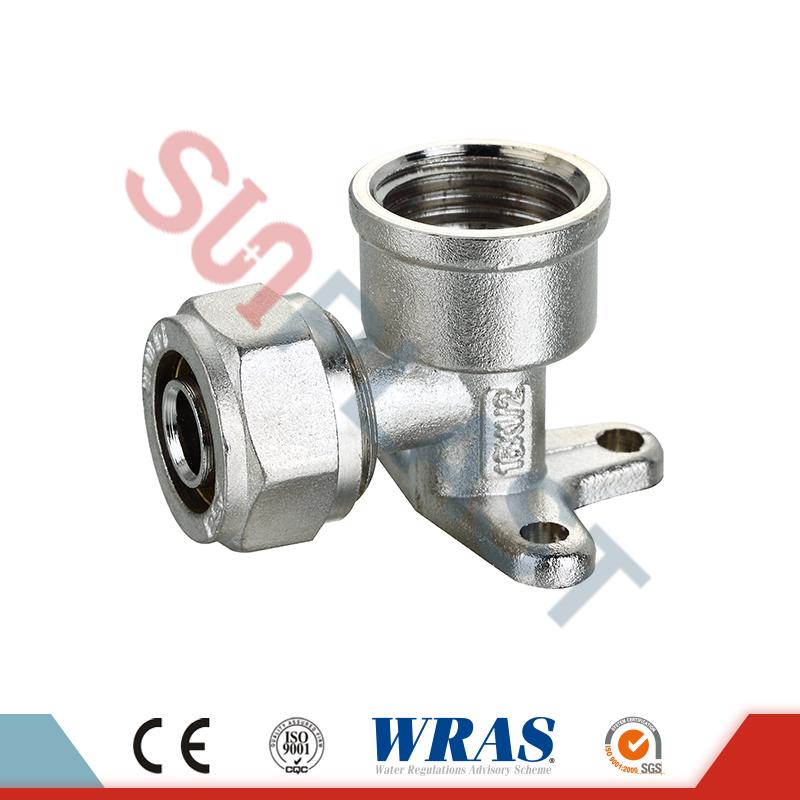
In our factory, we manufacture PEX-AL-PEX Pipe Fittings that are designed for mechanical press connection. The fittings have a barbed insert that grips the inner layer of the pipe and a compression sleeve that compresses the outer layer. The O-ring sits in a groove between the insert and the sleeve. The press tool compresses the sleeve to a fixed diameter, which compresses the O-ring and creates a seal. Ningbo Sunplast Pipe Co., Ltd. has been manufacturing these fittings for over 15 years.
2. How Does Mechanical Connection Speed Affect Project Costs?
The speed of the connection method directly affects the labor cost of the project. A press connection takes 10 to 15 seconds to complete, including the time to insert the pipe and actuate the tool. A heat fusion connection takes 60 to 90 seconds, including the heating and cooling time. For a project with 500 joints, the difference is 7 to 12 hours of labor. At a labor rate of $50 per hour, the saving is $350 to $600. The saving is even greater when the reduced risk of rework is considered. The table below compares the time and cost of the two methods for a typical project.
| Parameter | Mechanical press connection | Heat fusion connection |
| Time per joint (seconds) | 10 – 15 | 60 – 90 |
| Time for 500 joints (hours) | 1.4 – 2.1 | 8.3 – 12.5 |
| Labor cost for 500 joints ($50/hour) | $70 – $105 | $415 – $625 |
| Rework rate (typical) | 1 – 2% | 3 – 5% |
| Rework cost for 500 joints | $35 – $70 | $125 – $250 |
| Total connection cost | $105 – $175 | $540 – $875 |
The press method reduces the connection cost by 70 to 80 percent compared to heat fusion. This is a significant saving on a large project. In our factory, we provide press tools and jaws that are calibrated to the specific fitting size. The tools have a built-in counter that records the number of presses, which helps the contractor track tool usage and schedule maintenance. Sunplast offers a full range of PEX-AL-PEX Pipe Fittings and press tools.
3. How Can Mechanical Connections Be Verified After Installation?
One of the advantages of mechanical connections is that they can be visually verified. The press tool leaves a mark on the sleeve when the connection is complete. The mark is a small dimple or a colored ring that indicates that the tool has been actuated. The installer can inspect each joint and confirm that the press has been made. Fusion connections do not leave a visible mark. The only way to verify a fusion joint is to perform a destructive test on a sample or to wait for the pressure test. The table below compares the verification methods for the two connection types.
| Verification method | Mechanical press connection | Heat fusion connection |
| Visual inspection | Press mark on sleeve | No visible mark |
| Destructive test | Not required | Required on sample joints |
| Pressure test | Required for system | Required for system |
| Rework if test fails | Replace fitting | Cut out and re-fuse |
| Traceability | Tool counter and batch number | Operator log |
Field tip: After pressing a joint, mark it with a paint pen or a marker. This provides a second level of verification and makes it easy for the inspector to see which joints have been completed. We recommend marking the joint with the date and the installer's initials. This simple practice reduces the risk of missing a joint during the pressure test.
4. What Are the Limitations of Mechanical Connections?
Mechanical connections are not suitable for every application. There are three limitations. First, the press tool requires access to the joint from the side. The tool needs about 100 mm of clearance around the fitting. In very tight spaces, a fusion method may be the only option. Second, the O-ring in the fitting is made from EPDM or FKM. These materials have a temperature limit. EPDM is suitable for water up to 95°C. FKM is suitable for higher temperatures but is more expensive. Third, the mechanical connection relies on the compression of the sleeve. If the pipe is not fully inserted into the fitting, the connection will leak. The installer must verify that the pipe is inserted to the marked depth. The table below shows the limitations and the corresponding mitigation.
| Limitation | Mitigation |
| Tight working space | Use a compact press tool or a fusion method |
| High temperature above 95°C | Use FKM O-rings or a metal-to-metal connection |
| Incomplete pipe insertion | Mark the insertion depth on the pipe; inspect after pressing |
| Tool calibration drift | Calibrate the press tool every 5,000 presses |
In our factory, we mark the insertion depth on every PEX-AL-PEX Pipe Fittings with a laser-etched line. The installer can see the line when the pipe is fully inserted. We also provide a calibration service for press tools. Sunplast recommends that the press tool be calibrated every 5,000 presses or every 6 months, whichever comes first.
Frequently Asked Questions About Mechanical Connections for PEX-AL-PEX Pipes
Summary for Pipe Installers and Contractors
Mechanical connections are preferred for PEX-AL-PEX pipes because they are reliable in wet and extreme temperature conditions, they are faster to install, they can be visually verified, and they reduce the risk of rework. The press method reduces the connection cost by 70 to 80 percent compared to heat fusion. The limitations of mechanical connections, such as tight space and high temperature, can be managed with the correct tool and fitting selection. Ningbo Sunplast Pipe Co., Ltd. has been manufacturing PEX-AL-PEX Pipe Fittings and press tools for over 15 years and provides full installation support for our customers.
Ningbo Sunplast Pipe Co., Ltd. manufactures PEX-AL-PEX Pipe Fittings for water and gas service, with laser-etched insertion depth marks and EPDM or FKM O-rings. We provide press tools, calibration gauges, and installation training.