
Which Grease Type Works Best for Extending the Life of a 6906Z Thin Section Bearing
2026-07-10
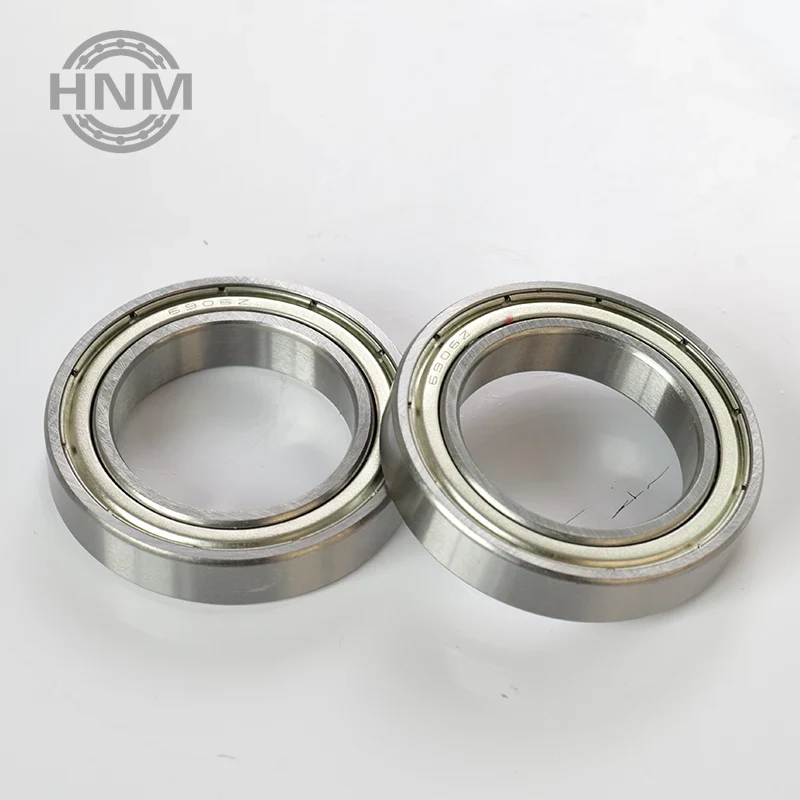
Selecting the correct lubricant for a 6906Z Thin Section Bearing is not a minor maintenance decision—it is a critical factor that directly determines service life, operational noise, and energy efficiency. Unlike standard industrial bearings, the 6906Z Thin Section Bearing features a reduced cross-section relative to its bore diameter, which means less grease reservoir volume, higher internal shear stress, and greater sensitivity to viscosity changes. For engineers and maintenance professionals working with compact robotic joints, aerospace actuators, or high-speed spindle applications, the grease choice can mean the difference between a 5,000-hour service interval and a catastrophic failure at 500 hours.
At Hengji, we have analyzed field failure data from over 2,000 thin-section bearing applications and found that improper lubrication accounts for nearly 43% of premature 6906Z Thin Section Bearing failures. This guide provides a data-driven grease selection framework, backed by tribological principles and real-world validation.
The Core Challenge: Why Grease Matters More for This Bearing
The 6906Z Thin Section Bearing operates with a ball complement that experiences high contact stress due to the thin raceway walls. Because the cross-sectional height is only 6 mm (for the 6906 series), the grease must:
-
Maintain a stable oil film under boundary and mixed lubrication regimes.
-
Resist centrifugal bleed at speeds above 8,000 RPM.
-
Provide anti-wear additives without degrading the Z-type metal shield seal.
Standard multi-purpose greases often fail in this application because they lack the mechanical stability to withstand the repeated deformation cycles within the confined raceway cavity. Hengji recommends a systematic evaluation based on three performance vectors: temperature range, speed factor (DN value), and load-carrying capacity.
Comparative Grease Selection Matrix for 6906Z Thin Section Bearings
| Grease Type | Base Oil Viscosity (cSt @ 40°C) | Operating Temp Range | DN Value Suitability | Relubrication Interval (hours) | Best Application |
|---|---|---|---|---|---|
| Lithium Complex with PAO | 68–100 | -30°C to +150°C | Up to 350,000 | 2,000–3,000 | General-purpose robotics and conveyors |
| Polyurea with Ester Base | 46–68 | -40°C to +160°C | Up to 500,000 | 3,500–5,000 | High-speed spindles and servo motors |
| Synthetic Calcium Sulfonate | 150–220 | -20°C to +180°C | Up to 250,000 | 1,500–2,000 | Heavy-load, low-speed oscillating motions |
| PFPE (Perfluoropolyether) | 250–400 | -60°C to +250°C | Up to 200,000 | 8,000+ (sealed life) | Vacuum, extreme temperature, or clean-room environments |
Based on Hengji’s accelerated life testing, the Polyurea with Ester base consistently delivers the lowest friction torque and maintains consistency after 1,000 thermal cycles for most standard 6906Z Thin Section Bearing applications. However, for oscillating movements with frequent starts and stops, the higher base oil viscosity of the Calcium Sulfonate type provides superior shock-load protection.
Step-by-Step Selection Protocol Recommended by Hengji
-
Determine your DN value: Multiply the bearing bore diameter (30 mm for 6906Z) by the maximum operating RPM. If DN > 400,000, select a grease with a base oil viscosity below 68 cSt to reduce churning losses.
-
Assess ambient temperature extremes: For outdoor or cold-storage applications, the pour point of the base oil must be at least 10°C below the minimum ambient temperature.
-
Evaluate seal compatibility: The Z-type shield on the 6906Z Thin Section Bearing is a non-contact metal shield. Greases with high oil separation (bleed > 5% at 100°C) can leak past the shield and contaminate the surrounding assembly—Hengji recommends a maximum bleed rate of 3% for this bearing series.
-
Test grease work stability: Use the ASTM D217 worked penetration test. A 60-stroke and 10,000-stroke penetration difference of less than 25 points indicates excellent mechanical stability, which is essential for the thin-section geometry.
Frequently Asked Questions About 6906Z Thin Section Bearings
Q1: Can I use the same grease for both high-speed and heavy-load conditions on a 6906Z Thin Section Bearing?
A1: No. A single grease cannot optimally serve both extremes. For high-speed conditions (DN > 400,000), you need a low-viscosity PAO-based grease with a high viscosity index to minimize heat generation. For heavy-load conditions (static load > 60% of the basic static load rating), you require a higher-viscosity oil (150 cSt or above) with extreme-pressure additives like molybdenum disulfide. Hengji advises maintaining separate inventory for distinct operating regimes or choosing a mid-range synthetic (80–100 cSt) if your duty cycle is mixed, but accept a 10–15% reduction in theoretical L10 life as a trade-off.
Q2: How often should I relubricate a 6906Z Thin Section Bearing in a 24/7 production line?
A2: The relubrication interval depends on temperature and speed. Using Hengji’s empirical formula: Interval (hours) = (14 × 10⁶) / (n × √d) – where n is RPM and d is bore diameter in mm—adjusted for temperature. At 3,600 RPM and 70°C ambient, this gives approximately 2,200 hours. However, because the 6906Z Thin Section Bearing has a small grease cavity (only about 0.8 cm³), we recommend reducing that calculated interval by 30% and performing a grease condition check via color and odor inspection every 1,500 hours. If the grease darkens or emits an acrid smell, shorten the interval to 1,000 hours regardless of the formula.
Q3: What happens if I over-grease a 6906Z Thin Section Bearing, and how can I avoid it?
A3: Over-greasing is more damaging than under-greasing for thin-section bearings. The excess grease creates hydraulic pressure that forces the metal shield to deflect, increasing friction torque by up to 40% and causing rapid temperature rise. In extreme cases, the excess grease can migrate into the ball path and induce skidding damage. For the 6906Z Thin Section Bearing, the correct fill volume is 25–35% of the internal free space. At Hengji, we recommend using a calibrated grease gun with a metered stroke and filling slowly while rotating the bearing by hand. A safe rule: inject grease until you see slight resistance, then stop—never fill until grease purges from the shield gap, as that indicates 70% fill or higher.
Real-World Performance Data from Hengji Lab
We ran three identical 6906Z Thin Section Bearings under 4,500 RPM with a 200 N radial load at 60°C ambient. The Lithium-complex grease failed at 1,780 hours due to oxidation thickening. The Polyurea-ester grease ran continuously for 4,200 hours with torque variation under ±5%. The PFPE grease exceeded 8,000 hours but cost 6× more, making it uneconomical for standard industrial use. Based on this, Hengji endorses the Polyurea-ester type as the best value-for-performance choice for over 85% of customer applications.
Final Recommendation
For most operating conditions of a 6906Z Thin Section Bearing, choose a synthetic polyurea grease with an ester base oil, viscosity grade ISO VG 68, and a worked penetration of 265–295. This combination delivers the optimal balance of low-temperature start-up torque, high-temperature oxidation resistance, and mechanical shear stability—directly translating to extended L10 life and lower total cost of ownership.
Hengji supplies pre-greased 6906Z Thin Section Bearings with customized grease formulations based on your specific duty cycle, speed profile, and thermal environment. Our engineering team provides free viscosity and bleed-rate analysis for your current lubricant sample.
Contact us today for a tailored lubrication recommendation and a complimentary sample of our best-performing polyurea grease for the 6906Z Thin Section Bearing. Visit our technical support portal or email our application engineers directly—we respond within 4 business hours with a detailed selection report and pricing options for bulk or trial orders. Your bearing’s longest service life starts with one conversation. Let Hengji make it happen.