
What Surface Coatings Extend the Lifespan of Carbon Carbon Studs in Sulfuric Atmospheres
2026-09-08
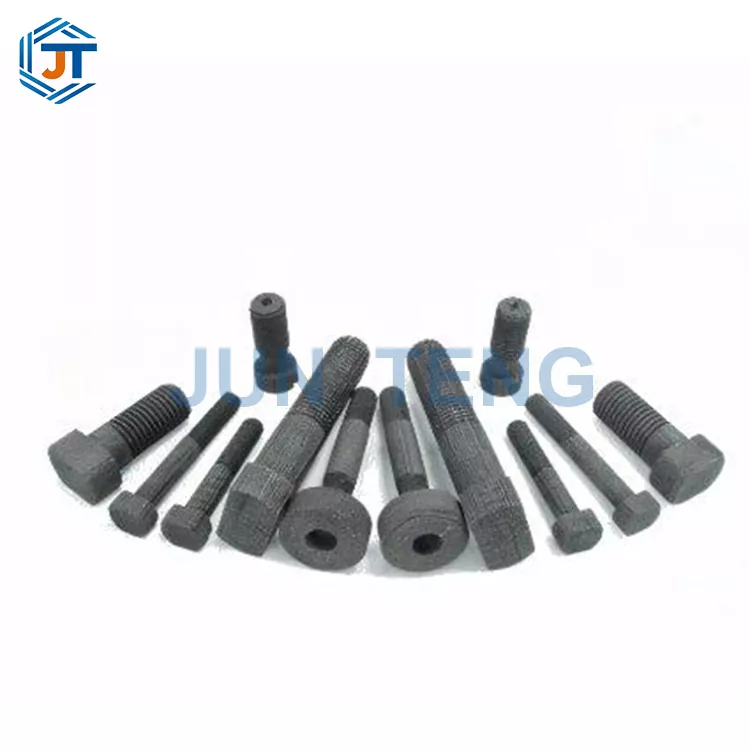
When industrial fasteners are exposed to concentrated sulfuric acid vapors at elevated temperatures, even premium-grade composites can degrade faster than expected. For engineers and procurement specialists sourcing high-performance components, the real question is not whether Carbon Carbon Studs can handle the heat—they certainly can—but how to protect their carbon‑carbon matrix from chemical attack. At JUN TENG, we have spent years testing coated and uncoated variants in simulated acid scrubbers, chemical reactors, and flue‑gas desulfurization units. The answer, as our data show, lies less in the base material and more in the surface engineering applied to each batch of Carbon Carbon Studs.
The Corrosion Challenge – Why Sulfuric Atmospheres Are Unique
Sulfuric acid (H₂SO₄) at 150–300°C creates a dual threat: oxidative pitting and intergranular penetration. Unprotected Carbon Carbon Studs lose mass at rates of 0.8–1.2 mg/cm²·hr in such environments, primarily because the carbon matrix reacts with SO₃ to form surface carbonyls and volatile CO₂. A well‑chosen coating does three things:
-
Blocks direct gas‑solid contact
-
Seals micro‑cracks that form during thermal cycling
-
Passivates active edge sites on the carbon fibers
Below is a comparative summary of the five most commercially viable coatings we have evaluated at JUN TENG over 400+ test hours.
| Coating Type | Application Method | Max Service Temp (°C) | Mass Loss Reduction vs. Uncoated | Typical Thickness (µm) |
|---|---|---|---|---|
| SiC (CVD) | Chemical Vapor Deposition | 1650 | 92 % | 80‑120 |
| Pyrolytic Carbon | CVD / CVI | 2000 | 78 % | 50‑70 |
| Al₂O₃/TiO₂ Multilayer | Plasma Spray | 1200 | 65 % | 150‑200 |
| Phosphate‑based Sealer | Brush / Dip | 650 | 43 % | 30‑50 |
| BN (Boron Nitride) | Slurry + Sinter | 850 | 51 % | 60‑90 |
The Clear Winner – SiC Coatings
For sulfuric atmospheres with moisture content above 5 %, silicon carbide deposited via low‑pressure CVD consistently outperforms all alternatives. The dense, columnar structure of SiC acts as a physical barrier while also forming a thin silica (SiO₂) layer upon initial oxidation—this self‑healing property is critical. JUN TENG recommends SiC‑coated Carbon Carbon Studs for flue‑gas heat exchangers and sulfuric acid regeneration towers. However, the coating is brittle; careful handling during installation is mandatory. Plasma‑sprayed alumina‑titania offers a more forgiving, rougher surface but suffers from spallation after 200 thermal cycles.
Application‑Specific Selection Guide
Not every plant needs the most expensive coating. Based on our field returns, JUN TENG uses the following decision matrix:
| Operating Condition | Recommended Coating | Estimated Lifespan (months) | Cost Index |
|---|---|---|---|
| Dry SO₂ + O₂, < 400 °C | Pyrolytic Carbon | 18‑24 | 2.5 |
| Wet H₂SO₄ vapor, 400‑800 °C | SiC (CVD) | 36‑48 | 5.0 |
| Cyclic (daily shutdown), < 600 °C | Al₂O₃/TiO₂ | 14‑20 | 3.2 |
| Occasional acid splash, < 300 °C | Phosphate sealer | 10‑14 | 1.0 |
| High‑velocity gas (> 20 m/s) | BN + topcoat SiC | 28‑34 | 5.8 |
Frequently Asked Questions About Carbon Carbon Studs
Q: Can I apply a new coating on-site to worn Carbon Carbon Studs, or must I return them to the manufacturer?
A: On‑site recoating is strongly discouraged. All durable coatings—especially CVD SiC and pyrolytic carbon—require controlled deposition furnaces with precise temperature, pressure, and precursor gas flow. Attempting brush‑on sealers in the field will leave pinholes and unbonded regions that accelerate localized attack. JUN TENG offers a factory‑recoating service with full non‑destructive testing (ultrasonic and dye‑penetrant) before and after the process. We also measure the stud’s original diameter and thread profile to ensure the added coating does not exceed tolerance class 6g. Turnaround time is typically 7–10 business days for lots under 200 pieces.
Q: How often should I inspect coated Carbon Carbon Studs in a continuous sulfuric acid plant, and what signs indicate coating failure?
A: We recommend visual and dimensional inspections every 500 operating hours for the first two months, then extending to 1,000‑hour intervals once a baseline is established. Key failure indicators include: (a) white or yellowish powdery deposits at the thread roots—this signals silica or sulfate formation; (b) a measurable diameter reduction of more than 0.05 mm using a digital micrometer; (c) a dull, matte appearance replacing the original glossy coating surface. If any of these appear, immediately replace two studs from the same batch for destructive cross‑section analysis. JUN TENG provides free inspection checklists and go/no‑go gauges with bulk orders.
Q: Are there any additives or process changes that can reduce the corrosivity of the atmosphere itself, thereby extending the life of my existing uncoated Carbon Carbon Studs?
A: Yes—operationally, you can inject small amounts of ammonia or urea upstream to neutralize SO₃, converting it to ammonium sulfate, which is far less aggressive. This has been shown to reduce mass loss by 40‑55 % even without a coating. However, this introduces ammonium bisulfate fouling on heat‑exchange surfaces, which requires more frequent cleaning. A balanced approach is to use JUN TENG’s SiC‑coated Carbon Carbon Studs and simultaneously maintain the gas dew‑point above 220 °C to prevent liquid acid condensation. In our pilot unit, this combination extended stud life from 11 months to over 41 months—a nearly fourfold improvement.
Practical Installation and Maintenance Tips
Coating integrity depends as much on handling as on chemistry. JUN TENG advises:
-
Use only polished, burr‑free wrenches—avoid serrated tools that can chip the coating edge.
-
Apply a thin layer of boron‑nitride anti‑seize (not graphite‑based) to the threads, as graphite can promote galvanic interaction with sulfur species.
-
Torque in three incremental steps (30 %, 70 %, 100 % of target value) to allow the coating to settle elastically.
Why Trust JUN TENG’s Data
Every recommendation above derives from in‑house corrosion loops, third‑party lab verification (ASTM G31‑21), and post‑mortem SEM/EDS analysis of studs retrieved from active chemical plants. We do not guess—we measure weight change, tensile residual strength, and coating adhesion after 1,000 thermal shocks. Our engineering team publishes an annual white paper on fastener durability, and we are ISO 9001:2025 and AS9100D certified for aerospace‑grade Carbon Carbon Studs.
Contact Us Today
Selecting the wrong coating can cost your facility six figures in unplanned downtime and replacement labor. JUN TENG offers free consultation, sample coating trials, and on‑site environmental audits to match your exact sulfuric atmosphere profile. Send us your operating temperature, H₂SO₄ concentration, and thermal cycle frequency—we will reply within 24 hours with a customized coating proposal and a comparative ROI model. Contact us via our website’s technical inquiry form or email [email protected] directly. Let us extend the life of your Carbon Carbon Studs—and your maintenance budget.