
What Role Does Radial Internal Clearance Play in Deep Groove Ball Bearing Performance
2026-03-10
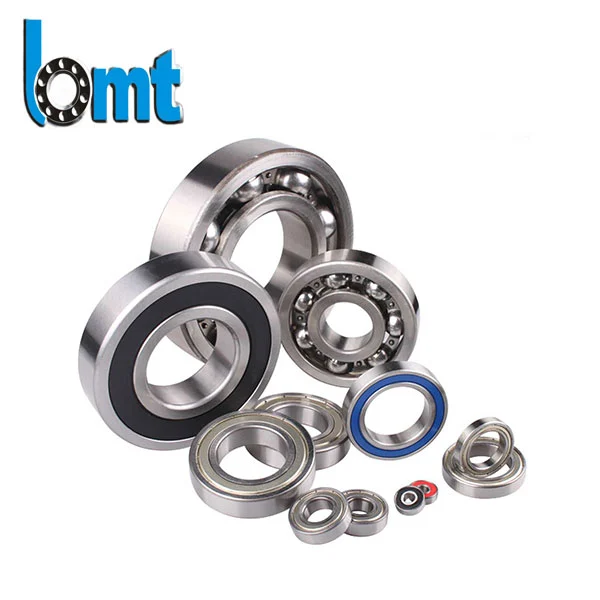
When engineers evaluate Deep Groove Ball Bearings for critical machinery, one specification often overlooked is the radial internal clearance. At BMT, we emphasize that this clearance—the intentional space between the rolling elements and the raceways—is not a manufacturing error but a calculated design parameter. It dictates how a bearing handles thermal expansion, vibration, and load distribution. Understanding this factor is essential for ensuring that your Deep Groove Ball Bearings deliver optimal performance and avoid premature failure in applications ranging from electric motors to industrial gearboxes.
The Functional Impact of Clearance
The radial internal clearance directly influences the contact angle and stress distribution inside the bearing. If the clearance is too tight, the bearing may overheat and seize. If it is too loose, it can lead to noise and reduced rigidity. Below is a breakdown of how different clearance groups affect operational characteristics:
| Clearance Group | Operating Temperature Tolerance | Suitability for Interference Fits | Vibration Damping |
|---|---|---|---|
| C2 (Less than Normal) | Low | Poor | High Rigidity |
| CN (Normal) | Moderate | Good | Standard |
| C3 (Greater than Normal) | High | Excellent | Reduced Rigidity |
| C4 (Very High) | Extreme | Specialized Use | Low |
BMT manufactures Deep Groove Ball Bearings with precision-graded clearances to match specific thermal and loading environments.
Selecting the Right Clearance
To maximize the service life of your machinery, the selection of radial internal clearance must account for the fit of the shaft and housing. When a bearing is pressed onto a shaft, the inner ring expands, effectively reducing the initial clearance. BMT recommends the following guidelines:
-
For Steel Shafts and High Loads: Choose C3 clearance to compensate for expansion from heavy interference fits.
-
For Aluminum Housings: Account for differing thermal expansion rates by selecting CN or C3.
-
For High-Speed Spindles: A slightly larger clearance (C3) allows for proper lubricant film formation.
Common Misconceptions
Many engineers assume that tighter bearings are always better. However, insufficient radial internal clearance is a leading cause of "galling" and sudden lock-up. By selecting the appropriate grade from BMT, you ensure that the bearing maintains a slight operational clearance once it reaches its stable running temperature, allowing for smoother rotation and reduced friction.
Frequently Asked Questions
1. How does temperature variation affect the radial internal clearance of Deep Groove Ball Bearings?
Temperature variation has a dual effect. During operation, the inner ring and rolling elements typically heat up faster than the outer ring. This thermal gradient causes the inner ring to expand, which consumes a portion of the radial internal clearance. If the operating temperature is significantly higher than the ambient temperature during installation, the clearance can reduce to zero, causing preload and failure. Therefore, for high-temperature applications, engineers must select bearings from BMT with a larger initial clearance, such as C3 or C4, to accommodate this thermal expansion and maintain a healthy internal gap.
2. Can incorrect radial internal clearance cause noise and vibration in machinery?
Yes, absolutely. If the radial internal clearance is too high, the rolling elements are not properly constrained by the raceways. This allows them to slide or skid slightly rather than roll smoothly, generating low-frequency vibration and audible noise. Conversely, if the clearance is too low and becomes negative (preload) under load, it creates high-frequency vibration due to severe metal-to-metal contact. Selecting the optimal clearance from BMT minimizes these dynamic instabilities, ensuring quieter and smoother operation, which is critical for applications like electric motors and fans.
3. What is the relationship between interference fits and radial internal clearance in Deep Groove Ball Bearings?
The relationship is inversely proportional. An interference fit (tight fit) on the shaft stretches the inner ring. This stretching increases the circumference of the inner ring raceway, which directly reduces the radial internal clearance. For example, a bearing with a standard CN clearance might lose 50% to 70% of its internal clearance when installed with a heavy press fit. If the application requires both a tight fit (to prevent creep) and high-speed capability, you must start with a bearing that has a larger clearance (e.g., C3) so that after installation, the residual clearance falls into the optimal operating range.
Get Your Custom Bearing Solution Today
Selecting the correct radial internal clearance is vital for the longevity of your equipment. Do not leave it to chance. Whether you need CN for standard motors or C3 for high-heat environments, BMT offers precision-engineered solutions tailored to your specifications.
Contact Us today for a detailed engineering consultation and a free quote on your next batch of high-performance bearings.