
What Materials Can a Phillips Modified Truss Head Self Drilling Screw Penetrate
2026-06-11
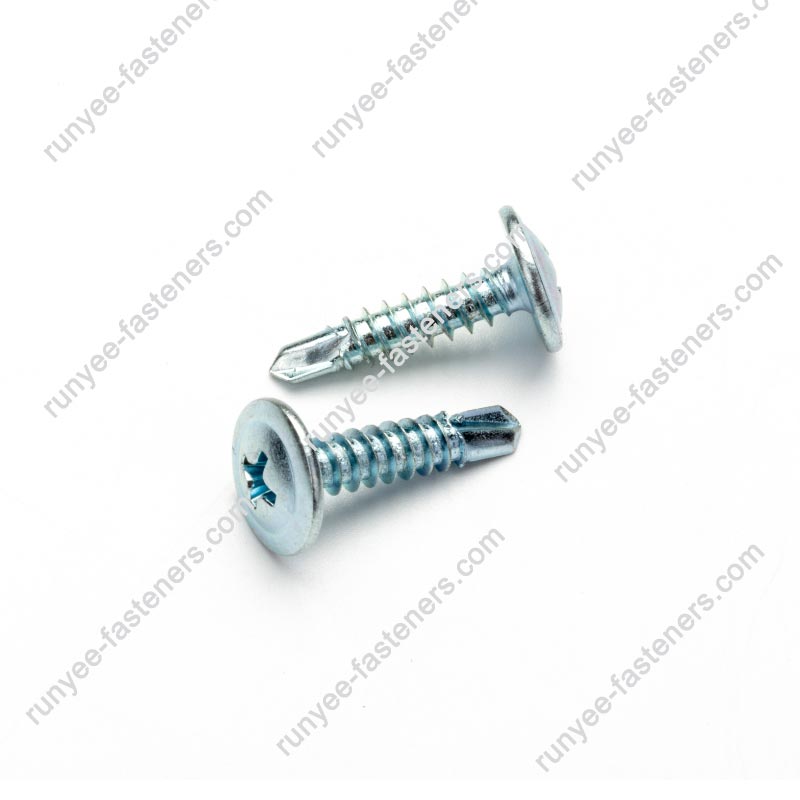
When selecting fasteners for industrial or construction projects, understanding material compatibility is critical. The Phillips Modified Truss Head Self Drilling Screw, particularly from Runyee, offers exceptional versatility across a wide range of substrates. Unlike standard screws that require pre-drilling, this fastener integrates a drilling point with a specialized head design. This article examines the specific materials these screws can penetrate, supported by technical data and practical FAQs.
Common Penetrable Materials
The table below outlines the primary materials suitable for a Phillips Modified Truss Head Self Drilling Screw, including thickness limits and application notes.
| Material Category | Specific Material | Max Penetration Thickness (Steel) | Application Notes |
|---|---|---|---|
| Metals | Mild Steel | 0.5 mm – 6.0 mm | Ideal for ductwork and light structural steel. |
| Metals | Aluminum Sheet | 0.8 mm – 8.0 mm | Use with anti-corrosion coating for outdoor use. |
| Metals | Galvanized Steel | 0.5 mm – 5.0 mm | No pre-drilling required; drill point #2 or #3 recommended. |
| Plastics | Polycarbonate Panels | Up to 10.0 mm | Truss head prevents panel cracking. |
| Plastics | PVC and FRP | 1.0 mm – 12.0 mm | Low torque setting prevents stripping. |
| Wood | Hardwood (Oak, Maple) | Up to 25.0 mm | Drill point should clear wood fibers before thread engagement. |
| Wood | Softwood (Pine, Cedar) | Up to 35.0 mm | Excellent pull-out resistance due to modified truss head. |
Runyee engineers each Phillips Modified Truss Head Self Drilling Screw with a precision-ground drill point, ensuring consistent penetration across these materials without bit walking or excessive heat buildup.
Technical Performance Factors
Several variables affect penetration success. The screw’s drill point length (designated as #2, #3, or #5) determines maximum steel thickness. A Phillips Modified Truss Head Self Drilling Screw from Runyee typically features a 60-65 HRC drill point hardness, allowing it to pierce structural steel up to 6 mm. The modified truss head distributes clamping force evenly, making it particularly effective for softer materials like polycarbonate or aluminum where standard heads might cause dimpling.
Phillips Modified Truss Head Self Drilling Screw FAQ
Q1: Can a Phillips Modified Truss Head Self Drilling Screw penetrate stainless steel sheet?
A1: Yes, but with limitations. A standard Phillips Modified Truss Head Self Drilling Screw can penetrate austenitic stainless steel (304/316) up to 1.5 mm thickness. For thicker stainless steel (2.0 mm+), Runyee recommends a screw with a cobalt drill point. The higher work-hardening rate of stainless steel requires slower RPM (1,500–2,000) and consistent downward pressure. Avoid using on stainless steel over 2.5 mm without pre-drilling a pilot hole, as excessive heat may dull the drill point.
Q2: What happens if I try to penetrate hardened steel over 8 mm with a Phillips Modified Truss Head Self Drilling Screw?
A2: The drill point will likely overheat and fail. A standard Phillips Modified Truss Head Self Drilling Screw has a maximum steel penetration of 6 mm. Attempting 8 mm hardened steel (e.g., 1045 carbon steel) will cause the drill tip to lose hardness (temper damage) above 200°C, resulting in immediate blunting. For materials exceeding 6 mm, Runyee suggests switching to a self-drilling screw with a #5 point or using a pre-drilled hole. The modified truss head design does not compensate for an inadequate drill point in thick, hardened alloys.
Q3: Is a Phillips Modified Truss Head Self Drilling Screw suitable for penetrating fiber cement board?
A3: Yes, but with a critical caution. Fiber cement board (density 1.2–1.5 g/cm³) is penetrable by a Phillips Modified Truss Head Self Drilling Screw from Runyee up to 12 mm thickness. However, the screw must have a carbide-coated drill point to resist the abrasive silica particles in cement. Without this coating, standard drill points dull after 10–15 penetrations. The modified truss head’s wider bearing surface actually reduces the risk of surface cracking in fiber cement compared to bugle or flat heads. Pre-drilling is not required, but setting a clutch to low torque (2–3 Nm) prevents spin-out.
Best Practices for Maximum Performance
To achieve reliable penetration, follow these guidelines:
-
Match drill point to material thickness: Use #2 point for 0.5–2.0 mm steel, #3 point for 2.0–4.5 mm, and #5 point for 4.5–6.0 mm.
-
RPM recommendations: 2,000–2,500 RPM for steel; 1,200–1,800 RPM for plastics and wood.
-
Avoid material stacking: Penetration efficiency drops by 40% when screwing through two separate steel sheets with an air gap.
Runyee tests every production batch of Phillips Modified Truss Head Self Drilling Screws on NIST-traceable hardness blocks to verify drill point performance. For specialized applications involving exotic alloys or composite laminates, Runyee provides custom drill point geometries.
Contact Us
For technical datasheets, sample kits, or bulk pricing on Runyee Phillips Modified Truss Head Self Drilling Screws, please contact us directly. Our engineering team offers material penetration testing and fastener selection assistance for your specific project requirements. Reach out via the website form or call the technical sales line to discuss your application.