
What Materials Are Best Suited for Deep Drawn Enclosures and Housings
2025-12-23
When designing a critical component like an enclosure or housing, the choice of material is paramount. It dictates the part's strength, durability, corrosion resistance, and final cost. Selecting the optimal material for your deep drawn services project ensures longevity and reliability in the field. At Youlin, our expertise lies in guiding clients through this crucial decision, matching material properties to precise application demands for superior deep drawn components.
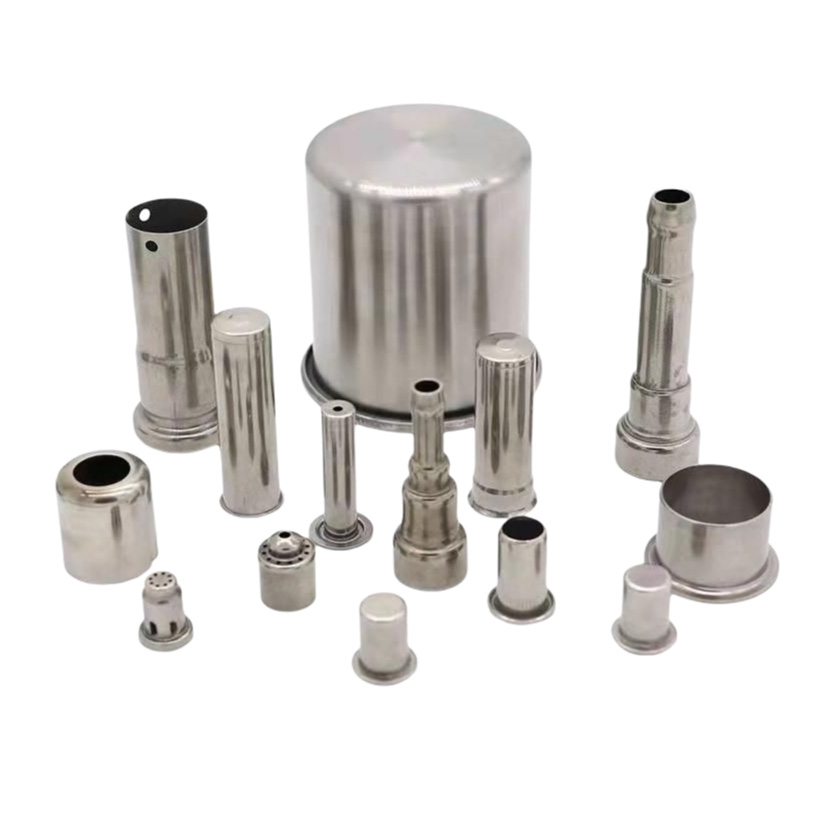
The ideal material must offer excellent formability to withstand the rigorous deep drawn process without tearing or thinning excessively. Here are the most common and effective metals we utilize at Youlin:
-
Stainless Steel (e.g., 304, 316): The gold standard for corrosion resistance and strength. Perfect for medical devices, marine applications, and food processing equipment.
-
Aluminum (e.g., 1050, 3003, 5052): Offers an excellent strength-to-weight ratio, good conductivity, and natural corrosion resistance. Ideal for electronics housings, aerospace components, and lightweight enclosures.
-
Copper and Brass: Chosen for superior electrical and thermal conductivity. Commonly used in electrical connectors, shielding cans, and decorative architectural elements.
-
Low-Carbon Steel (e.g., 1008, 1010): A cost-effective option with good strength and formability, often used for automotive components and industrial guards when followed by appropriate plating or coating.
To compare their core attributes:
| Material | Key Advantages | Typical Applications |
|---|---|---|
| Stainless Steel | High corrosion resistance, hygienic, strong | Medical instrument housings, sensor casings |
| Aluminum | Lightweight, good corrosion resistance, conductive | Electronics enclosures, aerospace housings |
| Copper/Brass | Excellent conductivity, antimicrobial | Electrical components, RFI shielding |
| Low-Carbon Steel | High strength, cost-effective, platable | Automotive assemblies, industrial covers |
Deep Drawn Services FAQ
Q: What are the primary design considerations for deep drawn enclosures?
A: Key considerations include corner radii, wall thickness uniformity, depth-to-diameter ratio, and the inclusion of features like flanges or holes. A design optimized for the deep drawn services process minimizes material waste and reduces secondary operations.
Q: Can multiple parts be integrated into a single deep drawn housing?
A: Yes, a significant advantage of deep drawn services at Youlin is part consolidation. Complex geometries with multiple sides or integrated features can be formed as a single, seamless unit, enhancing structural integrity and reducing assembly time.
Q: How does material choice impact the cost of a deep drawn part?
A: Material cost is a major factor. While stainless steel offers premium properties, aluminum or carbon steel may provide a more budget-friendly solution for suitable applications. Our engineers at Youlin perform a full value analysis to recommend the most cost-effective material that meets all your technical specifications.
Choosing the right partner for your deep drawn services is as critical as selecting the material. Youlin combines decades of metallurgical knowledge with precision engineering to deliver enclosures that excel in form, function, and durability. Ready to materialize your vision with a trusted expert?
Contact us today for a detailed consultation and quote on your next deep drawn housing project.