
What makes custom precision CNC Fixing Bracket essential for modern manufacturing?
2026-06-18
In modern industrial production, precision, repeatability, and structural stability are no longer optional—they are fundamental requirements. A custom precision CNC Fixing Bracket plays a crucial role in achieving these goals by providing accurate alignment, stable support, and long-term durability for mechanical assemblies. As industries such as automotive, aerospace, robotics, and automation continue to evolve, the demand for high-quality CNC-machined fixing solutions has increased significantly. Companies like Hangzhou Grand Import And Export Co., Ltd. are actively contributing to this demand by delivering tailored engineering solutions that meet strict technical standards.
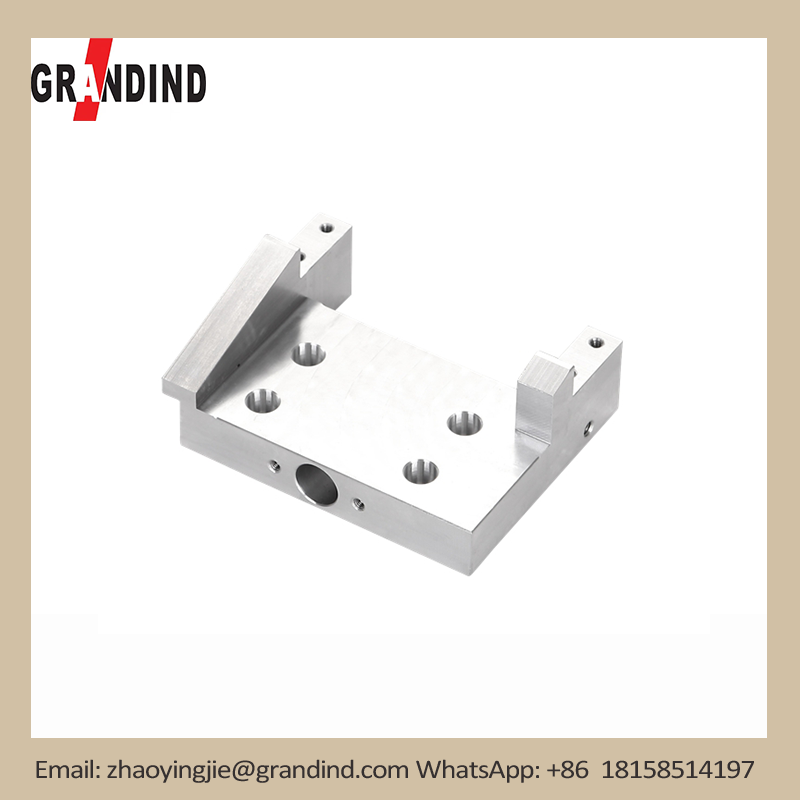
A custom precision CNC Fixing Bracket is not just a simple connecting component. It is a carefully engineered part designed to secure components in precise positions while resisting vibration, load stress, and environmental impact. Unlike standard brackets, custom CNC versions are manufactured according to exact specifications, ensuring perfect compatibility with complex systems.
Key Functions of Custom Precision CNC Fixing Bracket
The role of a CNC fixing bracket extends far beyond basic fastening. It provides structural integrity and enhances overall system efficiency.
Main functions include:
- Ensuring precise component alignment
- Reducing vibration and mechanical noise
- Improving load distribution
- Enhancing assembly stability
- Supporting modular mechanical design
These functions make it indispensable in high-performance machinery and automated production systems.
Why CNC Precision Matters
CNC machining guarantees extremely tight tolerances and consistent quality. Compared to traditional fabrication methods, CNC manufacturing offers:
| Feature | CNC Fixing Bracket | Traditional Bracket |
|---|---|---|
| Precision | ±0.01mm or better | Lower accuracy |
| Durability | High structural strength | Medium |
| Customization | Fully customizable | Limited |
| Repeatability | Excellent | Inconsistent |
| Surface Finish | Smooth and refined | Rough or uneven |
This comparison highlights why industries increasingly rely on CNC solutions for critical applications.
Types of Custom Precision CNC Fixing Brackets
Different industrial needs require different bracket designs. Below are some commonly used types:
- L-shaped fixing brackets (for corner reinforcement)
- U-shaped brackets (for frame support systems)
- Flat mounting brackets (for surface installation)
- Adjustable modular brackets (for flexible assembly systems)
- Heavy-duty structural brackets (for load-bearing applications)
Each type is engineered based on mechanical load requirements and installation environment.
Materials Used in CNC Fixing Brackets
Material selection directly affects performance, durability, and cost efficiency.
Common materials include:
- Aluminum alloy (lightweight and corrosion-resistant)
- Stainless steel (high strength and durability)
- Carbon steel (cost-effective and strong)
- Titanium alloy (high-performance applications)
Aluminum is widely used in automation systems, while stainless steel is preferred in harsh environments such as marine or chemical industries.
Applications Across Industries
The versatility of custom precision CNC Fixing Brackets allows them to be used in multiple sectors:
- Automotive manufacturing: engine mounts, chassis systems
- Aerospace engineering: structural assemblies and support frames
- Industrial automation: robotic arms and conveyor systems
- Electronics industry: device enclosures and mounting systems
- Medical equipment: precision diagnostic machinery
Their adaptability makes them a core component in modern engineering systems.
Advantages of Custom CNC Fixing Brackets
Choosing a custom solution offers several advantages:
- Perfect fit for complex assemblies
- Reduced installation time
- Improved mechanical safety
- Lower maintenance costs
- Extended service life
Custom production ensures that every bracket is optimized for its intended function, eliminating inefficiencies caused by generic components.
Manufacturing Process Overview
The production of a custom precision CNC Fixing Bracket involves several critical steps:
- Requirement analysis and CAD design
- Material selection based on application
- CNC milling or turning
- Precision machining and shaping
- Surface treatment (anodizing, polishing, coating)
- Quality inspection and testing
Each stage ensures that the final product meets strict industrial standards.
Why Choose Custom Solutions from Professionals?
Working with experienced manufacturers like Hangzhou Grand Import And Export Co., Ltd. ensures not only product quality but also engineering support. Professional suppliers provide:
- Engineering consultation for design optimization
- High-precision CNC machining capabilities
- Flexible customization options
- Strict quality control systems
- Competitive pricing for bulk production
This combination of technical expertise and manufacturing capability is essential for modern industrial projects.
Conclusion
A custom precision CNC Fixing Bracket is a critical component in achieving stability, accuracy, and efficiency in mechanical systems. Its importance spans across industries where precision engineering is essential. With advanced CNC technology and professional manufacturing support from Hangzhou Grand Import And Export Co., Ltd., businesses can achieve higher performance and reliability in their equipment design.
If you are looking for high-quality, durable, and fully customized CNC fixing solutions tailored to your project requirements, contact us today to discuss your specifications and get a professional engineering solution that fits your needs.