
What Makes Casting Parts Essential for Modern Manufacturing?
2026-01-15
In today's competitive manufacturing industry, Casting Parts play a pivotal role in ensuring precision, durability, and cost-efficiency. From automotive components to industrial machinery, casting technology provides manufacturers with flexible solutions to meet complex design requirements. Quzhou Kingsoon Precision Machinery Co., Ltd. specializes in delivering high-quality casting parts that cater to diverse industrial applications, combining advanced technology with rigorous quality control.
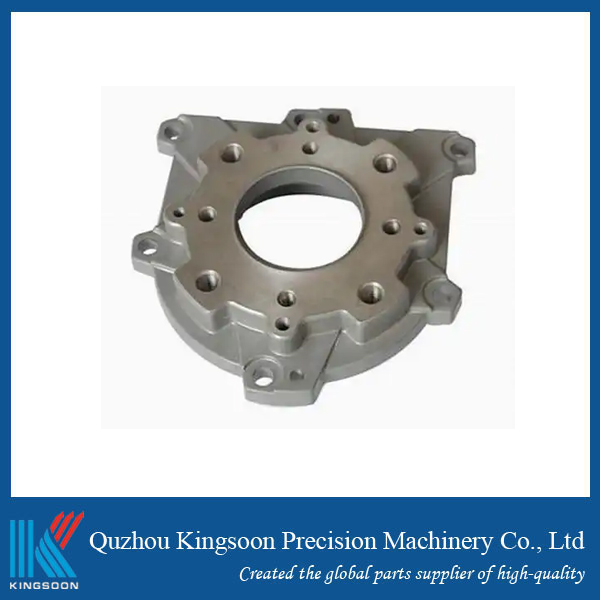
Why Are Casting Parts Crucial in Industrial Applications?
Casting parts offer unique advantages over other manufacturing methods, such as machining or forging. By pouring molten material into molds, manufacturers can achieve complex geometries that would be difficult or expensive with traditional methods. Key benefits include:
-
High precision – Ideal for components requiring exact dimensions.
-
Cost efficiency – Reduces material waste and production steps.
-
Versatility – Supports a wide range of materials including aluminum, steel, and iron.
-
Durability – Suitable for high-stress and high-temperature applications.
Table 1: Comparison of Casting Parts vs. Machined Parts
| Feature | Casting Parts | Machined Parts |
|---|---|---|
| Production Cost | Lower for complex shapes | Higher due to material waste |
| Design Flexibility | High | Limited |
| Material Utilization | Efficient | Less efficient |
| Strength & Durability | Excellent | Good |
How Does Quzhou Kingsoon Precision Machinery Co., Ltd. Ensure Quality?
At Quzhou Kingsoon Precision Machinery Co., Ltd., quality control is at the core of the casting process. Each batch of casting parts undergoes stringent testing including:
-
Dimensional inspection – Ensuring tolerance requirements are met.
-
Material testing – Confirming chemical composition and mechanical properties.
-
Surface finish evaluation – Guaranteeing smoothness and aesthetic standards.
-
Stress testing – Verifying structural integrity under operational conditions.
This meticulous process ensures that clients receive casting parts that are not only precise but also reliable for long-term use.
What Are the Common Applications of Casting Parts?
Casting parts are widely used across multiple industries. Some notable applications include:
-
Automotive industry – Engine blocks, transmission housings, and suspension components.
-
Industrial machinery – Gearboxes, pump housings, and machine bases.
-
Aerospace – Turbine components and structural frames.
-
Construction equipment – Hydraulic parts and heavy-duty brackets.
Which Casting Method Should You Choose?
Different casting methods suit different production needs. Common types include:
-
Sand casting – Economical for small to medium production runs.
-
Die casting – Ideal for high-volume production with excellent surface finish.
-
Investment casting – Best for complex shapes requiring high accuracy.
-
Centrifugal casting – Used for cylindrical parts with high strength requirements.
List 1: Key Considerations for Selecting Casting Parts
-
Required material and mechanical properties.
-
Desired production volume.
-
Complexity of the part's design.
-
Surface finish and tolerance requirements.
-
Cost-effectiveness and delivery time.
The Importance of Casting Parts in Modern Manufacturing
Casting parts are not just components; they are the backbone of precision engineering. By leveraging advanced casting technologies, companies like Quzhou Kingsoon Precision Machinery Co., Ltd. help manufacturers optimize performance, reduce costs, and maintain competitive advantages. Whether for small-scale production or mass manufacturing, casting parts remain an indispensable solution for industries seeking reliability and innovation.
For businesses looking to enhance their production capabilities with high-quality casting parts, Quzhou Kingsoon Precision Machinery Co., Ltd. offers expert solutions, professional guidance, and custom manufacturing services tailored to your needs. Contact us today to learn how our precision casting parts can transform your production process.