
What Makes Blue Aluminium Alloy the Preferred Material for Hub Centric Rings in Performance Cars
2026-04-22
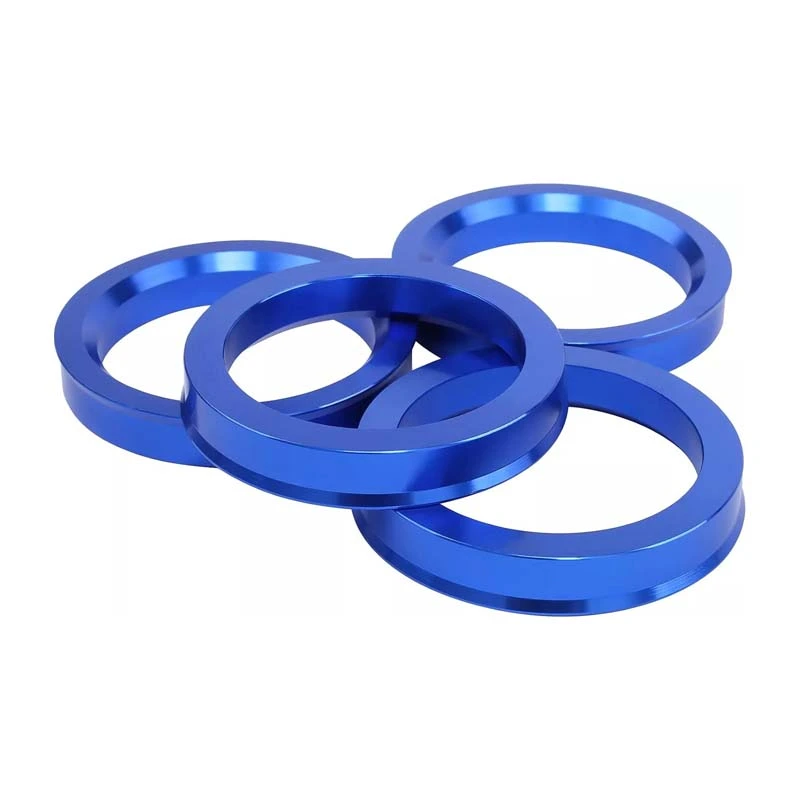
When upgrading to aftermarket wheels on a performance vehicle, precision fitment is non‑negotiable. The Blue Aluminium Alloy Hub Centric Ring from J&W has emerged as the benchmark for enthusiasts who refuse to compromise on safety, durability, and ride quality. Unlike generic plastic rings, this blue anodised aluminium solution addresses the unique demands of high‑speed driving, heat exposure, and vibration control.
Why Colour and Material Matter in Performance Applications
The blue finish is not merely aesthetic. It indicates a hard anodising process that increases surface hardness, resists galvanic corrosion, and allows for visual inspection of wear. Aluminium alloy (typically 6061‑T6 or 7075) offers thermal expansion characteristics closely matching wheel hubs, ensuring the ring remains centred under extreme braking or track conditions.
| Property | Blue Aluminium Alloy | Plastic (Nylon/ABS) |
|---|---|---|
| Heat resistance up to | 300°C | 80‑120°C |
| Compression strength | High (300 MPa+) | Low (40‑70 MPa) |
| Creep over time | None | Significant after 12 months |
| Reusability | Yes, multiple removals | Often cracks upon removal |
| Corrosion protection | Anodised layer | Not applicable |
How the Ring Enhances Performance Vehicle Dynamics
A Blue Aluminium Alloy Hub Centric Ring fills the gap between the wheel’s centre bore and the vehicle’s hub flange. Without this ring, lug nuts alone must centre the wheel – a condition called lug‑centric mounting. At high lateral G‑forces or during heavy braking, the wheel can shift microns, leading to:
-
Steering wheel vibration at 110 km/h+
-
Uneven torque distribution on studs
-
Premature bearing fatigue
By transferring shear loads from the studs to the hub, the ring from J&W ensures the wheel remains perfectly coaxial with the axle. This is critical for performance cars where rotational mass and precision alignment directly affect lap times and tyre wear.
Why Professionals Choose J&W Blue Aluminium Alloy Hub Centric Rings
J&W engineers each ring with a tolerance of ±0.05mm, verified by CNC machining after anodising (which adds 0.02‑0.03mm of thickness). The blue dye is integrated into the anodic layer, not painted, so it never flakes. This level of quality control is why J&W rings are standard in many track‑day preparation shops.
Frequently Asked Questions (FAQ) – Blue Aluminium Alloy Hub Centric Ring
Q1: Can a Blue Aluminium Alloy Hub Centric Ring be reused when switching wheels for track days?
A: Yes, provided it is removed carefully using a non‑marring tool. The anodised surface resists galling, and the aluminium alloy does not permanently deform under proper torque (80‑110 Nm). J&W recommends inspecting the ring for any burrs or flattening before reinstallation. With care, a single ring can outlast three sets of tyres.
Q2: Will a Blue Aluminium Alloy Hub Centric Ring corrode when exposed to road salt or brake dust?
A: The hard anodising process creates a ceramic‑like layer that is chemically inert to salt, moisture, and acidic brake dust. Unlike raw aluminium, the J&W blue ring passes 500+ hours of neutral salt spray testing (ASTM B117). However, the mating surfaces should be cleaned annually to prevent debris build‑up, which could affect fitment.
Q3: Is a Blue Aluminium Alloy Hub Centric Ring necessary if my aftermarket wheels claim to be "hubcentric"?
A: Many aftermarket wheels have a generic 73.1mm or 72.6mm centre bore but are not machined to your specific vehicle’s hub diameter (e.g., 57.1mm for Honda, 66.56mm for BMW). A J&W Blue Aluminium Alloy Hub Centric Ring adapts that generic bore precisely to your hub. Even wheels labelled "hubcentric" often require rings because the hub pilot is machined separately from the wheel casting – a tolerance stack‑up of 0.2mm is common without a ring.
Call to Action for Precision Fitment
Vibration, stud failure, and uneven tyre wear are avoidable with the correct chassis solution. Contact J&W today via our technical support form to match your vehicle’s hub diameter and wheel bore to the exact Blue Aluminium Alloy Hub Centric Ring. Our team provides CAD drawings and torque specifications for every performance application – because centricity is not optional above 200 km/h.