
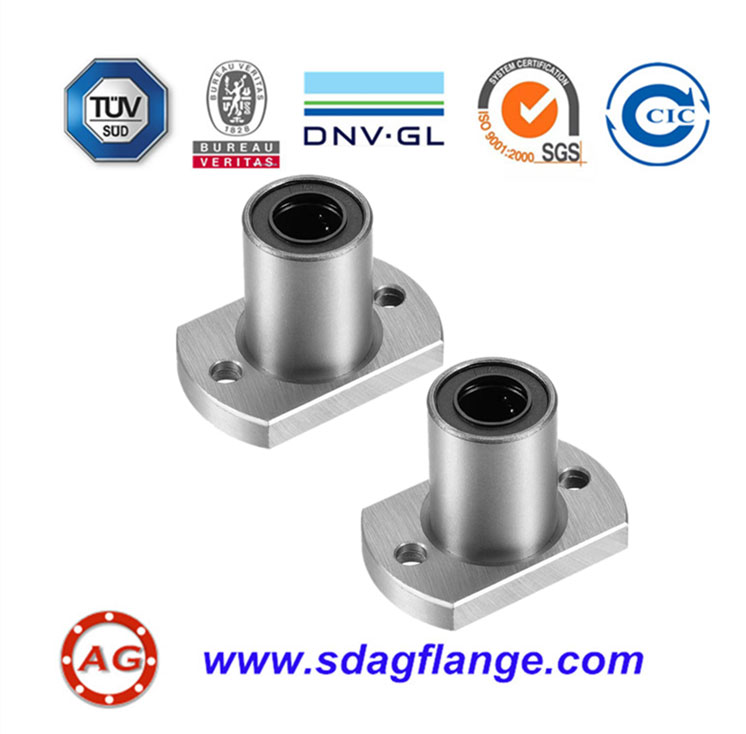
An oval flange is a specialized mechanical connection component designed for applications where a conventional circular flange does not provide the most practical configuration. Its distinctive geometry can support specific valve, equipment, piping, and installation requirements while maintaining a secure bolted connection.
For engineers, purchasing teams, maintenance professionals, and industrial equipment manufacturers, understanding the structure, materials, standards, applications, and selection considerations of an oval flange can help prevent compatibility problems and unnecessary replacement costs.
What Is an Oval Flange?
An oval flange is a specially shaped flange used to create a mechanical connection between pipes, valves, equipment components, or other parts of an industrial system. Unlike a conventional round flange, its outer profile follows an oval or elliptical geometry that is selected for a particular equipment or connection requirement.
The basic purpose remains familiar: two mating components are brought together and secured with bolts, while a gasket or appropriate sealing arrangement can help prevent leakage. The important difference is that the flange shape and dimensional arrangement are adapted to a particular application rather than following the most common circular configuration.
According to the product information published by Aiguo Forging, oval flanges are classified as special-shaped flanges and are mainly used with valves and other special equipment components. The company also lists applications across petroleum, chemical processing, water treatment, shipping, paper manufacturing, power plants, heating, and light industry.
What Does the Oval Geometry Achieve?
The geometry of a flange directly influences how components fit together, how bolts can be arranged, and how much installation space is required. An oval configuration can be useful when equipment design or connection space makes a standard circular flange inconvenient.
1. Accommodation of Special Equipment
Certain valves and equipment components have connection surfaces that do not follow the same dimensional pattern as ordinary pipe flanges. A purpose-designed oval flange can provide a more suitable interface without forcing the surrounding system to be redesigned.
2. Better Integration With Existing Components
Industrial replacement projects frequently involve equipment that has been operating for years. Replacing a complete assembly may be expensive or impractical. A correctly specified oval flange can help integrate a replacement component into an existing installation when its dimensions and connection details are properly matched.
3. Space-Conscious Installation
Industrial plants often contain dense networks of pipes, valves, supports, pumps, and equipment. The available space around a connection can be limited. A special flange geometry may provide engineers with additional flexibility when designing or maintaining such systems.
4. Purpose-Built Connection Design
The value of an oval flange is not the oval shape itself. Its value comes from using a geometry that matches the actual engineering requirement. This distinction is important when comparing standard and customized flange solutions.
What Materials Are Used for Oval Flanges?
Material selection should be based on pressure, temperature, fluid characteristics, corrosion exposure, mechanical loads, installation conditions, and the applicable project specification. A flange that works well in a dry indoor environment may not be the right choice for a corrosive chemical or marine environment.
| Material or Finish | Typical Benefit | Important Consideration |
|---|---|---|
| Carbon Steel | Good mechanical strength and broad industrial use | Corrosion protection may be required depending on the environment |
| Zinc-Plated Carbon Steel | Additional surface protection for suitable environments | Finish requirements and service conditions should be confirmed |
| Stainless Steel | Strong corrosion resistance for demanding environments | Grade selection should match the media and temperature |
| Alloy Steel | Can provide specialized mechanical or temperature performance | Must be selected according to engineering requirements |
Aiguo Forging's published oval flange range includes carbon steel products as well as an Oval ZINC Plated Flange. Its product information also indicates the ability to produce steel flanges according to several international standards and customer requirements.
For procurement teams, the safest approach is to provide the manufacturer with the complete service conditions rather than specifying only the word “steel.” Material grade, dimensions, pressure class, surface treatment, and testing requirements can all affect the final product.
What Standards Can Apply to an Oval Flange?
Flange standards establish dimensional and technical requirements that help different components work together correctly. However, a special-shaped flange may require more detailed engineering confirmation than a standard catalog flange.
Aiguo Forging states that it can produce steel flanges according to GB, ANSI, ASME, DIN, BS EN, GOST, JIS, and SANS standards, in addition to customized requirements. This range can be useful for international projects where equipment and piping systems originate from different markets.
One common purchasing mistake is assuming that two products with the same nominal size will automatically fit. Nominal dimensions alone are not enough. The complete connection specification should be checked before an order is released.
What Applications Use Oval Flanges?
Oval flanges are particularly relevant to industrial systems containing specialized valves, equipment interfaces, and connections where a conventional round flange does not provide the required configuration.
Petroleum and Chemical Processing
Processing facilities contain extensive piping networks and equipment connections. Materials, pressure ratings, corrosion resistance, and sealing requirements must be carefully considered because the consequences of leakage can be significant.
Water Treatment
Water treatment installations use valves, pumps, tanks, piping, and filtration equipment. Maintenance teams may need replacement components that match existing connection arrangements without rebuilding the surrounding system.
Power Plants
Power-generation facilities rely on large numbers of mechanical connections. Temperature, pressure, vibration, accessibility, and long-term reliability can all influence flange selection.
Shipping and Marine Equipment
Marine environments can expose metal components to moisture and corrosive conditions. Appropriate material selection and surface protection become especially important when the flange is installed in an exposed environment.
Paper, Heating, and Light Industry
Specialized piping and equipment connections can also be found in paper manufacturing, heating systems, and other industrial production environments. The correct flange configuration can simplify equipment integration and maintenance.
- Petroleum processing equipment
- Chemical processing systems
- Water treatment equipment
- Marine and shipping equipment
- Paper manufacturing systems
- Power generation facilities
- Heating installations
- General industrial equipment
What Should Buyers Check Before Ordering?
Selecting a special flange requires more than requesting a product by name. The following checklist can significantly reduce the risk of receiving a component that cannot be installed as expected.
- Connection dimensions: Confirm the outside dimensions, bore, thickness, bolt-hole dimensions, and center distances.
- Pressure class: Verify the required pressure rating under the actual operating temperature.
- Material grade: Specify the required material and confirm its suitability for the working medium.
- Facing and sealing: Confirm the flange face and gasket arrangement required by the mating equipment.
- Applicable standard: Identify whether the project follows DIN, ANSI/ASME, JIS, GB, GOST, BS EN, SANS, or another specification.
- Surface treatment: Determine whether the application requires zinc plating, painting, coating, or another protective finish.
- Drawing requirements: For non-standard products, provide an accurate technical drawing whenever possible.
- Quantity and delivery: Confirm production quantity, packaging, inspection, lead time, and shipping requirements in advance.
What Manufacturing Factors Affect Reliability?
A flange may look simple, but its reliability depends on material quality, dimensional accuracy, forming or forging processes, machining, surface condition, inspection, and final verification.
Material Control
Consistent raw material quality is an important starting point. Material should be selected according to the specified grade and application rather than based only on appearance or price.
Dimensional Accuracy
Bolt holes, bore dimensions, thickness, and mating surfaces need to remain within the agreed tolerances. Even a small dimensional mismatch can make installation difficult or cause alignment problems.
Machining and Surface Quality
Proper machining contributes to accurate assembly and reliable sealing. Surface condition should be appropriate for the selected gasket and mating component.
Inspection
Depending on project requirements, inspection may include dimensional checks, material verification, visual examination, mechanical testing, or other specified procedures. The exact inspection plan should be agreed before production.
Aiguo Forging describes full-process quality control for its PN16 carbon steel oval flange products and positions customized flange manufacturing as part of its product offering. Its website also identifies the company as having been established in 1992 and exporting flanges since 2011.
What Are the Main Oval Flange Options?
Different projects may require different oval flange configurations. Aiguo Forging's published product range provides several examples of how the same general flange geometry can be adapted to different requirements.
| Oval Flange Type | Key Characteristic | Potential Project Need |
|---|---|---|
| Oval ZINC Plated Flange | Carbon steel with zinc-plated surface | Applications requiring additional surface protection |
| Carbon Steel Oval Flange Pipe | Carbon steel construction | General industrial connection requirements |
| DIN Oval Flange | Designed around DIN requirements | Projects using compatible DIN-based specifications |
| PN16 Carbon Steel Oval Flange | Carbon steel with PN16 designation | Systems requiring the corresponding pressure class |
These categories should not be treated as interchangeable simply because they all contain the words “oval flange.” The actual dimensions, material, pressure rating, standard, facing, and equipment interface must be verified for each project.
What Helps Extend the Service Life of an Oval Flange?
Proper installation and maintenance are just as important as the original product specification. Even a high-quality flange can experience premature problems if it is incorrectly aligned, over-tightened, exposed to an unsuitable environment, or paired with an incompatible gasket.
Installation Checklist
- Clean the mating surfaces before assembly.
- Check that the flange faces are correctly aligned.
- Use the appropriate gasket for the operating conditions.
- Confirm that bolts and nuts meet the project requirements.
- Tighten fasteners using an appropriate sequence and method.
- Avoid forcing components into alignment with excessive bolt loading.
- Inspect for corrosion, deformation, or leakage during scheduled maintenance.
During maintenance, technicians should also check whether repeated thermal cycling, vibration, corrosion, or mechanical loading has affected the connection. If a flange is repeatedly leaking despite correct assembly, the underlying alignment, gasket, pressure, temperature, or component compatibility should be investigated rather than simply replacing the gasket again.
Frequently Asked Questions About Oval Flanges
What is an oval flange mainly used for?
An oval flange is mainly used for specialized connections involving valves, equipment, and piping systems where a conventional circular flange does not provide the required configuration. It is commonly associated with specialized industrial equipment connections.
Are oval flanges available in carbon steel?
Yes. Carbon steel is one of the materials used for oval flange products. Aiguo Forging lists several carbon steel oval flange products, including Carbon Steel Oval Flange Pipe and PN16 Carbon Steel Oval Flange.
What is a zinc-plated oval flange?
A zinc-plated oval flange is generally a carbon steel oval flange with a zinc surface treatment intended to provide additional protection against corrosion in suitable service environments. The exact finish and environmental suitability should be confirmed for the application.
Can an oval flange be customized?
Special-shaped flanges can be manufactured according to drawings and project requirements when the manufacturer has the necessary production and machining capabilities. Aiguo Forging states that it provides standard and customized flange solutions.
How should I specify an oval flange when requesting a quotation?
Provide the required standard, material, dimensions, pressure rating, facing, bolt-hole information, quantity, surface treatment, application, and technical drawing if available. Providing complete information helps the manufacturer confirm compatibility and prepare an accurate quotation.
Can an oval flange be used in high-pressure systems?
An oval flange can be designed for applications with specified pressure requirements, but suitability must be established from the actual design pressure, temperature, material, dimensions, applicable standard, and engineering requirements. A nominal size alone does not determine pressure capability.
What industries commonly use oval flanges?
Typical industries include petroleum, chemical processing, water treatment, shipping, paper manufacturing, power generation, heating, and light industrial applications.
Why is a technical drawing useful when ordering a special flange?
A technical drawing communicates dimensional details that may not be clear from a product name alone. For a special-shaped flange, a drawing can help confirm bolt-hole locations, overall geometry, bore size, thickness, facing, and other critical features before production.
What Makes the Right Oval Flange a Better Long-Term Investment?
The right oval flange is more than a metal connection component. It is a precisely specified interface between equipment and piping. When the geometry, material, pressure rating, standard, sealing arrangement, and manufacturing requirements are properly matched, the flange can contribute to safer operation, easier maintenance, better equipment compatibility, and fewer unexpected replacement problems.
For buyers, the most effective approach is to focus on the complete engineering requirement rather than choosing a flange based only on price or appearance. A detailed specification also makes it easier for a manufacturer to identify the correct product and provide a practical solution.
Aiguo Forging has supplied flange products for international markets and offers oval flange solutions covering carbon steel, zinc-plated, DIN, PN16, and customized configurations. Its published product information also indicates support for multiple international standards and custom requirements.
Need a Reliable Oval Flange for Your Project?
Whether you need a standard oval flange, carbon steel configuration, zinc-plated finish, DIN specification, PN16 product, or a customized flange based on your drawing, the right technical details can make the sourcing process much easier.
Share your drawings, dimensions, material requirements, pressure class, quantity, and application details with Aiguo Forging to discuss a suitable flange solution. For product specifications, pricing, customization, and project support, contact us today.