
What Makes Aluminum Profiles a Cost-Effective Choice for Structural Applications?
2026-09-15
1. What Is the Purchase Price Difference Between Aluminum Profiles and Steel?
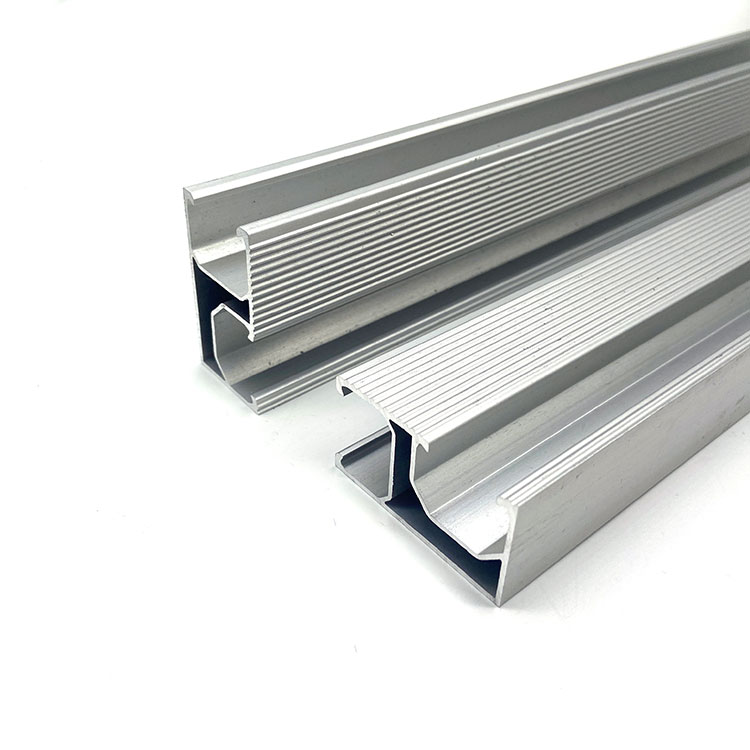
The raw material cost of an Aluminum Profiles is determined by the alloy, the temper, and the extrusion complexity. For a standard 6061-T6 profile, the price is approximately $3.50 to $4.50 per kilogram. For a comparable steel section, such as a rectangular hollow section in S355 grade, the price is approximately $0.80 to $1.20 per kilogram. However, because aluminum has a density of 2.70 g/cm³ compared to steel at 7.85 g/cm³, a structural member made from aluminum weighs about one-third as much as the same member made from steel. This means that the cost per meter of a structural member is often similar or only slightly higher for aluminum.
The table below compares the cost per meter for a typical structural member.
| Parameter | Aluminum profile (6061-T6, 100x50x5 mm) | Steel section (S355, 100x50x5 mm) |
| Density (g/cm³) | 2.70 | 7.85 |
| Mass per meter (kg/m) | 2.0 | 5.8 |
| Material cost per kg ($) | $4.00 | $1.00 |
| Material cost per meter ($) | $8.00 | $5.80 |
| Cost ratio (aluminum / steel) | 1.38x | 1.00x |
The material cost ratio is only 1.38x, not the 4x that the per-kilogram price suggests. When the fabrication and installation costs are considered, the gap narrows further or disappears entirely.
2. How Do Fabrication Costs Compare Between Aluminum and Steel?
Aluminum is significantly easier to machine than steel. It can be cut at three to five times the speed, and the tool life is longer. It can be drilled, tapped, and milled with standard carbide tooling. It does not require the heavy equipment needed to cut and weld steel. Welding aluminum requires a different process (TIG or MIG with alternating current) and a skilled welder, but many aluminum structures are assembled with mechanical fasteners rather than welding. This eliminates the need for welding altogether.
The table below compares the fabrication costs for a typical structural frame.
| Fabrication step | Aluminum profile | Steel section |
| Cutting speed (m/min) | 3,000 – 5,000 | 800 – 1,200 |
| Drilling time per hole (seconds) | 3 – 5 | 8 – 12 |
| Welding required? | Often no (mechanical fastening) | Yes (MIG or stick) |
| Surface preparation before painting | Minimal (anodized or mill finish) | Required (sandblasting, priming) |
| Fabrication labor cost per meter ($) | $6.00 – $10.00 | $12.00 – $18.00 |
In our factory, we have observed that the fabrication labor cost for an Aluminum Profiles frame is approximately 40 to 50 percent lower than for an equivalent steel frame. This is due to the faster cutting and drilling, the reduced need for welding, and the elimination of surface preparation before finishing.
3. What Are the Installation and Maintenance Cost Advantages?
The weight advantage of Aluminum Profiles translates directly into lower installation costs. A 6-meter aluminum beam that weighs 12 kilograms can be lifted and positioned by two workers. The equivalent steel beam weighs 35 kilograms and may require a crane or a lifting device. This reduces the labor cost and the equipment cost for installation. On a large project with hundreds of members, the savings can be substantial. In terms of maintenance, Aluminum Profiles do not rust. They form a protective oxide layer that prevents further corrosion. In indoor applications, no painting or coating is required. In outdoor applications, anodizing or powder coating provides a durable finish that lasts for decades. Steel, by contrast, requires painting or galvanizing, and these coatings must be maintained every 5 to 10 years.
The table below shows the maintenance cost over a 20-year period.
| Maintenance activity | Aluminum profile (anodized) | Steel section (painted) |
| Initial protection cost ($/m²) | $0 (integral anodized layer) | $8 – $12 (sandblast + primer + paint) |
| Repainting interval | Not required | Every 7 years |
| Repainting cost ($/m² per cycle) | $0 | $6 – $10 |
| 20-year maintenance cost ($/m²) | $0 | $18 – $30 |
For outdoor structures, the maintenance saving alone can offset the higher purchase price of the Aluminum Profiles within 10 to 12 years. For structures that are difficult to access, such as those on rooftops or in industrial ceilings, the saving is even greater because the cost of access is avoided.
4. How Does the Recycling Value of Aluminum Profiles Improve the Economic Case?
Aluminum is one of the most valuable recyclable materials. The scrap value of aluminum is approximately 40 to 60 percent of the original purchase price, compared to 10 to 20 percent for steel. At the end of a structure's life, the Aluminum Profiles can be sold for recycling, which recovers a significant portion of the initial investment. Steel also has a scrap value, but it is lower.
The table below compares the residual value of a structural frame after 20 years of service.
| End-of-life value | Aluminum profile | Steel section |
| Initial material cost per meter ($) | $8.00 | $5.80 |
| Scrap value per kg ($) | $1.60 – $2.40 | $0.20 – $0.40 |
| Mass per meter (kg/m) | 2.0 | 5.8 |
| Scrap value per meter ($) | $3.20 – $4.80 | $1.16 – $2.32 |
| Residual value as % of initial cost | 40 – 60% | 20 – 40% |
The higher residual value of aluminum reduces the net cost of ownership. When the residual value is subtracted from the initial cost, the effective material cost of the Aluminum Profiles is often lower than that of steel. In our factory, we work with customers to calculate the net cost of ownership for their specific projects, taking into account the expected service life and the end-of-life recovery value.
Frequently Asked Questions About Aluminum Profiles for Structural Applications
Summary for Structural Engineers and Procurement Managers
Aluminum Profiles are a cost-effective choice for structural applications when the total cost of ownership is considered rather than the purchase price alone. The lower fabrication cost, reduced installation labor, zero maintenance for anodized finishes, and high recycling value combine to offset the higher material price. For projects where weight is critical, where maintenance access is difficult, or where the service life is long, the economic case for aluminum is strong. Ningbo Gangtong Zheli Fasteners Co.,Ltd. has been supplying Aluminum Profiles for structural applications for over 15 years.
Ningbo Gangtong Zheli Fasteners Co.,Ltd. manufactures Aluminum Profiles in a range of alloys and tempers, including 6061-T6 and 6063-T5. We provide design assistance, fabrication services, and full material certifications.