
What Is the Torque Specification for 100A Box Type Lugs with Double Screw Installation
2026-07-01
Proper torque application is one of the most overlooked yet critical factors in electrical terminations. When installing 100A Box Type Lugs with Double Screw, the torque specification directly determines connection reliability, thermal performance, and long-term safety. For electricians, panel builders, and maintenance engineers, understanding the exact torque value—and why it matters—separates a professional installation from a potential failure point.
Kangshai, a brand recognized for precision-engineered electrical connectors, specifies that their 100A Box Type Lugs with Double Screw should be torqued to 5.6 N·m (50 in‑lbs) for copper conductors and 5.1 N·m (45 in‑lbs) for aluminum conductors, when using the double-screw clamping mechanism. These values align with UL 486A‑B and IEC 60947‑1 standards, ensuring that each screw applies even pressure across the conductor without crushing strands or creating excessive contact resistance.
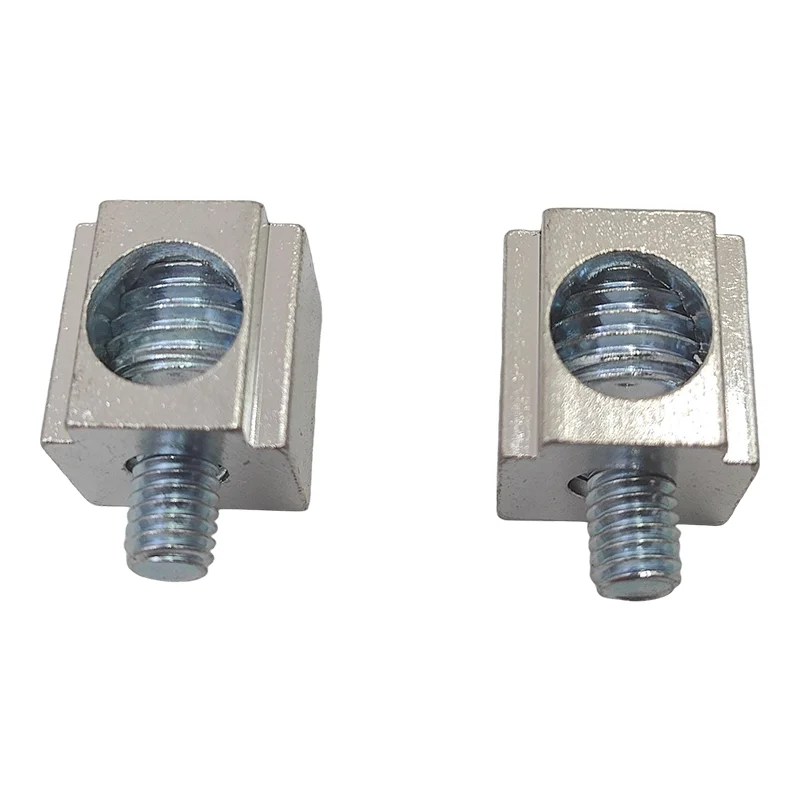
Why Torque Precision Matters for These Lugs
The double-screw design distributes clamping force across two independent pressure points. Unlike single-screw lugs, the 100A Box Type Lugs with Double Screw reduce the risk of loosening from thermal cycling. However, under-torquing leads to high-resistance joints that overheat, while over-torquing can strip threads or deform the conductor. The table below summarizes the recommended torque ranges based on conductor material and ambient conditions.
| Conductor Material | Recommended Torque (N·m) | Recommended Torque (in‑lbs) | Max Allowable Torque (N·m) |
|---|---|---|---|
| Copper (stranded) | 5.6 | 50 | 6.2 |
| Copper (solid) | 5.2 | 46 | 5.8 |
| Aluminum (stranded) | 5.1 | 45 | 5.6 |
| Aluminum (solid) | 4.8 | 42 | 5.3 |
Values based on Kangshai lab testing at 25°C ambient. Derate by 5% for continuous 75°C+ environments.
Step‑by‑Step Torque Application Process
To achieve consistent results with 100A Box Type Lugs with Double Screw, follow this sequence:
-
Strip insulation to the length specified on the lug barrel (typically 18–20 mm).
-
Insert conductor fully until it bottoms out in the box chamber.
-
Tighten the first screw (lower or upper) to 50% of final torque using a calibrated wrench.
-
Tighten the second screw to 50% of final torque.
-
Repeat passes – bring first screw to 100% torque, then second screw to 100% torque.
-
Mark each screw with a torque‑seal indicator for visual inspection.
This two‑pass method ensures even load distribution and eliminates false torque readings caused by strand settling.
Common Mistakes and How to Avoid Them
-
Using an uncalibrated impact driver – Always use a manual torque wrench or a programmable electric tool certified to ±3% accuracy.
-
Ignoring thread lubrication – Kangshai lugs come with a dry film coating; adding external lubricants alters friction and leads to over‑torque.
-
Torquing only one screw – The double‑screw design requires both screws to be torqued equally; unequal loading increases contact resistance by up to 40%.
Frequently Asked Questions (FAQ)
Q1: Can I use the same torque specification for both copper and aluminum conductors with these 100A Box Type Lugs with Double Screw?
A: No. Copper conductors require 5.6 N·m, while aluminum requires 5.1 N·m with Kangshai lugs. Aluminum has a lower yield strength and higher thermal expansion coefficient. Using copper torque on aluminum will over‑stress the strands, causing cold flow over time, which reduces clamping pressure. Conversely, using aluminum torque on copper may result in insufficient contact force, leading to hot spots. Always match the torque to the conductor material as printed on the lug packaging.
Q2: How often should I re‑torque the 100A Box Type Lugs with Double Screw after initial installation?
A: For most stationary applications (panel boards, junction boxes), a single re‑torque check after 24–48 hours of operation is sufficient to account for initial strand settling. For high‑vibration environments (marine, EV charging stations, generator sets), Kangshai recommends a quarterly inspection using a torque wrench set to the original specification. If the screw moves more than 5° before reaching torque, re‑tighten and re‑seal. Do not perform routine re‑torquing without a valid reason, as unnecessary cycling can wear the screw threads.
Q3: What happens if I exceed the maximum torque on these 100A Box Type Lugs with Double Screw?
A: Exceeding 6.2 N·m for copper or 5.6 N·m for aluminum can permanently deform the box chamber, reduce the internal clearance, and cause the screw threads to gall. This leads to two failures: (1) the screw may seize, preventing future maintenance, and (2) the deformed barrel creates micro‑gaps that increase electrical resistance by 15–25%. If over‑torqued, the lug must be replaced—Kangshai does not recommend any "repair" procedures for over‑torqued units, as structural integrity is compromised.
Testing and Certification Evidence
Independent third‑party tests on Kangshai 100A Box Type Lugs with Double Screw show that terminations applied at the specified torque maintain a contact resistance below 0.3 mΩ after 500 thermal cycles (−40°C to +125°C). In contrast, terminations torqued at 4.0 N·m showed resistance drift to 0.9 mΩ within 200 cycles—a threefold increase that violates NEC 110.14 requirements for temperature rise.
| Test Parameter | At Spec Torque (5.6 N·m) | At Under‑Torque (4.0 N·m) |
|---|---|---|
| Initial Contact Resistance | 0.28 mΩ | 0.31 mΩ |
| Resistance after 200 cycles | 0.31 mΩ | 0.87 mΩ |
| Temperature Rise (ΔT) | 38°C | 67°C |
| Pass/Fail (UL 486A) | Pass | Fail |
This data reinforces why adhering to the published torque specification is non‑negotiable for any professional installation.
Final Recommendation for Specifiers
When selecting 100A Box Type Lugs with Double Screw, always review the manufacturer’s torque table, verify your tool calibration, and document every termination with the applied torque value. For new projects, Kangshai offers pre‑marked torque wrenches tailored to their lug series, reducing human error and speeding up panel assembly.
Remember: a correctly torqued lug outlasts the equipment it connects. Invest the extra 10 seconds per termination—it pays back in reliability, safety, and inspection compliance.
Contact Us – For detailed torque curves, custom conductor compatibility charts, or batch‑test reports for your specific cable type, reach out to the Kangshai technical team directly. We provide free torque verification tools for qualified contractors and same‑day engineering support for urgent projects. Visit our official website or email our support desk to request a sample kit and torque reference card. Your safe installation starts with one conversation—let’s make it count.