
What is the Proper Installation Procedure for High-Strength Bolts in Structural Steelwork
2026-01-04
The integrity of any steel structure hinges on the reliability of its connections. At Liweiyuan, we understand that using High-Strength Bolts For Steel Structures is only half the equation; a correct, controlled installation is what truly unlocks their performance. This procedure is a systematic sequence designed to ensure consistent clamping force and joint safety.
The Critical Installation Sequence
A proper installation is a multi-step, quality-driven process. Skipping or short-cutting any step can compromise the entire connection.
-
Joint Preparation: All contact surfaces within the joint, known as the faying surfaces, must be clean and free of paint, oil, rust, or scale. Surfaces should be of the specified type (e.g., untreated, galvanized, or coated with an approved slip-resistant coating).
-
Assembly & Alignment: Assemble the connected members using temporary bolts or pins. Ensure holes align properly; reaming of misaligned holes should be done according to specification, never by forcing the bolt.
-
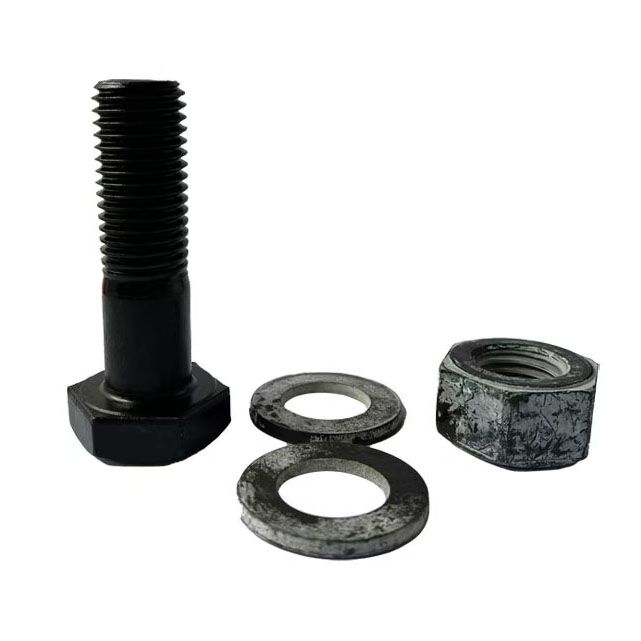
Bolt Insertion: Insert the High-Strength Bolts For Steel Structures—complete with nut and washers (where required)—into the clean, dry holes. The bolt’s grade marking should be visible.
-
Initial Snug-Tightening: Run the nuts down by hand and then use an impact wrench or spud wrench to bring all plies of the material into firm contact. This "snug-tight" condition is the baseline.
-
Final Tightening: This is the most critical phase. Apply the final preload (tension) using a calibrated, controlled method. The two primary methods are:
-
Turn-of-Nut Method: After snug-tight, rotate the nut a specified additional fraction of a turn (e.g., 1/2 or 2/3 turn).
-
Direct Tension Indicating (DTI) Method: Use load-indicating devices like twist-off-type tension control bolts or special washers that visually confirm the required tension has been reached.
-
Comparison of Final Tightening Methods
| Method | How It Works | Key Advantage | Typical Standard |
|---|---|---|---|
| Turn-of-Nut | Specific rotation after snug-tight. | No specialized gauge needed; relies on mechanics. | AISC, ASTM |
| DTI (Twist-Off Bolts) | Bolt spline shears off at correct torque. | Visual, unambiguous verification. | Common in critical joints. |
| Calibrated Wrench | Uses a wrench calibrated to deliver specific torque. | Good for accessibility; requires tool calibration. | Widely used. |
High-Strength Bolts For Steel Structures FAQ
Q: Can lubricants be used on high-strength bolts during installation?
A: Only if explicitly specified by the bolt manufacturer or engineer. Improper lubrication drastically alters the torque-tension relationship, often leading to under-tightening or, more dangerously, bolt failure from over-torque.
Q: Is it acceptable to re-use high-strength bolts?
A: Generally, no. High-Strength Bolts For Steel Structures are designed for single use. The controlled tightening process can alter their mechanical properties and thread engagement. Re-use is prohibited in most structural codes unless specifically approved after rigorous inspection.
Q: How is the installed tension in a bolt actually verified?
A: Verification is key. For the turn-of-nut method, inspectors check the paint markings applied before tightening. For DTI methods, they inspect for the sheared spline or the gap in a load-indicator washer. Supervisors may also use a calibrated torque wrench for a sample check, applying a slight additional rotation.
Mastering this procedure is non-negotiable for structural safety. At Liweiyuan, we provide not only premium, certified High-Strength Bolts For Steel Structures but also the technical guidance to ensure they are installed to perfection. For project specifications, technical data sheets, or expert consultation on your next structural project, contact us today.