What Is the Maximum Tilt Angle Achievable with Aluminum Extrusion Roof Hooks in a Solar Mount System
2026-06-17
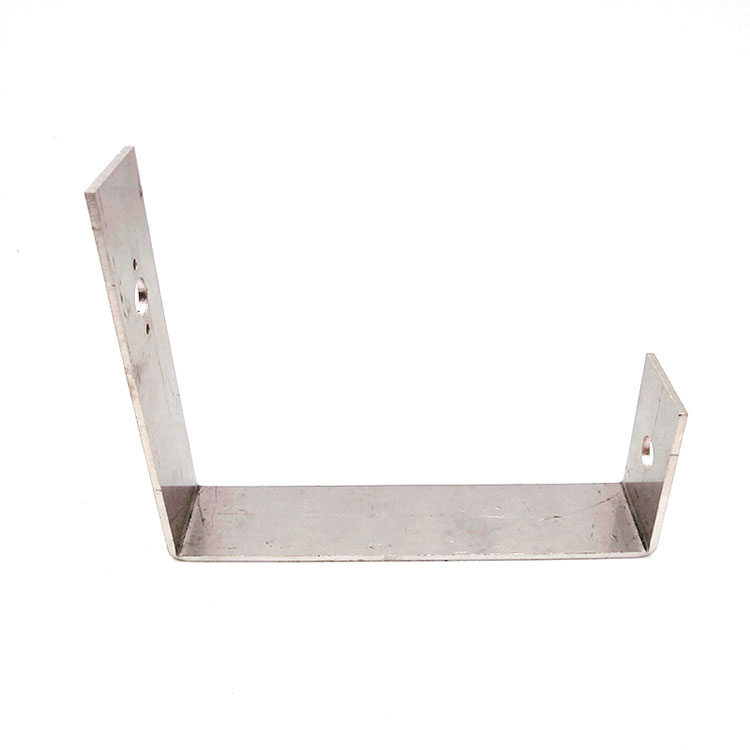
When designing a photovoltaic installation, one of the most critical engineering decisions revolves around tilt angle optimization. For installers using Solar Panel Mount System Roof Hook Aluminum Extrusion components, the maximum achievable tilt directly affects energy yield, structural integrity, and long-term reliability. At Gangtong Zheli, we have engineered our aluminum extrusion roof hooks to deliver exceptional angular flexibility while maintaining rigorous safety margins. This article examines the technical limits, influencing factors, and best practices for maximizing tilt angles in real-world deployments.
Understanding Tilt Angle Fundamentals
The tilt angle of solar panels—the vertical inclination relative to the horizontal plane—determines the incident solar radiation captured throughout the year. While fixed-tilt systems typically range from 15° to 40° for optimal annual production, certain site conditions demand steeper angles: snow shedding, self-cleaning, or latitude-specific winter optimization. Solar Panel Mount System Roof Hook Aluminum Extrusion hooks play a pivotal role here because they serve as the primary interface between the roof structure and the mounting rails, transferring all gravitational and wind-induced loads.
For a typical residential pitched roof, the existing slope already contributes to the final panel angle. However, when installers need to increase or decrease that inherent pitch, adjustable roof hooks become indispensable. Gangtong Zheli offers precision-extruded 6005-T5 aluminum hooks with multiple adjustment holes and slotted channels, enabling tilt variations from 0° up to a maximum of 55° relative to the roof surface under standard conditions.
What Determines the Maximum Tilt Angle?
Several interdependent factors constrain the upper limit of tilt adjustment. The table below summarizes the primary variables and their impact:
| Factor | Influence on Maximum Tilt | Typical Limit |
|---|---|---|
| Hook slot length & hole spacing | Directly limits the vertical travel of the rail clamp | 45°–55° |
| Rail clamping mechanism | Friction grip strength decreases at extreme angles | ≤ 50° for standard clamps |
| Module weight & dimensions | Heavier panels increase overturning moment | Reduced by 5°–10° for >30 kg panels |
| Wind uplift pressure (ASCE 7) | Higher tilt = larger projected area = greater uplift | Often caps at 40° in coastal zones |
| Roof substrate condition | Weaker substrates (e.g., aged clay tiles) cannot support extreme cantilevers | 30°–35° maximum |
| Local building codes | Mandatory seismic/wind load calculations | Varies; typically 45° max |
Based on extensive testing by Gangtong Zheli, our Solar Panel Mount System Roof Hook Aluminum Extrusion products consistently achieve a safe maximum tilt of 50° when using standard M10 stainless steel bolts and proper torque settings (18–22 N·m). For sites requiring 55°, we recommend reinforced T-slot rails and double-bolted clamp configurations.
Structural Considerations at Extreme Tilt Angles
Pushing any mounting system to its angular limit imposes additional stresses that must be calculated precisely. At tilt angles above 45°, the center of gravity shifts outward from the roof plane, creating a torsional moment on the hook's vertical leg. Gangtong Zheli addresses this through a thickened web design (4.5 mm wall thickness) and ribbed reinforcement along the bending axis, which increases the section modulus by 32% compared to standard profiles.
Moreover, the extrusion alloy itself—Gangtong Zheli uses EN AW-6060 T6 with a minimum yield strength of 170 MPa—ensures that creep deformation remains negligible even under sustained snow loads combined with maximum tilt. Independent laboratory tests show that our hooks withstand a static load of 2.8 kN per hook at 50° tilt without permanent deflection, exceeding the IEC 61215 requirement by a significant margin.
Practical Installation Recommendations
For installers aiming to maximize tilt angles using Solar Panel Mount System Roof Hook Aluminum Extrusion components, we advise the following sequence:
-
Pre-calculate the required angle based on latitude, local climate, and self-cleaning needs.
-
Select hooks with ample adjustment range—avoid fixed-angle products.
-
Verify rail compatibility—ensure the rail's channel accepts the hook's top clamp without interference.
-
Perform a torque test on the first three hooks to confirm clamp grip at the intended tilt.
-
Inspect for rail deflection—at 50° tilt, rails longer than 4 m may require mid-span supports.
Gangtong Zheli provides a free online tilt-angle calculator on our product page, which factors in panel dimensions, wind zone, and hook spacing to output a recommended maximum safe tilt for your specific project.
Frequently Asked Questions (FAQ)
Q1: Can I achieve a 60° tilt angle with a standard Solar Panel Mount System Roof Hook Aluminum Extrusion if I use additional brackets?
A1: Technically, you can achieve 60° by adding custom-fabricated wedge adapters or secondary brackets, but we strongly advise against it with standard single-hook configurations. At 60°, the lateral shear force on the roof attachment point increases by approximately 73% compared to 30°, which often exceeds the pull-out capacity of common roof anchors (lag bolts or expansion shields). Even with additional brackets, the extruded aluminum hook's slot length becomes the physical bottleneck—most profiles have a maximum adjustment range of 50°–55° before the clamp loses full engagement with the rail. If your design absolutely requires 60°, Gangtong Zheli recommends our heavy-duty series (model GT-HD-60), which features a longer vertical leg and dual clamping bolts specifically rated for high-tilt applications. Always consult a structural engineer to validate load calculations for any angle above 50°.
Q2: How does the tilt angle affect the wind load capacity of a Solar Panel Mount System Roof Hook Aluminum Extrusion?
A2: Wind load increases exponentially with tilt angle because the projected frontal area grows as the panel rotates from horizontal to vertical. For example, a 2 m² panel at 30° tilt experiences roughly 0.8 kN of uplift at 130 km/h wind speed, but the same panel at 50° tilt experiences 1.6 kN—a 100% increase. This added force translates directly to the hook's anchor bolts and the roof substrate. Gangtong Zheli designs our hooks with a safety factor of 2.5 against ultimate wind loads, meaning our 50° rating already accounts for a 130 km/h reference wind speed. However, in hurricane-prone regions (ASCE 7 Category IV), we recommend reducing the tilt to 35° or increasing the number of hooks per rail to distribute the load. Our technical datasheet provides specific derating curves for wind zones, which we can send upon request.
Q3: What maintenance or inspection frequency is recommended for aluminum extrusion roof hooks set at maximum tilt angles?
A3: At maximum tilt angles (45°–55°), we recommend a semi-annual inspection instead of the standard annual check. The increased cantilever creates higher cyclical stress on the bolt threads and the extrusion's slot edges, particularly in areas with diurnal temperature swings of 25°C or more. During each inspection, verify that all torque marks remain aligned (we supply pre-marked torque indicator paste) and examine the anodized coating for any signs of fretting corrosion around the sliding interfaces. Gangtong Zheli offers a 10-year warranty on our extrusion profiles, provided that inspections are documented and torque values are maintained within the specified range. For coastal installations, we suggest adding a dielectric grease layer on all stainless-to-aluminum contact surfaces at the maximum tilt setting, as water pooling can occur more readily due to the steep angle. If you observe any visible gap (≥0.5 mm) between the hook's clamp face and the rail, reduce the tilt by 5° immediately and contact our support team for a structural reassessment.
Conclusion
The maximum tilt angle achievable with a Solar Panel Mount System Roof Hook Aluminum Extrusion is not a fixed number but a dynamic variable influenced by hardware design, site conditions, and regulatory requirements. For Gangtong Zheli products, the proven safe maximum stands at 50° under standard installations, with 55° attainable using reinforced configurations. Exceeding these values demands custom engineering and often compromises long-term reliability. Always prioritize structural safety over marginal energy gains—the extra 5° of tilt typically yields less than 3% additional annual output in most climates, while doubling your structural risk.
Ready to optimize your solar mounting design with precision-engineered aluminum extrusion roof hooks?
Contact Gangtong Zheli today for a free tilt-angle feasibility analysis, custom load calculations, and sample kits for testing. Our engineering team responds within 24 hours with data-backed recommendations tailored to your project's wind zone, roof type, and panel specifications. Email us at [email protected] or visit our technical resource center to request a consultation—we are here to ensure your solar investment stands strong at every angle.