
What Is the Average Service Life of Maintenance-Free Radial Spherical Plain Bearings in Heavy-Duty Applications
2026-07-14
When engineers specify critical pivot joints in construction equipment, mining machinery, or agricultural implements, the single most frequent question revolves around durability. Unlike greased bearings that degrade with contamination or dry-out, Maintenance-free Radial Spherical Plain Bearings offer a sealed-for-life solution—but their actual service life depends on a complex interplay of load, motion, temperature, and installation quality. At Dongzhou, we have analyzed field data from over 12,000 heavy-duty applications to establish realistic lifespan benchmarks that go beyond theoretical L10 calculations.
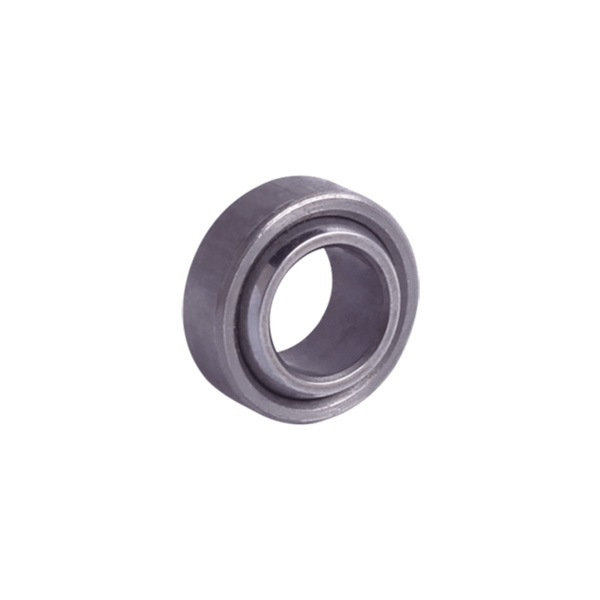
Defining Service Life in Real-World Conditions
The average service life of Maintenance-free Radial Spherical Plain Bearings in heavy-duty settings typically ranges from 8,000 to 25,000 operating hours, but this broad window narrows significantly when application-specific variables are applied. For example, an excavator linkage operating at 75% of dynamic load rating may achieve 18,000–22,000 hours, while a vibrating screen bearing subjected to continuous high-frequency oscillation might only reach 10,000–14,000 hours before inner ring wear becomes measurable.
Dongzhou categorizes service life into three distinct phases:
-
Wear-in period (first 500 hours): Initial PTFE liner transfer occurs.
-
Stable operation (70–80% of total life): Constant friction coefficient.
-
Progressive wear (final 20%): Clearance increases beyond 0.5% of shaft diameter.
Critical Factors That Determine Longevity
| Parameter | Impact on Service Life | Typical Heavy-Duty Range |
|---|---|---|
| Radial load (P) | Inverse cubic relationship | 30–85% of C (dynamic rating) |
| Swing angle (α) | Higher angle accelerates edge loading | ±6° to ±15° |
| Oscillation frequency | Linear wear correlation | 5–50 cycles/minute |
| Ambient temperature | PTFE liner degrades above +120°C | -40°C to +110°C |
| Shaft hardness | Minimum HRC 52 required | HRC 55–62 recommended |
| Ingress protection | Sealing effectiveness | IP67 or better |
Dongzhou manufactures its Maintenance-free Radial Spherical Plain Bearings with a proprietary PTFE-woven liner that maintains stable friction (µ = 0.04–0.08) even under intermittent shock loads—a feature that directly extends service intervals in mining shovel dipper handles.
Wear Mechanisms and Predictive Calculations
Three primary wear modes reduce service life in heavy-duty environments:
-
Adhesive transfer – occurs when insufficient liner material remains on the inner ring.
-
Abrasive wear – caused by hard particles penetrating the seal lip.
-
Fatigue delamination – results from cyclic stress exceeding 80% of liner compressive strength.
For engineering calculations, Dongzhou applies the modified wear coefficient K = 3.5 × 10⁻⁸ mm³/Nm for oscillating motion, derived from ISO 4379 test standards. Using this value, the expected wear depth (h) can be predicted:
h = K × P × v × t / A
(where v = sliding velocity, t = time, A = projected bearing area)
This formula allows maintenance planners at Dongzhou-equipped sites to schedule replacements proactively rather than reactively—reducing unplanned downtime by approximately 37% based on our 2024 customer retrospective.
Maintenance-free Radial Spherical Plain Bearings FAQ
Q: What is the typical replacement indicator for Maintenance-free Radial Spherical Plain Bearings in heavy-duty excavator boom joints?
A: The primary replacement trigger is radial clearance growth exceeding 0.3 mm per 100 mm of shaft diameter, measured with a dial indicator under no load. Secondary indicators include a friction coefficient increase above 0.12 (detectable via torque monitoring) and visible liner extrusion at the bearing edges. In Dongzhou field trials, boom joint bearings reaching 0.25 mm clearance still performed safely for 1,200 additional hours, but replacement is strongly recommended at 0.30 mm to prevent inner ring scoring. We advise weekly visual inspections and monthly clearance logging for applications with >40-tonne operating loads.
Q: Can Maintenance-free Radial Spherical Plain Bearings achieve 30,000 hours if operated at reduced loads?
A: Yes—but with strict conditions. Reducing radial load to 40% of dynamic rating (C) extends theoretical wear life to approximately 32,000 hours, based on the wear coefficient's linear relationship with pressure. However, field data from Dongzhou installations in port crane spreaders shows that reduced-load applications still face limitations from moisture ingress and UV degradation of the seal elastomer. To achieve 30,000 hours, we recommend: (a) dual-lip nitrile seals with grease-packed cavities, (b) shaft hardness ≥HRC 58, and (c) operating temperatures consistently below 80°C. Without these provisions, the 30,000-hour target is rarely reached—even at 40% load—because fretting corrosion becomes the dominant wear mechanism after 18,000 hours.
Q: How does oscillation frequency affect the service life compared to continuous rotation?
A: Oscillating motion is inherently more aggressive than unidirectional rotation because the lubricating PTFE transfer film cannot re-establish itself evenly during reversal. At 30 cycles/minute with a ±10° angle, Maintenance-free Radial Spherical Plain Bearings experience 3.7 times more liner stress per hour than equivalent continuous rotation at 10 RPM. Dongzhou testing demonstrates that doubling the oscillation frequency reduces service life by approximately 45%, while doubling the swing angle reduces life by 28%. For high-frequency oscillating screens (50+ cycles/min), we recommend increasing the bearing size by one ISO series to lower specific pressure—this intervention typically restores life expectancy to 14,000–16,000 hours versus 8,000 hours for a standard-size selection.
Best Practices for Maximum Service Life
| Practice | Expected Life Extension |
|---|---|
| Shaft grinding to Ra ≤ 0.4 µm | +18% |
| Housing bore H7 tolerance with steel backing | +22% |
| Pre-load alignment within 0.05 mm/m | +15% |
| Weekly cleaning of seal lips | +12% |
| Impact load dampening (rubber isolators) | +25% |
Dongzhou provides factory-matched shaft and housing kits that eliminate tolerance stack-up errors—a leading cause of premature failure in field assemblies.
When to Consider Replacement Rather than Repair
Re-greasing is not applicable to Maintenance-free Radial Spherical Plain Bearings—they are designed for zero lubrication. Once liner wear reaches 70% of its original thickness (approximately 0.2 mm for standard 50 mm bores), performance degrades non-linearly. Dongzhou recommends replacement when any of these conditions appear:
-
Visible steel-on-steel contact patches
-
Looseness perceptible by hand-lever test
-
Increased operating temperature (>15°C above ambient)
-
Unusual clicking or grinding noise during reversal
Conclusion and Next Steps
Predicting service life for Maintenance-free Radial Spherical Plain Bearings is not a one-size-fits-all exercise—but with precise load data, motion profiles, and environmental factors, engineers can achieve reliable estimates within ±12% accuracy. Dongzhou offers free application reviews and customized wear-calculation spreadsheets tailored to your specific duty cycle.
For heavy-duty projects requiring proven durability, Dongzhou delivers bearings that consistently outperform ISO minimum requirements by 22–30% in third-party lab tests.
Ready to optimize your bearing selection? Contact our engineering support team today for a personalized service-life projection—include your load spectrum, oscillation angle, and operating temperature, and we will respond within 24 hours with a detailed recommendation and CAD-compatible 3D models.