
What Is Precision NC Machining and Its Role in Modern Manufacturing?
2026-07-06
In today's highly competitive manufacturing industry, demand for ultra-precise components continues to grow across aerospace, medical devices, automotive, robotics, and electronics. Among the most critical technologies enabling this level of accuracy is Precision NC Machining. It refers to the use of numerically controlled (NC) machines to produce parts with extremely tight tolerances, high repeatability, and exceptional surface finishes. By combining advanced programming with automated machining systems, manufacturers can achieve consistency that traditional manual machining cannot match. Companies like Shenzhen Sanluo Precision Technology Co., Ltd. are actively applying these technologies to deliver high-quality precision components for global industries.
Understanding Precision NC Machining
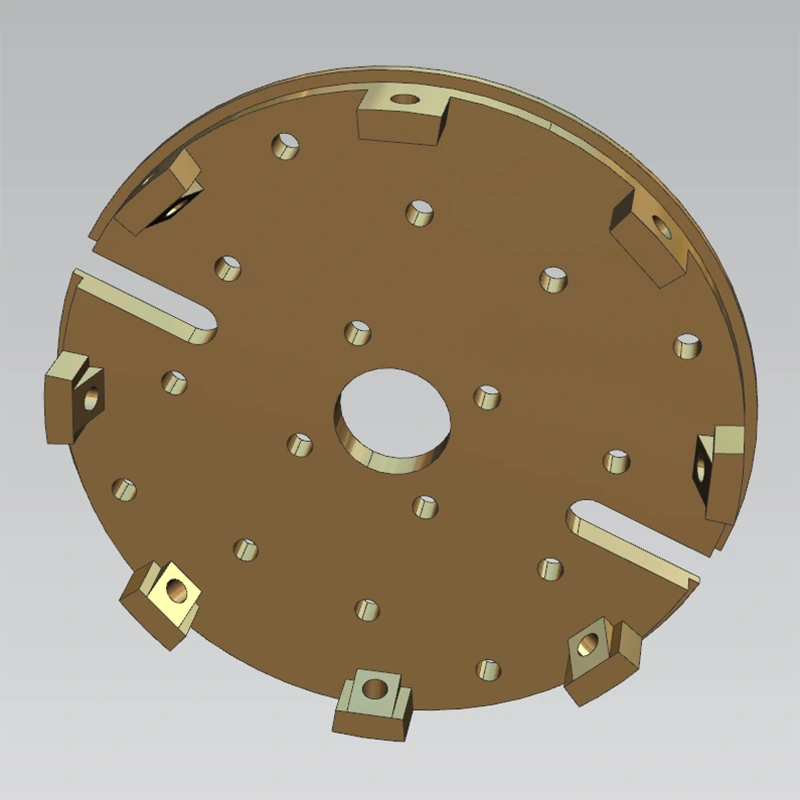
Precision NC Machining is a manufacturing process where computer-controlled tools remove material from a workpiece to achieve a desired shape and specification. The process is guided by digital instructions (G-code), ensuring every cut, drill, or mill is executed with microscopic accuracy.
This technology is widely used for:
- High-tolerance mechanical parts
- Complex geometrical structures
- Prototypes and mass production components
- Metal, plastic, and composite materials
The core advantage lies in its ability to reduce human error while maintaining repeatability at scale.
Why Precision NC Machining Matters
The importance of Precision NC Machining can be summarized in three key aspects:
1. Extreme Accuracy
Tolerances can reach micrometer levels, ensuring parts fit perfectly in complex assemblies.
2. High Efficiency
Once programmed, machines can operate continuously with minimal supervision.
3. Consistency in Mass Production
Every unit produced is nearly identical, which is critical for industries like aerospace and automotive.
Key Applications Across Industries
Precision NC Machining plays a crucial role in many high-tech industries:
- Aerospace: turbine blades, structural components
- Medical: surgical instruments, implants
- Automotive: engine parts, transmission systems
- Electronics: connectors, heat sinks, housings
- Industrial equipment: gears, valves, precision housings
Its versatility makes it a backbone of modern industrial manufacturing.
Precision NC Machining vs Traditional Machining
| Feature | Precision NC Machining | Traditional Machining |
|---|---|---|
| Accuracy | Extremely high (micron level) | Moderate |
| Automation | Fully automated | Manual or semi-manual |
| Production speed | High and continuous | Slower |
| Consistency | Excellent | Varies by operator |
| Complexity handling | Can produce complex shapes | Limited |
This comparison clearly shows why modern industries are shifting toward NC-based systems.
Core Processes in Precision NC Machining
Precision NC Machining involves several key processes, each contributing to the final product quality:
- Milling: shaping flat and complex surfaces
- Turning: producing cylindrical parts
- Drilling: creating precise holes
- Grinding: achieving ultra-smooth finishes
- EDM (Electrical Discharge Machining): handling hard materials with complex shapes
These processes can be combined for multi-step manufacturing of advanced components.
Benefits for Manufacturers
Implementing Precision NC Machining offers several strategic advantages:
- Reduced material waste
- Lower production costs in the long term
- Faster product development cycles
- Enhanced product reliability
- Ability to produce complex geometries
For companies aiming to scale production while maintaining high standards, NC machining is a critical investment.
Challenges and Technical Requirements
Despite its advantages, Precision NC Machining also requires:
- Skilled programming engineers
- High initial equipment investment
- Regular maintenance of machines
- Strict quality control systems
However, these challenges are often outweighed by long-term productivity gains and manufacturing precision.
Quality Control in Precision NC Machining
To ensure consistent output, manufacturers apply strict inspection methods:
- Coordinate Measuring Machines (CMM)
- Optical inspection systems
- Surface roughness testing
- Dimensional tolerance verification
These steps ensure every component meets engineering specifications before delivery.
Role of Advanced Manufacturing Companies
Modern precision manufacturing depends heavily on companies that integrate engineering expertise with advanced CNC systems. Shenzhen Sanluo Precision Technology Co., Ltd. focuses on delivering high-precision machined parts with strict quality standards, supporting industries that require reliability, durability, and tight tolerances.
Future Trends in Precision NC Machining
The future of NC machining is moving toward:
- AI-assisted machining optimization
- Smart factories with IoT integration
- Higher-speed multi-axis machining
- Sustainable and energy-efficient production
- Real-time quality monitoring systems
These advancements will further enhance precision and reduce production costs.
Conclusion
Precision NC Machining has become a fundamental technology in modern manufacturing. Its ability to deliver high accuracy, consistency, and efficiency makes it indispensable across multiple industries. As technology continues to evolve, NC machining will play an even more critical role in shaping advanced industrial production systems.
Whether you are developing complex prototypes or scaling mass production, choosing the right manufacturing partner is essential to success.
For professional support, high-quality machining solutions, and customized precision parts, contact us today at Shenzhen Sanluo Precision Technology Co., Ltd. and let us help you achieve superior manufacturing performance.