
Article Summary:
An oval flange is a flange component with an elongated or oval-shaped external profile, developed for specific connection, installation, sealing, and space-related requirements in piping and mechanical systems. Unlike a conventional round flange, its geometry can provide useful advantages where installation space, mounting orientation, bolt positioning, or equipment interface dimensions are restricted. This article explains the structure of an oval flange, how it functions, the materials commonly used, important dimensional considerations, sealing requirements, typical applications, and practical purchasing points. It also covers how manufacturers such as Aiguo Forging can approach forged flange production when customers require controlled dimensions, suitable materials, and application-specific configurations.
What Is an Oval Flange?
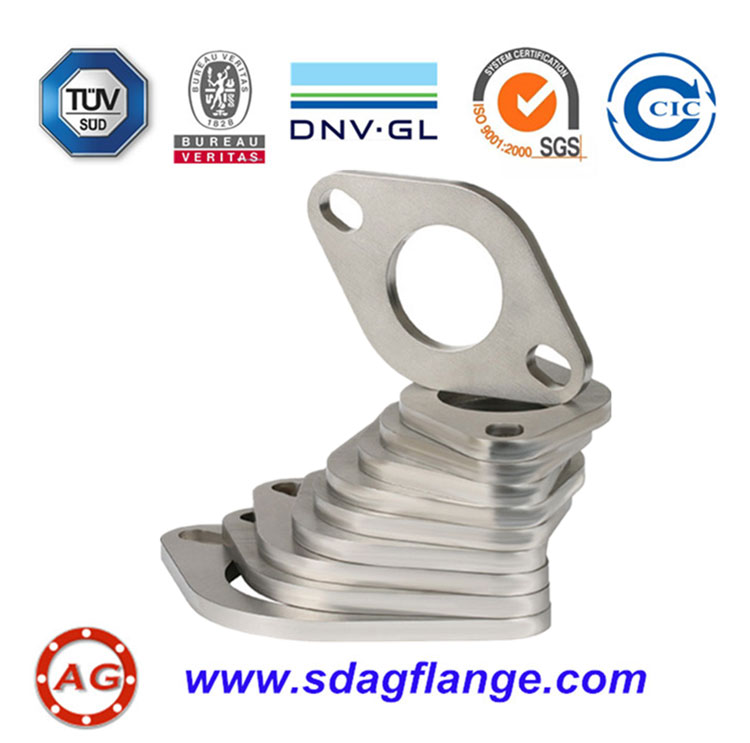
An oval flange is a mechanical connection component designed with an elongated outer shape rather than the circular profile normally associated with standard pipe flanges. Its primary purpose remains familiar: it provides a controlled interface between pipes, equipment, valves, fittings, vessels, or other mechanical components while creating a surface suitable for bolting and sealing.
The oval shape is not simply a cosmetic variation. It is normally selected because the installation has a particular dimensional or structural requirement. A longer flange profile can accommodate mounting arrangements that would be difficult to achieve with a conventional circular flange, particularly when surrounding components, support structures, or equipment openings limit available space.
Depending on the application, an oval flange may be produced from forged steel, stainless steel, carbon steel, alloy steel, or another engineering material. Its final dimensions, bolt arrangement, bore, thickness, sealing face, and material grade need to correspond with the connected system rather than being selected independently.
How Does the Oval Geometry Work?
The elongated profile changes how the flange occupies space around the connection. In a crowded installation, a standard circular flange may extend into an adjacent component or leave insufficient room for bolts, tools, supports, or maintenance access. An oval design can be developed around the actual envelope available at the connection point.
The central bore remains responsible for aligning with the fluid passage or equipment opening. Around that bore, the flange body provides the structural area required for fasteners and sealing. The precise relationship between the bore, bolt holes, outside dimensions, and flange thickness determines whether the component will fit correctly.
This is why an oval flange should not be selected by outside dimensions alone. Two products can have a similar overall shape but differ significantly in bore size, bolt-hole spacing, pressure rating, sealing face, or thickness.
Geometry that deserves attention
- Overall length and width: determine whether the flange fits within the available installation envelope.
- Center bore: must correspond with the connected pipe or equipment passage.
- Bolt-hole arrangement: controls compatibility with the mating component.
- Flange thickness: influences mechanical strength and connection dimensions.
- Sealing face: needs to match the selected gasket and mating surface.
- Machining tolerance: affects assembly, alignment, and interchangeability.
Key Parts and Dimensional Features
Although the exact design varies by manufacturer and application, an oval flange normally consists of several functional areas rather than a single undifferentiated piece of metal. Understanding these areas helps purchasing teams communicate requirements more accurately.
| Feature | Purpose | What Buyers Should Confirm |
|---|---|---|
| Flange body | Provides the structural connection between components. | Material, thickness, dimensions and manufacturing method. |
| Bore | Provides the internal passage for the connected pipe or equipment. | Inside diameter, tolerance and compatibility. |
| Bolt holes | Allow the mating parts to be secured together. | Number, diameter, center distance and pattern. |
| Sealing face | Works with a gasket or sealing element to control leakage. | Face type, finish and dimensional requirements. |
| Outer profile | Defines the installation envelope and overall geometry. | Oval dimensions and clearance requirements. |
For custom orders, a technical drawing is often the clearest way to eliminate uncertainty. A drawing can show the oval profile, bore dimensions, hole locations, thickness, surface requirements, corner radii, and other details that are difficult to communicate through a product name alone.
Common Materials for Oval Flanges
Material selection depends heavily on the operating environment. The flange may experience internal pressure, elevated temperature, corrosion, vibration, cyclic loading, or contact with chemically aggressive media. Choosing material only according to purchase price can create problems later if the material does not match the actual service conditions.
| Material Category | Typical Characteristics | Common Considerations |
|---|---|---|
| Carbon steel | Good mechanical strength and broad industrial availability. | Corrosion protection and service environment should be considered. |
| Stainless steel | Useful corrosion resistance for demanding environments. | Grade selection should reflect the medium and temperature. |
| Alloy steel | Designed for particular strength, temperature, or service requirements. | Material specification and heat treatment require control. |
| Special alloys | Used when ordinary steels cannot provide the required performance. | Application conditions and material certification become especially important. |
For forged products, the material certificate should correspond with the ordered grade. Depending on the project, buyers may also request chemical composition records, mechanical test results, heat-treatment information, dimensional inspection reports, or other documentation.
How Is Sealing Performance Achieved?
A flange connection is only as reliable as its sealing arrangement. The flange faces must provide the correct contact condition for the selected gasket or sealing element. If the face geometry, surface finish, gasket type, or bolt loading is unsuitable, leakage may occur even when the flange itself has sufficient mechanical strength.
The sealing surface should therefore be treated as a functional part of the flange design. Depending on the system, the connection may use different face configurations and gasket materials. The operating temperature, fluid characteristics, pressure, chemical compatibility, and maintenance requirements all influence the selection.
Common causes of flange leakage
- Incorrect flange dimensions or mismatched mating surfaces.
- Unsuitable gasket material for the operating medium.
- Uneven bolt tightening or insufficient bolt load.
- Damage, scratches, corrosion, or contamination on the sealing face.
- Incorrect alignment between connected components.
- Operating conditions exceeding the original design requirements.
Proper installation is therefore as important as manufacturing quality. The flange should be inspected before assembly, and the connection should follow the torque and installation requirements established for the specific system.
Where Are Oval Flanges Used?
Oval flanges are most useful when a connection needs more than a standard circular interface can conveniently provide. Their elongated profile can be incorporated into equipment layouts where available space or mounting orientation is restricted.
Depending on the engineering design, applications may include industrial piping assemblies, pump and fluid-handling equipment, pressure equipment, hydraulic systems, process machinery, automotive or transportation equipment, and specialized machinery. The exact application depends on the flange dimensions, material, pressure requirements, connection standard, and equipment design.
For OEM equipment manufacturers, this can also mean that the flange needs to be manufactured according to a proprietary drawing rather than selected from a generic catalog. In such cases, dimensional consistency between batches becomes particularly important.
Important Points When Selecting an Oval Flange
A reliable purchasing decision starts with the operating conditions rather than the flange name. The following information should normally be established before requesting a quotation.
- Connection dimensions: Provide the bore, outside dimensions, thickness, bolt-hole details, and mating dimensions.
- Material grade: Identify the required steel or alloy grade and any applicable material standard.
- Pressure and temperature: State the actual operating range rather than relying only on a nominal application description.
- Sealing arrangement: Confirm the face design and gasket requirements.
- Applicable standard: If the component must comply with a particular flange or equipment standard, include it in the inquiry.
- Quantity: Production quantity can affect manufacturing method, tooling, machining arrangements, and quotation.
- Inspection requirements: Identify any dimensional, material, mechanical, or third-party inspection requirements in advance.
- Documentation: Confirm whether material certificates, inspection reports, test records, or traceability documents are required.
When the flange is a replacement part, sending the original drawing or a dimensioned sample can significantly reduce the risk of ordering an incompatible component. For a new project, a 2D drawing or 3D model is preferable because it gives the manufacturer a precise reference for production.
Why Forging Matters in Flange Manufacturing
Forging is widely used for components that require dependable mechanical properties because the forming process works the metal under controlled pressure and can produce a dense, structurally consistent component. For flanges exposed to pressure, mechanical loads, vibration, or repeated service, the manufacturing route is an important part of product selection.
With forged oval flanges, the production process may include material preparation, heating, forging, heat treatment, machining, dimensional inspection, and final surface inspection. The exact sequence depends on the material grade, product dimensions, order quantity, and customer specification.
Aiguo Forging can work with application-specific flange requirements where dimensions and material specifications need to be controlled throughout production. For OEM and industrial buyers, this approach is particularly relevant when the same flange needs to be reproduced consistently for multiple equipment batches.
Where manufacturing consistency makes a difference
A flange may look simple, but small dimensional deviations can create assembly problems when it is installed together with precisely machined equipment. Consistent bore dimensions, bolt-hole locations, thickness, sealing faces, and overall profile help reduce fitting problems during assembly.
Quality Checks Before Shipment
Inspection requirements should reflect the function of the flange. A basic dimensional inspection may be sufficient for some general-purpose components, while pressure-related or critical industrial applications can require a more comprehensive inspection package.
| Inspection Area | Purpose |
|---|---|
| Material verification | Confirms that the supplied material corresponds with the specified grade. |
| Dimensional inspection | Checks bore, thickness, overall profile, bolt holes and other critical dimensions. |
| Surface inspection | Identifies visible defects, machining problems or surface damage. |
| Heat-treatment records | Provides process information when heat treatment is part of the specification. |
| Mechanical testing | May verify strength and elongation requirements where specified. |
| Documentation review | Ensures certificates and inspection reports correspond with the ordered product. |
For custom oval flanges, the inspection drawing should identify the dimensions that matter most to installation. This prevents a situation where a product meets a general dimensional description but fails to match the customer's actual mating component.
Oval Flange Compared with Conventional Round Flanges
Both oval and conventional round flanges perform the basic function of creating a bolted and sealed connection. The major difference is the external geometry and the design problem each configuration is intended to address.
| Consideration | Oval Flange | Conventional Round Flange |
|---|---|---|
| External profile | Elongated or oval-shaped. | Circular. |
| Space arrangement | Can be designed around specific space restrictions. | Requires clearance around a generally circular envelope. |
| Customization | Often associated with application-specific dimensions. | Commonly available in established standard configurations. |
| Replacement | Usually needs closer dimensional verification. | Standard dimensions may simplify interchangeability. |
| Typical purchasing method | Drawing, sample or detailed specification is often useful. | Standard size, rating and material may be sufficient for many applications. |
This comparison does not mean that one shape is universally preferable. The appropriate configuration depends on the equipment layout, connection standard, pressure conditions, available space, maintenance requirements, and manufacturing specification.
Frequently Asked Questions About Oval Flanges
1. Is an oval flange suitable for high-pressure applications?
It can be used in pressure-bearing systems when the flange is properly engineered and manufactured for the required pressure, temperature, material, connection configuration, and applicable standards. The shape alone does not determine pressure capability.
2. Can an oval flange be customized?
Yes. Custom dimensions are commonly required for OEM equipment and special machinery. A manufacturer may work from a technical drawing, CAD file, sample, or detailed dimensional specification.
3. Which materials can be used for an oval flange?
Depending on the application, carbon steel, stainless steel, alloy steel, and specialized alloys may be considered. The correct grade depends on pressure, temperature, corrosion exposure, mechanical loading, and applicable material requirements.
4. What information should I provide when requesting a quotation?
Provide the drawing or dimensions, material grade, bore size, overall dimensions, thickness, bolt-hole pattern, sealing face, quantity, operating pressure, temperature, applicable standard, and required inspection or documentation.
5. Does an oval flange require a special gasket?
The gasket should match the actual sealing-face configuration and service conditions. Its material and dimensions should be compatible with the flange, mating surface, operating medium, pressure, and temperature.
6. Can forged oval flanges be supplied for OEM projects?
Yes. OEM projects can be based on customer drawings and specified materials, dimensions, tolerances, machining requirements, and inspection documentation. Production arrangements depend on the project requirements and order quantity.
7. How can I avoid ordering the wrong oval flange?
The safest approach is to provide a dimensioned drawing or the original component information. Confirm the bore, bolt pattern, thickness, sealing face, material, and mating dimensions before production begins.
Final Considerations Before Ordering
An oval flange is a relatively compact component, but its dimensions have a direct effect on assembly and sealing. The correct product therefore needs to be evaluated as part of the complete connection rather than as an isolated metal fitting.
For standard requirements, clearly defined material, dimensions, connection details, and service conditions can make sourcing straightforward. For custom equipment, supplying a drawing or sample gives the manufacturer a much stronger basis for controlling the finished component.
Whether the requirement is a replacement flange, a forged component for industrial equipment, or a repeat OEM order, attention to material traceability, machining accuracy, sealing-face quality, and dimensional inspection can help prevent costly fitting and maintenance problems later.
Need an Oval Flange for Your Application?
If you are sourcing an oval flange for industrial equipment, piping assemblies, OEM machinery, or a replacement project, Aiguo Forgingcan review your drawings and technical requirements before production. Send the required material grade, dimensions, connection details, quantity, and application information so the product can be matched to your actual installation conditions.
For custom dimensions or forged flange requirements, contact us with your drawing or specification and discuss your project requirements with the Aiguo Forging team.