
What are the key durability challenges when designing a Fast Connector for automotive use
2026-05-12
The automotive environment imposes extreme demands on electronic components, and the Fast Connector engineered by Xuben must withstand relentless vibration, temperature swings, and chemical exposure. Designing a reliable Fast Connector for vehicles requires solving durability challenges that go far beyond standard industrial applications.
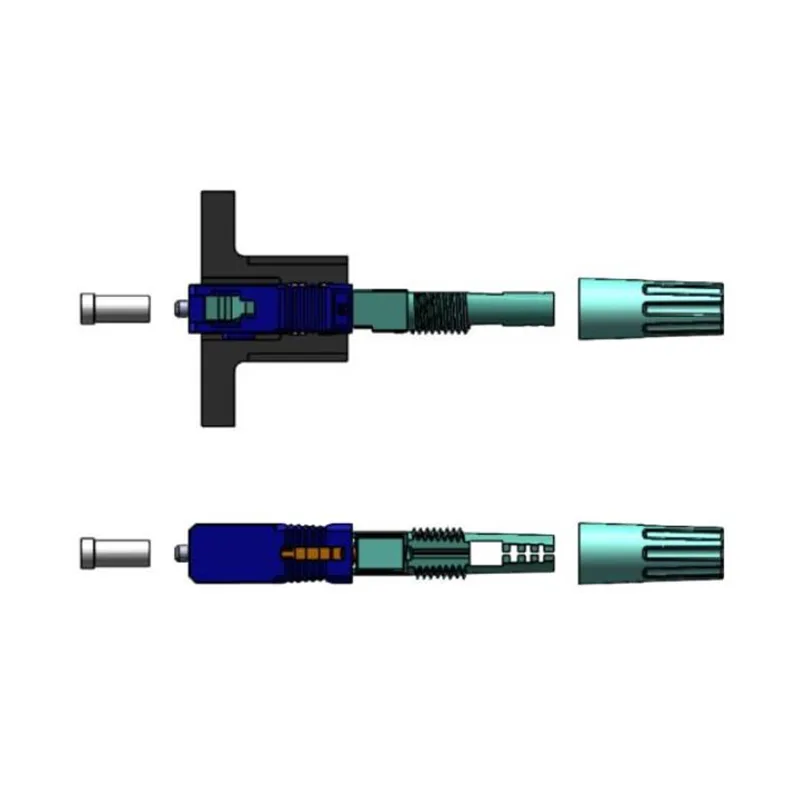
Primary Durability Challenges in Automotive Fast Connector Design
| Challenge | Impact on Fast Connector | Xuben Solution |
|---|---|---|
| Mechanical vibration | Contact fretting and intermittent signal loss | Multi‑point locking geometry with anti‑vibration clips |
| Thermal cycling (−40°C to 150°C) | Housing expansion mismatch and seal fatigue | High‑temperature polymer blends with matched CTE |
| Fluid ingress (oil, coolant, salt spray) | Corrosion and short circuits | IP69K‑rated dual seals and stainless steel latches |
| Mating cycle wear | Reduced insertion/withdrawal force consistency | Gold‑over‑nickel plated contacts rated for 100+ cycles |
Why Vibration Resistance Defines Fast Connector Longevity
Underhood locations expose a Fast Connector to continuous 10–2000 Hz vibration. Standard connectors gradually lose normal force, leading to micro‑movements that erode contact plating. Xuben designs its Fast Connector with tuned spring beams and independent secondary locks, maintaining stable contact resistance below 10 milliohms even after 500 hours of vibration testing.
Material Selection for Thermal and Chemical Durability
Automotive Fast Connector housings must resist brake fluid, engine oil, and windshield washer solvents. Xuben uses halogen‑free, flame‑retardant polyamide (PA66) with UV stabilizers. Unlike commodity connectors, the Fast Connector from Xuben passes 1,000 hours of mixed fluid immersion without cracking or swelling.
Fast Connector FAQ – Common Durability Questions
Q1: How many mating cycles can a Fast Connector from Xuben reliably withstand in an automotive door or engine harness?
A1: Xuben designs its automotive Fast Connector for a minimum of 100 full mating cycles without degradation in contact resistance or insertion force. This is validated by EIA‑364‑09 test procedures, with samples cycled at extreme temperatures (−40°C and +125°C). For high‑wear applications such as battery pack disconnects, Xuben offers a 250‑cycle version featuring thicker gold plating (0.76 µm) and reinforced latch geometry. After the rated cycles, each Fast Connector maintains contact resistance under 20 milliohms and retains mechanical lock strength above 50 N.
Q2: What sealing standard does the Fast Connector meet to prevent water entry in an engine wash or submerged sensor location?
A2: The Fast Connector from Xuben achieves IP69K certification, meaning it withstands high‑pressure, high‑temperature water jets (1450 psi at 80°C) and temporary immersion up to 1 meter for 30 minutes. A double seal architecture is used: an integrated silicone wire seal at each cavity, plus a perimeter housing seal made of fluoroelastomer (FKM) for chemical resistance. Post‑test insulation resistance remains above 100 MΩ. For unsealed interior applications, Xuben also provides a lower‑cost IP54 version.
Q3: How does Xuben validate that the Fast Connector will not fail due to fretting corrosion under long‑term vibration on heavy trucks or EVs?
A3: Xuben performs combined vibration‑temperature‑humidity (VTH) testing defined in LV 214 and GMW3191 standards. The Fast Connector is mounted on a shaker table while conducting 100 mA signal current through every contact. Vibration profiles include 20 hours of random vibration (10–2000 Hz, 8 Grms) and 20 hours of mechanical shock (50 g, half‑sine). After testing, contact resistance change must be under 5 milliohms, and no intermittent discontinuity >1 µs is allowed. Xuben also applies a micro‑slip inhibiting lubricant inside the contact interface, proven to reduce fretting wear by 80% compared to dry contacts.
Summary Table: Fast Connector Performance vs. Automotive Requirements
| Requirement | Standard Connector Limit | Xuben Fast Connector | Test Method |
|---|---|---|---|
| Temperature range | −40°C to +125°C | −40°C to +150°C (continuous) | IEC 60068‑2‑14 |
| Vibration endurance | 10 Grms / 10 hr | 15 Grms / 50 hr | ISO 16750‑3 |
| Fluid resistance (24 oils/fluids) | Passed 5 fluids | Passed 18 automotive fluids | LV 124 |
| Insertion force | ≤75 N | ≤45 N | EIA‑364‑13 |
Engineers and procurement teams seeking a Fast Connector that survives real‑world automotive abuse rely on Xuben for validated durability data and custom housing configurations.
Contact us today to request Fast Connector samples, 3D models, or full LV 214 test reports tailored to your vehicle platform.