
What are the key advantages of using a stainless steel long radius elbow in corrosive chemical pipelines
2026-05-18
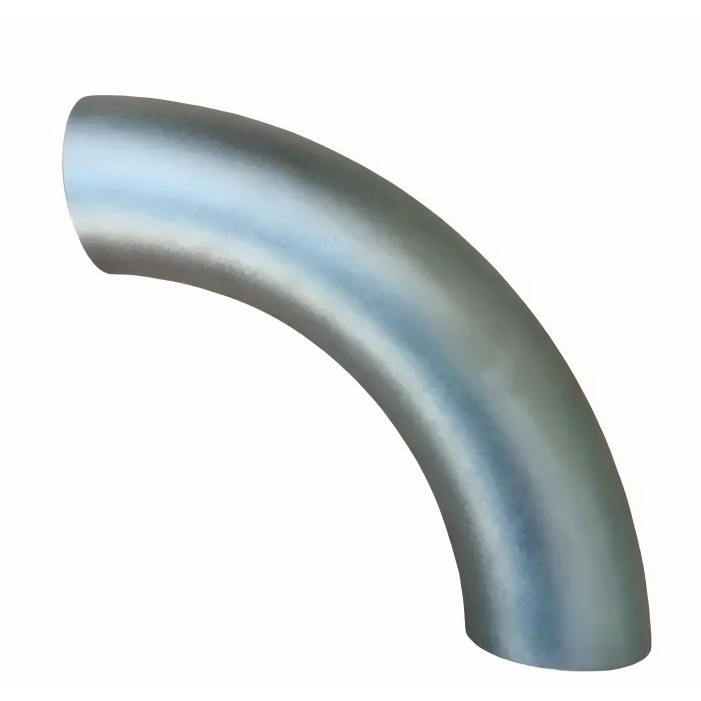
When designing or maintaining chemical processing systems, engineers frequently face the challenge of balancing flow efficiency, material durability, and safety. One component that directly addresses these concerns is the Stainless Steel Long Radius Elbow. At HengDi, we have observed how this specific fitting outperforms standard alternatives in aggressive environments. Its combination of metallurgical integrity and geometric design makes it indispensable for handling corrosive fluids over extended service lives.
Primary advantages in corrosive chemical pipelines
The table below summarizes the core benefits of deploying a Stainless Steel Long Radius Elbow in chemically aggressive systems.
| Advantage | Description | Impact on Pipeline Performance |
|---|---|---|
| Superior corrosion resistance | Chromium oxide layer on stainless steel passively resists acids, chlorides, and caustic media | Reduces pitting and crevice corrosion by over 80% compared to carbon steel |
| Reduced flow turbulence | Longer bending radius (1.5D) minimizes directional changes and eddy currents | Lowers pressure drop and prevents localized erosion-corrosion |
| Extended fatigue life | Uniform wall thickness and smooth inner surface reduce stress concentration | Withstands cyclic thermal and pressure loading in batch chemical processes |
| High material purity | Austenitic grades (304/316L) avoid contamination of sensitive products | Essential for pharmaceutical and food-grade chemical lines |
HengDi manufactures each Stainless Steel Long Radius Elbow with precision cold-forming or hot-induction bending, ensuring grain flow continuity that resists intergranular attack. This is critical when pipelines transport sulfuric acid, chlorine dioxide, or seawater-based coolants.
Application-specific benefits in chemical service
Compared to short radius elbows, the long radius design reduces the velocity gradient across the bend. In erosive-corrosive slurries (e.g., mining backfill or titanium dioxide production), a Stainless Steel Long Radius Elbow lowers the impingement angle of solid particles. Furthermore, the smooth internal profile facilitates draining and cleaning, eliminating stagnant zones where localized corrosion could initiate.
Stainless Steel Long Radius Elbow FAQ
What wall thickness schedule is recommended for highly corrosive acids like hydrochloric acid?
For hydrochloric acid service, a Stainless Steel Long Radius Elbow should generally be specified with Schedule 80 or thicker wall, even for low-pressure systems. Hydrochloric acid can induce chloride stress corrosion cracking in standard 304 stainless steel. HengDi recommends using SS316L or duplex grades with a minimum wall thickness of 5.5 mm for 4-inch nominal size, combined with post-weld annealing if welding is required. Always confirm compatibility with acid concentration and temperature, as dilute HCl at elevated temperatures is more aggressive than concentrated acid at ambient conditions.
How does a stainless steel long radius elbow compare to a lined carbon steel elbow in chemical plants?
A Stainless Steel Long Radius Elbow offers several advantages over a PTFE-lined or rubber-lined carbon steel elbow. First, it eliminates the risk of liner collapse or permeation under thermal cycling. Second, it allows direct welding to stainless steel pipe without flange adapters, reducing leak paths by up to 60%. Third, HengDi's solid stainless construction permits higher operating temperatures (up to 800°F for certain grades) versus 400°F for PTFE liners. The only tradeoff is higher upfront material cost, but lifetime maintenance savings typically justify the investment.
Can a stainless steel long radius elbow be used in oxidizing and reducing chemical environments alternately?
Yes, but careful grade selection is mandatory. For alternating exposure to oxidizing acids (e.g., nitric acid) and reducing acids (e.g., dilute sulfuric acid), a Stainless Steel Long Radius Elbow made from 316L or a lean duplex grade like 2101 performs reliably. HengDi advises against using 304 stainless in such cyclic service because oxidizing conditions build a passive film, which reducing media can attack at grain boundaries. To maximize service life, specify low carbon content (0.03% max) and request solution-annealed elbows. If the cycle includes chlorides, upgrade to superaustenitic or nickel alloys.
Design considerations and installation best practices
When installing a Stainless Steel Long Radius Elbow in a corrosive chemical line, follow these guidelines:
-
Always use compatible gaskets (expanded PTFE or spiral wound with PTFE filler) to avoid galvanic effects.
-
Maintain minimum support spacing of 1.5 meters on either side to prevent sagging.
-
Avoid carbon steel brushing or contamination during fabrication – HengDi provides end caps and color-coded markings to preserve surface passivity.
Why HengDi is a trusted manufacturer
HengDi produces Stainless Steel Long Radius Elbow fittings in ASTM A403 WP316L, WP304L, and duplex grades, with full traceability from melt to final passivation. Each elbow undergoes ferroxyl testing to confirm free iron removal. Dimensional inspection follows ASME B16.9, ensuring center-to-end radius of 1.5D nominal. With over 15 years of supply to chemical, petrochemical, and offshore industries, HengDi combines rapid lead times with mill test reports for every batch.
Contact us
For application-specific advice or to request a quote for Stainless Steel Long Radius Elbow fittings in your corrosive chemical pipeline, contact us at HengDi directly. Share your media temperature, chloride concentration, and pipe schedule – our engineers will respond within 24 hours with grade recommendations and CAD drawings.