
What Are the Differences Between Threaded and Weld Neck Flanges
2025-12-25
In the intricate world of piping systems, selecting the correct flange type is crucial for ensuring integrity, safety, and performance. Two of the most commonly compared options are Threaded Flanges and Weld Neck Flanges. At Dafugui, a trusted supplier of premium piping components, we specialize in providing high-quality solutions like Stainless Steel Threaded Flanges and beyond. This guide will professionally break down their key differences to help you make an informed decision.
The core distinction lies in their method of attachment. A Threaded Flange, as the name implies, screws onto the pipe using matching threads. Conversely, a Weld Neck Flange is permanently joined to the pipe by a circumferential butt weld at its neck. This fundamental difference dictates their applications, strengths, and limitations.
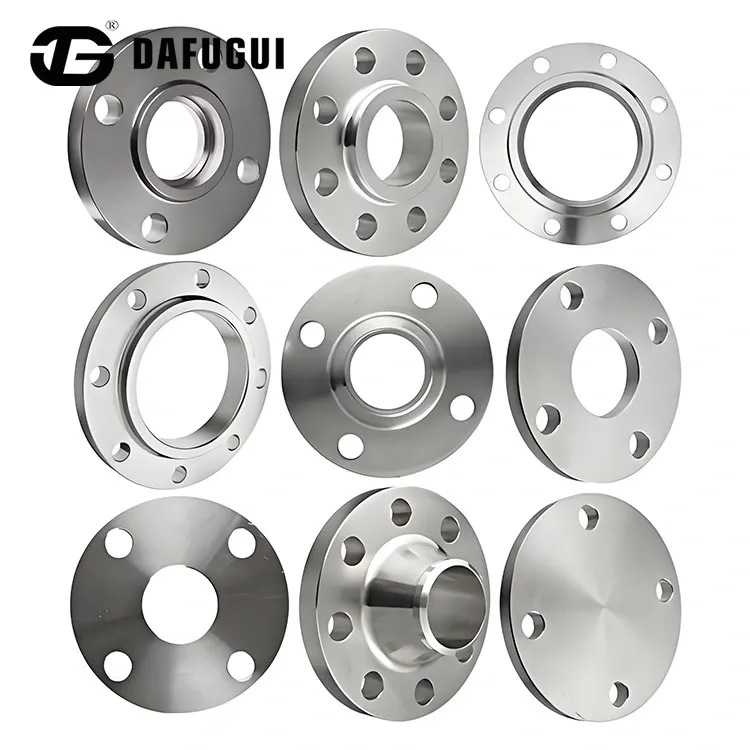
Key Differences: Threaded vs. Weld Neck Flanges
| Feature | Stainless Steel Threaded Flanges | Weld Neck Flanges |
|---|---|---|
| Connection Method | Screwed onto threaded pipes. | Butt-welded to the pipe. |
| Installation | Faster, no welding required. Ideal for easy disassembly. | Permanent, requires skilled welding and inspection. |
| Best For | Low-pressure, non-critical services; sites where welding is hazardous (e.g., explosive atmospheres). | High-pressure, high-temperature, and critical service applications (e.g., petrochemical, steam lines). |
| Strength & Integrity | Good for designated services. The thread is a potential leak point under cyclic loading. | Excellent. The welded neck provides superior structural integrity and stress distribution. |
| Cost Consideration | Lower initial installation cost. | Higher initial cost due to welding labor, but more reliable long-term for demanding services. |
When to Choose Which Flange?
-
Choose a Threaded Flange when: Working on low-pressure systems, instrument connections, air/water lines, or in locations where welding is impractical or unsafe. Dafugui offers a robust range of Stainless Steel Threaded Flanges for such applications.
-
Choose a Weld Neck Flange when: The system involves high pressure, high temperature, severe cyclic loading, or hazardous fluids. It is the standard for critical and demanding industrial services.
Stainless Steel Threaded Flanges FAQ
Q: Can Stainless Steel Threaded Flanges be used in high-pressure applications?
A: Generally, it is not recommended. While robust, the threaded connection is inherently weaker than a full-penetration weld. They are best suited for low to moderate pressure systems. For high-pressure lines, a Weld Neck flange from Dafugui is the safer, industry-standard choice.
Q: How do I prevent leaks in a Threaded Flange connection?
A: Proper sealing is achieved by using thread sealants or PTFE tape on the male threads. Additionally, a flat gasket is placed between the flange faces before tightening the bolts evenly in a crisscross pattern to ensure a uniform seal.
Q: Are Threaded Flanges reusable?
A: Yes, one of their advantages is reusability. They can be unscrewed and reinstalled on another threaded pipe of the same specification, provided the threads are not damaged. This makes them suitable for systems requiring periodic maintenance or modification.
Selecting the right flange is paramount to your project's success and longevity. Whether your design calls for the practical convenience of a Threaded Flange or the robust permanence of a Weld Neck, partnering with an expert ensures you receive components that meet exact specifications and quality standards.
Contact us at Dafugui today. Let our technical specialists guide you to the perfect flange solution for your specific pressure, temperature, and material requirements. Ensure the integrity of your piping system with components you can trust.