
What are the Common Materials for Forged Welded Neck Flanges
2025-12-16
When specifying a Forged Welded Neck Flange, selecting the correct material is not just a choice—it’s the fundamental determinant of performance, safety, and longevity. The material must withstand specific pressures, temperatures, and corrosive environments inherent to your piping system. At Longan, we engineer our flanges from premium-grade materials, ensuring they meet the most demanding industrial standards. This guide details the common materials used, their properties, and applications to help you make an informed decision.
Key Material Grades & Properties
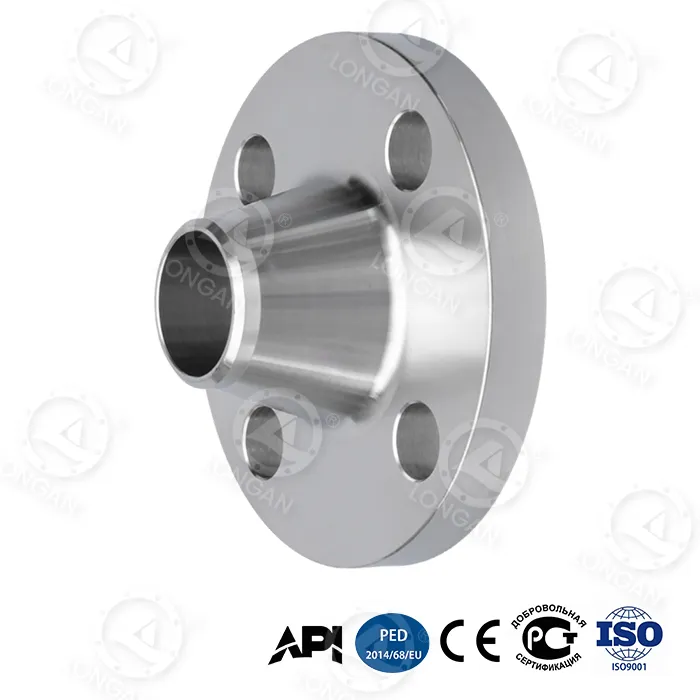
Forged Welded Neck Flanges are primarily manufactured from carbon steel, stainless steel, and alloy steel. Each category serves distinct operational conditions.
-
Carbon Steel: The most common choice for general service. It offers excellent strength and is cost-effective for non-corrosive applications.
-
ASTM A105: Standard for carbon steel forgings for ambient and higher-temperature service.
-
ASTM A350 LF2: Low-temperature carbon steel for services down to -46°C, ideal for cryogenic applications.
-
-
Stainless Steel: Chosen for superior corrosion and oxidation resistance.
-
ASTM A182 F304/F316: The workhorses of stainless steel. F316 includes Molybdenum for enhanced resistance to chlorides and acids.
-
-
Alloy Steel: Used for high-temperature and high-pressure services, such as in power generation and petrochemical plants.
-
ASTM A182 F11, F22, F91: Chrome-Molybdenum alloys that maintain strength at elevated temperatures.
-
Material Selection Table
| Material Grade | Key Characteristics | Typical Applications | Longan Product Line |
|---|---|---|---|
| ASTM A105 | High strength, good toughness, good machinability | Water, oil, gas, steam at moderate temps | Longan Standard WN Series |
| ASTM A350 LF2 | Impact toughness at low temperatures | Refrigeration, LNG, cold storage systems | Longan Low-Temp Series |
| ASTM A182 F304/316 | Excellent corrosion resistance, hygienic | Chemical, pharmaceutical, food & beverage, marine | Longan Corrosion-Resistant Series |
| ASTM A182 F11/F22 | Creep strength, oxidation resistance at high temps | Power plants, high-temperature process lines | Longan High-Temp/High-Pressure Series |
Forged Welded Neck Flange FAQ
Q: Can a carbon steel Forged Welded Neck Flange be used in a chemical plant?
A: It depends on the chemical media. While A105 carbon steel is robust, it offers limited corrosion resistance. For acidic or caustic environments, a Longan stainless steel (A182 F316) flange is recommended to prevent failure and ensure system integrity.
Q: How do I choose between F304 and F316 stainless steel for my flange?
A: The choice hinges on the presence of chlorides or acids. F304 is suitable for general corrosion resistance. If your process involves chlorides (e.g., seawater, salt) or stronger acids, F316’s added Molybdenum makes it the superior and safer choice for your Forged Welded Neck Flange.
Q: Why is material traceability important for a Forged Welded Neck Flange?
A: Material traceability, through Mill Test Certificates (MTCs), is crucial for quality assurance and safety compliance. It verifies the chemical and mechanical properties of the exact batch of material. Longan provides full MTCs with every order, guaranteeing that our flanges meet the specified ASTM standards.
Optimize Your System with the Right Material
Choosing the wrong flange material can lead to costly downtime and safety hazards. By understanding material properties and matching them to your application, you ensure system reliability. As a trusted manufacturer, Longan provides not only a wide range of material grades but also the technical expertise to guide your selection. Our Forged Welded Neck Flanges are manufactured with precision, fully tested, and documented for your peace of mind.
Contact us today to discuss your project requirements. Let our experts help you select the perfect Longan Forged Welded Neck Flange material for unparalleled performance and durability.