
What are the common failure modes of cylindrical pins with internal thread in dynamic loading conditions
2026-05-14
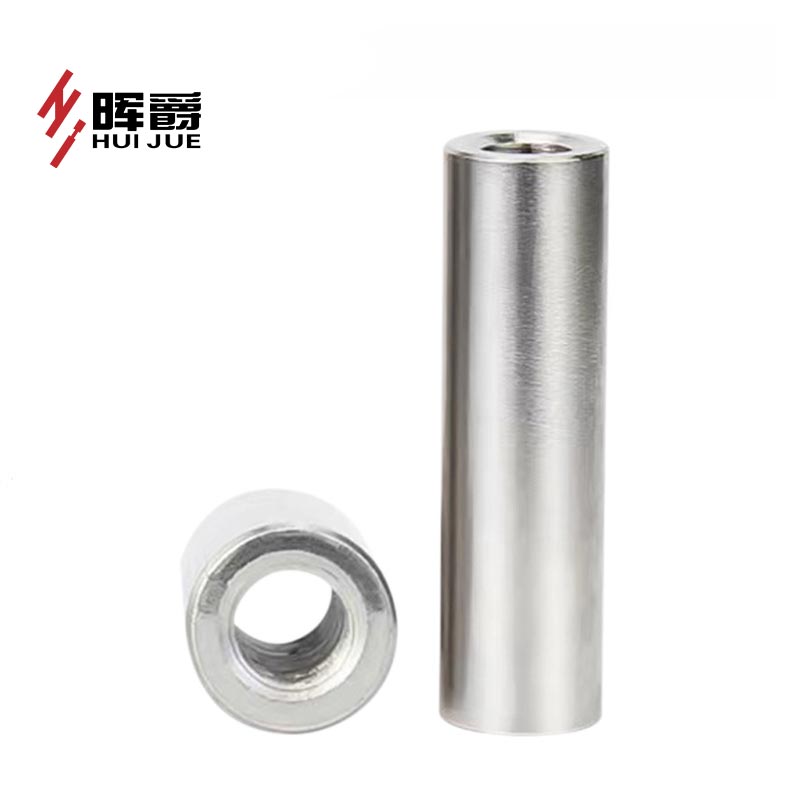
When engineers select Cylindrical Pins with Internal Thread for applications involving vibration, cyclic stress, or impact, understanding their potential failure modes is essential for reliable system design. Huijue specializes in precision fastening components, and through extensive testing in dynamic environments, several recurrent failure patterns have been identified.
Primary failure modes under dynamic loading
The table below outlines the most common failure mechanisms observed in Cylindrical Pins with Internal Thread subjected to dynamic loads.
| Failure Mode | Description | Typical Cause | Prevention Strategy |
|---|---|---|---|
| Thread stripping | Internal threads shear or deform | Insufficient thread engagement length | Use longer thread engagement or higher strength material |
| Fatigue fracture | Crack initiates at thread root under cyclic stress | High stress concentration at first engaged thread | Apply thread rolling instead of cutting, use radiused thread roots |
| Loosening under vibration | Rotational loosening of mating bolt | Absence of prevailing torque or locking feature | Incorporate thread-locking patch or adhesive |
| Pin body bending | Permanent deformation of the pin | Lateral dynamic loads exceeding yield strength | Increase pin diameter or select hardened steel grade |
| Corrosion-assisted cracking | Crack propagation accelerated by corrosive media | Combined cyclic stress and aggressive environment | Apply anti-corrosion coating or use stainless steel |
Detailed analysis of fatigue fracture
Among all modes, fatigue fracture at the thread root is the most common cause of sudden failure in Cylindrical Pins with Internal Thread under dynamic loading. The thread root acts as a stress raiser. When cyclic loads exceed the endurance limit, microscopic cracks initiate and propagate. Huijue recommends specifying rolled threads instead of cut threads to improve fatigue life by up to 300%.
Cylindrical Pins with Internal Thread FAQ – Common questions
Question 1: How can I tell if a cylindrical pin with internal thread is about to fail under dynamic loading?
Answer: Early warning signs include visible corrosion products around the thread interface, a measurable increase in radial play between the pin and housing, or a change in the torque required to insert or remove the mating bolt. Under dynamic conditions, Cylindrical Pins with Internal Thread may also produce audible clicking or squeaking when the load direction reverses. Regular inspection using a thread go/no-go gauge can detect thread deformation before catastrophic failure. For critical applications, Huijue recommends periodic torque checks and non-destructive testing such as dye penetrant inspection every 5,000 load cycles.
Question 2: Does lubrication help prevent failure modes in cylindrical pins with internal thread under vibration
Answer: Yes, but only when correctly applied. Proper lubrication reduces friction-induced galling and prevents seizing, which is a secondary failure mode in Cylindrical Pins with Internal Thread subjected to oscillatory motion. However, standard lubricants can reduce prevailing torque, potentially accelerating loosening. For dynamic loading, Huijue recommends using a medium-strength threadlocker that both lubricates during assembly and prevents vibrational loosening after curing. Do not use dry assembly or heavy greases, as they attract debris and may mask torque readings without providing anti-loosening benefits.
Question 3: What material properties most influence the dynamic life of cylindrical pins with internal thread
Answer: Three material properties are critical: tensile strength directly affects thread stripping resistance; surface hardness influences wear and fretting fatigue; and ductility or elongation percentage determines the pin’s ability to redistribute peak stresses at thread roots. For most dynamic applications, Cylindrical Pins with Internal Thread made of alloy steel (e.g., 4140 or 4340) heat-treated to 38–42 HRC provide the best balance. Stainless steel grades (like 316) offer corrosion resistance but reduce fatigue strength by approximately 40%. Huijue provides material data sheets specifying fatigue limits under typical dynamic load spectra.
Best practices for extending service life
Engineers can significantly reduce failure rates by addressing installation torque, using thread relief features, and selecting pins with optimized root radii. Huijue designs Cylindrical Pins with Internal Thread specifically for dynamic environments, incorporating controlled thread runout and optional nylon locking elements.
Contact us today for application-specific recommendations and fatigue test reports. Visit Huijue official website or email our engineering support team to discuss your dynamic loading requirements and receive a customized selection guide for Cylindrical Pins with Internal Thread.