
What Are the Common Failure Modes of a Long Neck Flange in Service
2026-06-15
In high-pressure and high-temperature piping systems, the Long Neck Flange is widely respected for its ability to reduce stress concentration at the hub junction. However, even this robust component can fail when improperly applied or maintained. At Longan, we have analyzed hundreds of field failures and identified recurring patterns. Understanding these failure modes helps engineers prevent catastrophic leaks and downtime.
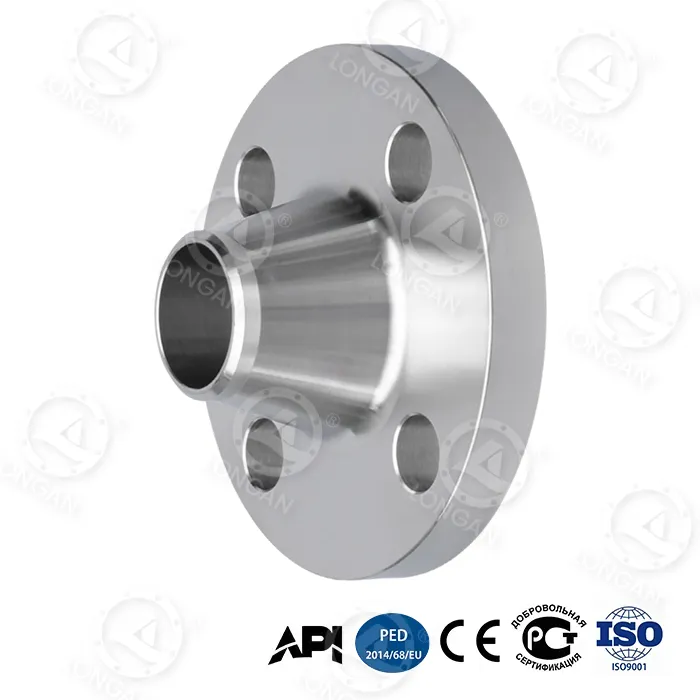
Primary Failure Modes of a Long Neck Flange
| Failure Mode | Primary Cause | Typical Location | Prevention Strategy |
|---|---|---|---|
| Weld Root Cracking | Incomplete penetration or thermal stress | Weld joint between neck and pipe | Strict welding procedure qualification (WPQ) |
| Hub Thinning | Erosion-corrosion or improper machining | Neck transition radius | Regular ultrasonic thickness (UT) scanning |
| Bolt Corrosion Fatigue | Cyclical loading + galvanic corrosion | Bolt holes and gasket contact face | Use coated bolts and controlled torque sequences |
| Gasket Creep Relaxation | Over-compression or high temperature | Gasket sealing surface | Select gasket material matching flange class |
| Neck Cracking | Vibration or thermal cycling | Long neck body | Finite element analysis (FEA) for dynamic loads |
Detailed Breakdown of Three Critical Failure Modes
1. Weld Root Cracking
This occurs when the weld between the Long Neck Flange and the pipe lacks full fusion. In service, cyclic thermal expansion opens micro-cracks, leading to leakage. Longan recommends 100% radiographic testing (RT) for critical services.
2. Erosion-Induced Hub Thinning
In slurry or high-velocity gas services, the long neck’s internal wall gradually erodes. Once thickness drops below code minimum (e.g., ASME B31.3), the Long Neck Flange loses pressure containment ability.
3. Bolt Corrosion Fatigue
When bolts seize or corrode, uneven clamping force distorts the Long Neck Flange gasket face. This is particularly common in marine or sour service environments.
Long Neck Flange FAQ – Common Questions from Engineers
Q1: How can I distinguish early fatigue cracking from a manufacturing defect in a Long Neck Flange?
A: Early fatigue cracks typically originate at the inner radius of the weld toe and propagate transgranularly, showing beach marks under magnification. Manufacturing defects (like shrinkage voids or laminations) are usually located in the parent metal away from stress risers. Longan advises dye penetrant (PT) inspection every 6 months for cyclic duty flanges. If cracks appear within 3 months of installation, suspect a material or heat treatment issue.
Q2: What bolting pattern minimizes uneven gasket compression on a Long Neck Flange?
A: Use a star (criss-cross) sequence in three incremental torque passes: 30%, 70%, then final 100% of target torque. For Long Neck Flange sizes above NPS 12, Longan recommends hydraulic tensioning instead of torque wrenches to avoid thread galling. Always lubricate studs with anti-seize rated for your process temperature. Uneven compression causes localized gasket indentation – measurable by a feeler gauge around the circumference.
Q3: Can a Long Neck Flange be repaired after hub thinning is detected?
A: Field repair is not recommended by ASME PCC-2 unless thinning is less than 12.5% of nominal thickness. If thinning exceeds this limit, the Long Neck Flange must be replaced. Longan offers an emergency replacement program with same-material flanges machined to original dimensions. Temporary repairs using weld buildup or composite wraps are prohibited for neck areas because stress calculations assume original geometry.
Conclusion and Contact
Selecting the right Long Neck Flange and monitoring its in-service condition directly impacts plant reliability. Longan provides full failure analysis, non-destructive testing (NDT) services, and custom-manufactured Long Neck Flange replacements with traceable certifications.
Contact us today for a free technical consultation or to request a failure prevention audit for your critical piping systems. Our engineers are ready to assist within 24 hours.