
What Are the Common Defects Found in a Shear Connector Welding Screw Weld
2026-06-16
When inspecting structural composite connections, one of the most frequent quality concerns appears in the Shear Connector Welding Screw weld zone. At Qunbang, we have analyzed thousands of field and shop welds to identify recurring defects that compromise shear transfer capacity. Understanding these flaws is the first step toward consistent, code-compliant results.
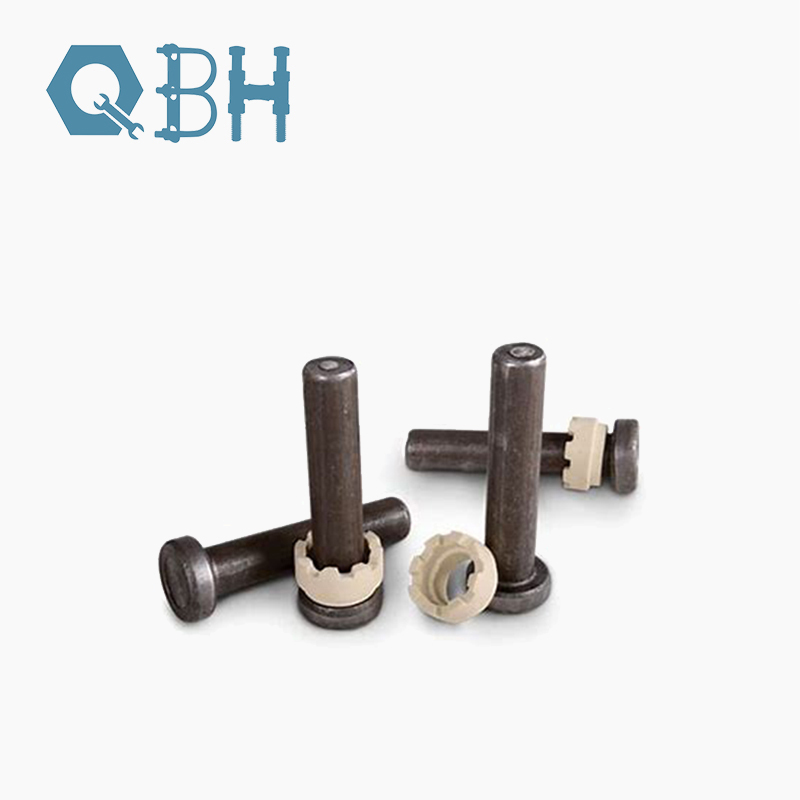
Most Frequent Defects in a Shear Connector Welding Screw Weld
| Defect Type | Visual / Test Sign | Primary Cause | Prevention Method |
|---|---|---|---|
| Incomplete fusion | Partial collar, visible notch at base | Insufficient current or incorrect ferrule seating | Use Qunbang certified ferrules and verify amperage settings |
| Porosity | Pinholes or voids in weld metal | Moisture in flux, dirty plate surface, or poor gas shielding | Clean steel to SSPC-SP3; store ferrules in dry cabinets |
| Undersized weld collar | Collar height or width below code minimum (e.g., AWS D1.1) | Short weld time or electrode plunge too shallow | Calibrate stud welder timing to Shear Connector Welding Screw diameter |
| Offset (misalignment) | Screw not perpendicular to steel surface | Uneven ferrule or operator tilt during plunge | Use Qunbang magnetic jigs for vertical alignment |
| Arc strike marks | Localized melt scars outside weld zone | Improper grounding or accidental tip contact | Attach ground clamp directly to clean base metal within 150mm of weld |
Why These Defects Matter for Structural Integrity
A defective Shear Connector Welding Screw weld reduces composite action between steel beams and concrete slabs. Undersized collars lower shear capacity by up to 40%, while porosity accelerates fatigue cracking under dynamic loads. Qunbang recommends performing a 15° bend test on 5% of installed screws as a routine quality checkpoint.
Shear Connector Welding Screw FAQ – Common Questions from Engineers
Q1: How can I visually identify an incomplete fusion defect in a Shear Connector Welding Screw without laboratory testing?
A1: Look for a missing or fragmented weld collar around the screw base. A complete Shear Connector Welding Screw weld should have a 360° smooth fillet. If you see a crescent-shaped gap or rough, unmelted steel surface on one side, that is incomplete fusion. Field inspectors often ring-test the screw with a light hammer – a hollow or cracked sound indicates poor fusion. Qunbang provides go/no-go gauges that check collar symmetry in under 3 seconds.
Q2: What welding parameters cause excessive spatter around a Shear Connector Welding Screw, and how do I fix them?
A2: Excessive spatter typically comes from overly high current (above 1,200A for 19mm diameter) or a contaminated steel surface with mill scale or oil. First, verify your current setting against Qunbang’s parameter chart: for a ¾" Shear Connector Welding Screw, use 950–1,050A with 0.6–0.8 seconds weld time. Second, clean the base steel to a bright metal finish for 2 inches around the weld location. Reduce lift height slightly (from 2.5mm to 1.8mm) to minimize arc dispersion. Retest with a production weld coupon.
Q3: Can I repair a bent or underfilled Shear Connector Welding Screw weld, or must I cut it off and restart?
A3: According to AWS D1.1/D1.1M:2020, you cannot simply re-weld over a defective Shear Connector Welding Screw – arc strikes or slag inclusions will remain. The correct repair process is: (1) cut the defective screw flush with a grinder, (2) grind the remaining weld metal down to sound base material (no more than 1mm depth removal), (3) install a new Qunbang Shear Connector Welding Screw at least 35mm away from the original center, or fill and re-drill if spacing is critical. Never patch with a hand welder; machine stud welding is mandatory for shear transfer.
Best Practices to Reduce Defects
-
Always perform a daily test weld on a scrap plate matching job thickness.
-
Replace ceramic ferrules after each weld – reuse causes offset and porosity.
-
Store Shear Connector Welding Screw screws in Qunbang sealed packaging to prevent rust on the weld base.
Contact Us
Need a welding procedure specification or defect analysis for your project? Qunbang supplies certified Shear Connector Welding Screw products with full lot traceability and technical field support. Contact us today for free weld parameter sheets and sample testing kits.