
How to Properly Torque a Carbon Steel Heavy Hexagonal Nut to Prevent Failure
2026-08-11
Improper torque application remains one of the leading causes of bolted joint failure in industrial, construction, and heavy machinery sectors. When dealing with high-strength fasteners like the Carbon Steel Heavy Hexagonal Nut, understanding the correct torque procedure is not just a best practice—it is a safety imperative. At QBH, we have spent years testing and supplying premium Carbon Steel Heavy Hexagonal Nut solutions to engineers and maintenance teams worldwide, and we know that even the best fastener will fail if torque is mishandled.
Why Torque Precision Matters for Carbon Steel Heavy Hexagonal Nut
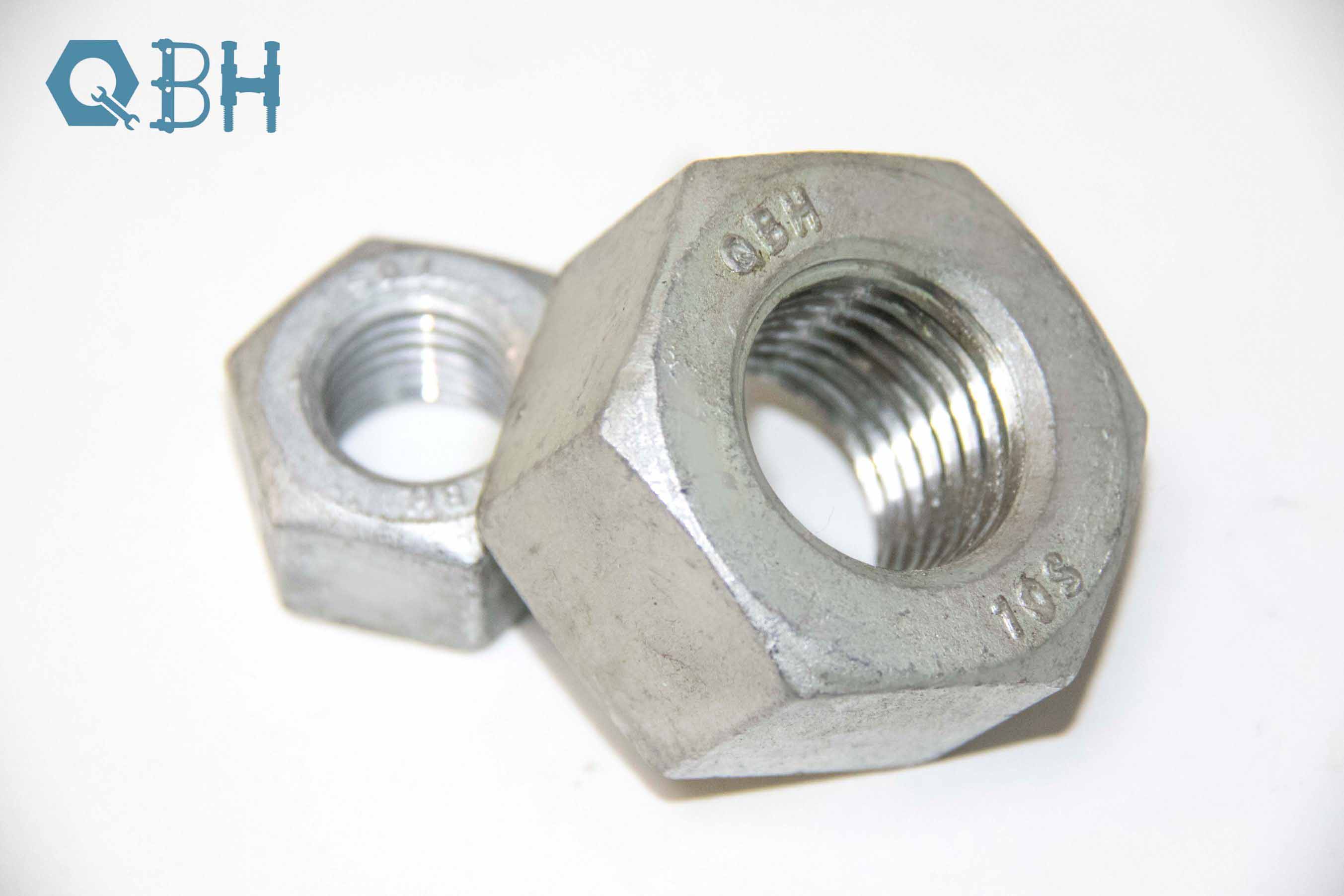
The Carbon Steel Heavy Hexagonal Nut is designed with a larger bearing surface and greater thickness than standard hex nuts, allowing it to distribute clamp load more evenly across bolted connections. However, this geometric advantage becomes irrelevant if torque is under-applied or over-applied. Under-torquing leads to joint loosening under vibration, while over-torquing can strip threads, yield the bolt, or induce stress fractures in the nut itself. Proper torque ensures that the clamp force stays within the elastic range of both the bolt and the Carbon Steel Heavy Hexagonal Nut, maximizing joint integrity over the service life.
Step-by-Step Torque Procedure for Carbon Steel Heavy Hexagonal Nut
| Step | Action | Critical Checkpoint |
|---|---|---|
| 1 | Clean all threads on the bolt and the Carbon Steel Heavy Hexagonal Nut | Remove rust, dirt, and old lubricant |
| 2 | Inspect for visible defects (nicks, burrs, or deformation) | Reject any nut with thread damage |
| 3 | Apply proper lubrication (if specified) | Use the exact lubricant type and amount from the engineering drawing |
| 4 | Hand-tighten the Carbon Steel Heavy Hexagonal Nut until snug | Ensure full thread engagement—at least one thread protruding beyond the nut |
| 5 | Set torque wrench to the calculated target value | Calibrate wrench within the last 12 months |
| 6 | Apply torque in a smooth, continuous motion | Stop immediately when the wrench clicks or indicates target |
| 7 | Perform a turn-of-nut method verification (for critical joints) | Mark nut position and measure additional rotation (typically 30–60°) |
Torque Calculation Fundamentals
The target torque for a Carbon Steel Heavy Hexagonal Nut is not a fixed number—it depends on bolt grade, thread pitch, lubrication condition, and friction coefficient. The standard formula used by QBH engineering team is:
T = K × D × F
Where:
-
T = Target torque (lb-ft or N·m)
-
K = Nut factor (friction coefficient, typically 0.15–0.30 for dry steel, 0.10–0.15 for lubricated)
-
D = Nominal bolt diameter (inches or mm)
-
F = Desired clamp force (usually 70–80% of bolt proof load)
| Bolt Diameter (inches) | Grade 8 Carbon Steel Heavy Hexagonal Nut – Dry Torque (lb-ft) | Grade 8 – Lubricated Torque (lb-ft) |
|---|---|---|
| 1/2" | 75–85 | 55–65 |
| 5/8" | 150–170 | 110–130 |
| 3/4" | 260–290 | 190–220 |
| 1" | 550–600 | 400–450 |
Note: Always verify with your specific bolt specification. QBH provides custom torque charts with every bulk order of Carbon Steel Heavy Hexagonal Nut products.
Common Mistakes That Lead to Failure
-
Using dry threads without lubrication – This increases friction, causing false torque readings and under-clamping.
-
**Reusing deformed Carbon Steel Heavy Hexagonal Nut – Once yield strength is exceeded, the nut loses its ability to maintain clamp load.
-
Impact wrench without torque control – Impacts often overshoot by 30–50% above target.
-
Mixing nut grades with incompatible bolt grades – Always match the Carbon Steel Heavy Hexagonal Nut to the same or higher grade bolt.
FAQ – Carbon Steel Heavy Hexagonal Nut Torque Questions
Q1: Can I use the same torque value for a Carbon Steel Heavy Hexagonal Nut and a standard hex nut of the same diameter?
A1: No. The Carbon Steel Heavy Hexagonal Nut has a larger bearing area and greater height, which changes the stress distribution and friction characteristics. Using the same torque value as a standard hex nut often results in under-clamping because the heavier nut requires more rotational energy to achieve the same preload. Always refer to manufacturer-specific torque tables. At QBH, we recommend reducing standard hex nut torque by approximately 5–8% when switching to our heavy hexagonal series, then verifying with a skidmore-wilhelm tension calibrator for critical joints.
Q2: How does the grade of the Carbon Steel Heavy Hexagonal Nut affect the torque specification?
A2: The grade directly determines the proof load and yield strength of the nut. For example, a Grade 2 Carbon Steel Heavy Hexagonal Nut has a proof load of about 90,000 psi, while a Grade 8 exceeds 150,000 psi. Higher-grade nuts can safely handle higher clamp forces, thus higher torque values. However, the torque limit is always dictated by the weaker component—usually the bolt. Never torque a Grade 8 Carbon Steel Heavy Hexagonal Nut to its maximum if the mating bolt is only Grade 5. QBH always advises customers to match grades and verify the lower of the two proof loads before calculating torque.
Q3: What is the correct way to verify that a Carbon Steel Heavy Hexagonal Nut has been torqued correctly after installation?
A3: The most reliable method is the "turn-of-nut" technique combined with a torque check. After achieving the target torque, mark the nut and bolt with a permanent paint pen. Then, loosen the nut by 10–15° and retorque it to the same value—the paint mark should realign perfectly. For high-criticality applications (e.g., wind turbines, pressure vessels), QBH recommends using ultrasonic bolt tension measurement or hydraulic tensioning instead of torque wrenches alone. Additionally, a post-torque inspection should include checking for thread galling, bearing surface indentation, and any signs of yielding around the hex corners.
Final Quality Assurance Checklist from QBH
-
□
Torque wrench calibration certificate is valid
-
□
Lubrication type and quantity match the procedure
-
□
Carbon Steel Heavy Hexagonal Nut thread condition is confirmed
-
□
Target torque is calculated using actual grade and diameter
-
□
Final torque is applied in one smooth stroke (no jerking)
-
□
Nut position is marked and documented for future re-torque
Contact Us
Proper torque procedures separate reliable assemblies from catastrophic failures. If you are specifying or installing Carbon Steel Heavy Hexagonal Nut in demanding environments, QBH is here to support you with grade-verified products, custom torque charts, and on-site technical training. Reach out to our engineering team today for a complimentary torque consultation tailored to your specific joint design—because when safety and performance depend on a single fastener, you need a partner who takes torque as seriously as you do. Contact QBH now to discuss your next project or request a sample pack for in-house testing.