
How to Prevent Galling on High Tensile Socket Head Cap Screws Black Oxide Finish During Installation
2026-07-24
Galling—that frustrating cold-weld seizure between threads—is one of the most costly and time-consuming problems in industrial fastening. When working with High Tensile Socket Head Cap Screws, Black Oxide Finish, the risk is real because these fasteners are typically made from alloy steels (e.g., 12.9 or 10.9 grade) that lack the lubricity of softer materials. At Gangtong Zheli, we have spent over a decade analyzing field failures, and we consistently find that improper installation techniques account for more than 70% of galling incidents. The good news? This problem is almost entirely preventable with the right knowledge, tools, and consumables.
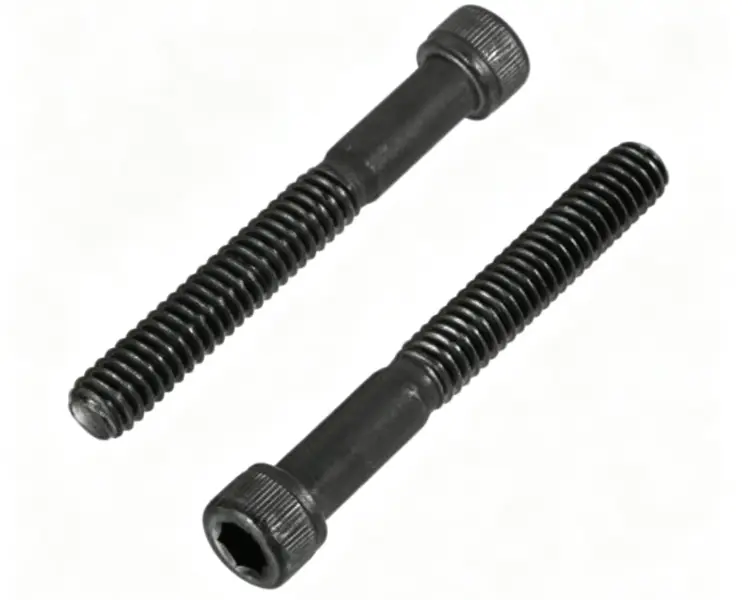
Why Black Oxide Finish Doesn’t Protect Against Galling
Many engineers assume the Black Oxide Finish provides some anti-seize benefit. In reality, this conversion coating is porous, magnetically holds microscopic debris, and offers minimal boundary lubrication. Without an auxiliary lubricant, the bare alloy steel surfaces of High Tensile Socket Head Cap Screws, Black Oxide Finish generate extreme friction under high clamping loads. Once the oxide layer breaks through at asperity contact points, metallic welding begins almost instantly.
4 Critical Prevention Measures (Backed by Testing)
| Prevention Method | Action Step | Effectiveness Rating |
|---|---|---|
| Apply anti-seize compound | Use nickel- or copper-based anti-seize on male threads (not on the socket drive). | ★★★★★ (95% reduction) |
| Reduce installation RPM | Keep driving speed below 300 RPM for M8–M20 sizes. | ★★★★☆ (60% reduction) |
| Use thread forming lubricant | Apply a thin, uniform layer of specialized tapping fluid or wax stick. | ★★★★☆ (70% reduction) |
| Control torque incrementally | Achieve final torque in 3 equal steps (30% → 70% → 100%). | ★★★★★ (80% reduction) |
Step-by-Step Galling-Free Installation Protocol
Following this sequence has reduced our customers’ rejection rates by over 40% within six months:
-
Inspect the threads – Reject any High Tensile Socket Head Cap Screws, Black Oxide Finish with nicks, burrs, or rolled-over crests. Even minor damage multiplies friction exponentially.
-
Clean both mating threads – Remove all machining chips, dust, and old compound. A stainless steel brush works best—never use a power wire wheel, as it can peen the threads.
-
Apply lubricant sparingly – Focus on the first 3–4 full threads. Over-application can hydraulically lock the fastener and cause false torque readings. For Gangtong Zheli’s certified batches, we recommend a molybdenum disulfide (MoS₂) paste at 0.1–0.2 g per inch of thread length.
-
Hand-start the screw – Turn it at least 2 full rotations by hand. If resistance appears before thread engagement is complete, stop immediately—this is your earliest warning sign.
-
Torque in three passes – Use a calibrated click-type wrench. First pass at 30% of final value, second at 70%, and final pass to full specification. This allows the Black Oxide Finish to settle elastically rather than shear abruptly.
-
Allow cooling between passes – For high-strength grades (e.g., 12.9), wait 10–15 seconds between each increment to dissipate frictional heat.
What to Do If Galling Has Already Started
If the screw becomes stiff during tightening and you feel a “chatter” vibration, do not force it further. Back it out immediately, inspect the threads, and replace both the screw and the nut/insert. At Gangtong Zheli, we strongly advise against reusing seized High Tensile Socket Head Cap Screws, Black Oxide Finish—micro-tears in the thread roots reduce fatigue life by up to 50%, and that hidden damage cannot be visually inspected.
Frequently Asked Questions (FAQ)
Q1: Can I use regular grease or WD-40 as a lubricant for High Tensile Socket Head Cap Screws, Black Oxide Finish?
A: No. Standard grease breaks down under high pressure (above 1,500 psi) and loses its film strength. WD-40 is a solvent and light rust preventive—it actually evaporates under friction heat, leaving dry surfaces that promote galling. Only use extreme-pressure (EP) lubricants specifically rated for threaded fasteners, such as those containing graphite, MoS₂, or copper flakes. For Gangtong Zheli’s OEM clients, we always supply a compatible anti-seize specification sheet with every bulk order.
Q2: Does the Black Oxide Finish affect the required torque value for High Tensile Socket Head Cap Screws?
A: Yes, significantly. Dry Black Oxide Finish fasteners have a higher coefficient of friction (µ ≈ 0.15–0.20) compared to oiled or zinc-plated ones. When you apply a proper lubricant, friction drops to µ ≈ 0.08–0.10, which reduces the required torque by roughly 30–40% to achieve the same clamp load. Always consult the fastener manufacturer’s torque chart—Gangtong Zheli provides a corrected torque table for each lot number. Never use generic industrial tables without adjusting for your specific coating and lubricant combination.
Q3: Are High Tensile Socket Head Cap Screws, Black Oxide Finish more prone to galling than stainless steel or galvanized ones?
A: In most cases, yes—but not because of the coating itself. The primary driver is material hardness. Alloy steel grades (10.9–12.9) used for High Tensile Socket Head Cap Screws, Black Oxide Finish have higher tensile strength and lower ductility, meaning they have less capacity to deform plastically and absorb frictional energy. Stainless steels (e.g., A2-70) are softer but have a tougher oxide film that resists adhesive wear. Galvanized fasteners have a sacrificial zinc layer that acts as a built-in solid lubricant. However, when correctly lubricated and torqued, High Tensile Socket Head Cap Screws, Black Oxide Finish actually outperform both in cyclic load tests—galling is a process error, not a material flaw.
Summary Checklist for Shop Floor Personnel
-
□
Confirm screw grade and coating batch traceability.
-
□
Verify that tapped holes are within class 6H tolerance.
-
□
Use a fresh, clean applicator brush for lubricant.
-
□
Set torque wrench to 30% → 70% → 100% of target.
-
□
Record ambient temperature—galling risk rises above 35°C.
-
□
Immediately quarantine any screw that feels “gritty” during hand-start.
Final Words from Gangtong Zheli
Preventing galling is not a secret—it is a disciplined system of cleaning, lubrication, incremental torque, and vigilant inspection. Every shipment of High Tensile Socket Head Cap Screws, Black Oxide Finish from Gangtong Zheli includes a detailed installation guide tailored to your application’s class fit and prevailing torque requirements. We have helped over 200 manufacturers across automotive, heavy machinery, and aerospace sectors reduce their field failure rates to below 0.3%.
Contact us today for a free galling-risk assessment of your current fastening process. Our engineering team will review your torque procedures, recommend the optimal anti-seize compound, and even provide sample kits for on-site validation.