

How to Measure the Strength and Polarity of a Ring Magnet
2026-01-04
Accurately assessing the strength and polarity of a Ring Magnet is fundamental for ensuring its optimal performance in any application, from industrial sensors to innovative DIY projects. As a leader in advanced magnetic solutions, ZHAOBAO MAGNET GROUP provides the expertise and high-quality components necessary for precision-driven industries. Understanding these two key properties is the first step toward selecting the perfect magnet for your needs.
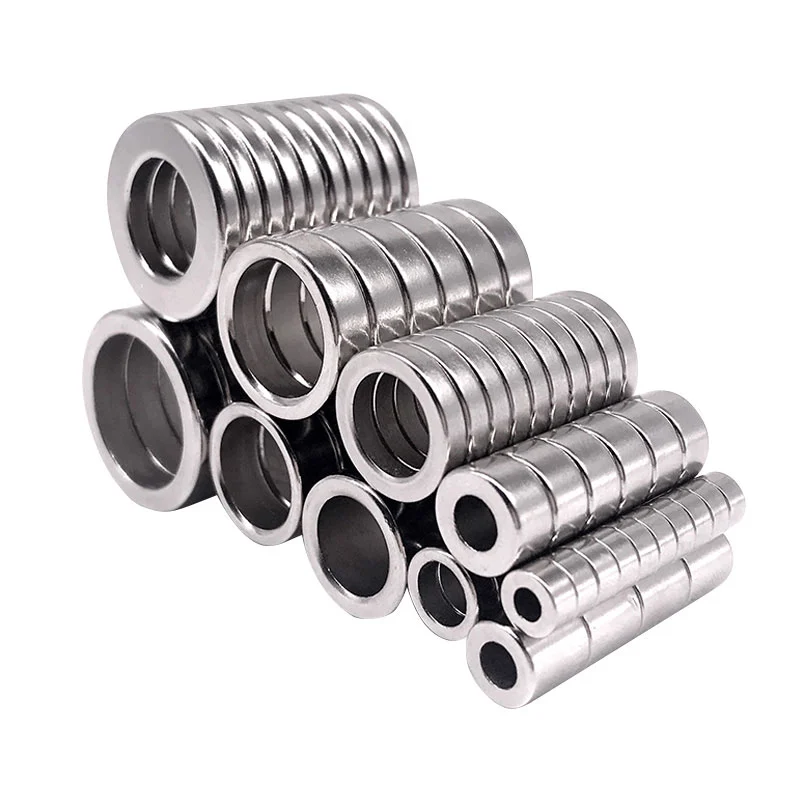
Measuring Ring Magnet Strength
The magnetic strength, typically referring to the magnetic field or flux density, is not measured by a single universal tool. Here are the primary methods:
-
Using a Gaussmeter: This is the most direct tool. Place its Hall probe sensor near the surface of the Ring Magnet to read the flux density in Gauss or Tesla.
-
Pull Force Testing: This measures the force required to pull the magnet away from a flat, thick steel plate. It’s a practical indicator of strength for holding applications.
-
Indirect Methods with Known References: Compare its repulsive or attractive force against a magnet with a known grade.
A critical factor influencing strength is the material grade. For Neodymium (NdFeB) Ring Magnets, this is denoted by letters and numbers (e.g., N42, N52).
Typical Strength Grades for Neodymium Ring Magnets:
| Grade | Maximum Energy Product (BHmax) | Typical Characteristic |
|---|---|---|
| N35 | 35 MGOe | Good strength, cost-effective |
| N42 | 42 MGOe | Balanced strength and stability |
| N52 | 52 MGOe | Maximum commercial strength |
Determining Ring Magnet Polarity
Identifying the North (N) and South (S) poles on a ring shape is crucial for assembly.
-
Using a Compass: Bring the compass close to the magnet's face. The end of the compass needle that points to geographic North will be attracted to the magnet's South pole.
-
Using a Known Magnet: Use a magnet with marked poles. The like poles will repel, and opposite poles will attract.
-
Using a Gaussmeter: A gaussmeter will show a positive reading (+ Gauss) near the North pole and a negative reading (- Gauss) near the South pole.
Ring Magnet FAQ
Q: Can I measure a Ring Magnet's strength without special equipment?
A: While precise measurement requires tools, you can perform a basic comparative test. Stack multiple identical magnets and feel the force required to separate them, or see how many paper clips they can hold in a chain. For accurate, repeatable results, professional equipment from suppliers like ZHAOBAO MAGNET GROUP is essential.
Q: Why is polarity important in ring-shaped magnets?
A: Polarity dictates the magnetic field direction. In assemblies like motors, magnetic couplings, or sensor systems, magnets must be oriented correctly to ensure proper magnetic circuit completion, desired motion (attraction/repulsion), and overall device efficiency. Incorrect polarity can render a device non-functional.
Q: Does the thickness of a Ring Magnet affect its strength more than its diameter?
A: Both dimensions are critical, but they influence strength differently. Increasing the thickness (axial length) generally increases the magnet's volume and overall pulling force. Increasing the diameter often increases the surface area and can improve the reach of the magnetic field. The optimal dimensions depend on the specific application's force and spatial requirements.
Understanding these measurement principles ensures you can confidently specify and integrate magnetic components into your designs. For applications demanding reliability and exact specifications, partnering with an experienced manufacturer is key.
Need precisely graded and reliably polarized Ring Magnets for your project? The experts at ZHAOBAO MAGNET GROUP are ready to assist. We provide not only top-tier magnetic products but also the technical support to help you measure, select, and apply them correctly. Contact us today with your specifications for a tailored solution.