
How to Maintain an Industrial Coupling for Long-Term Performance?
2026-08-27
Regular maintenance is essential to maximize the service life of an Industrial Coupling. Even a high-quality coupling may experience performance issues if it is exposed to excessive vibration, improper lubrication, misalignment, or harsh working conditions without proper inspection.
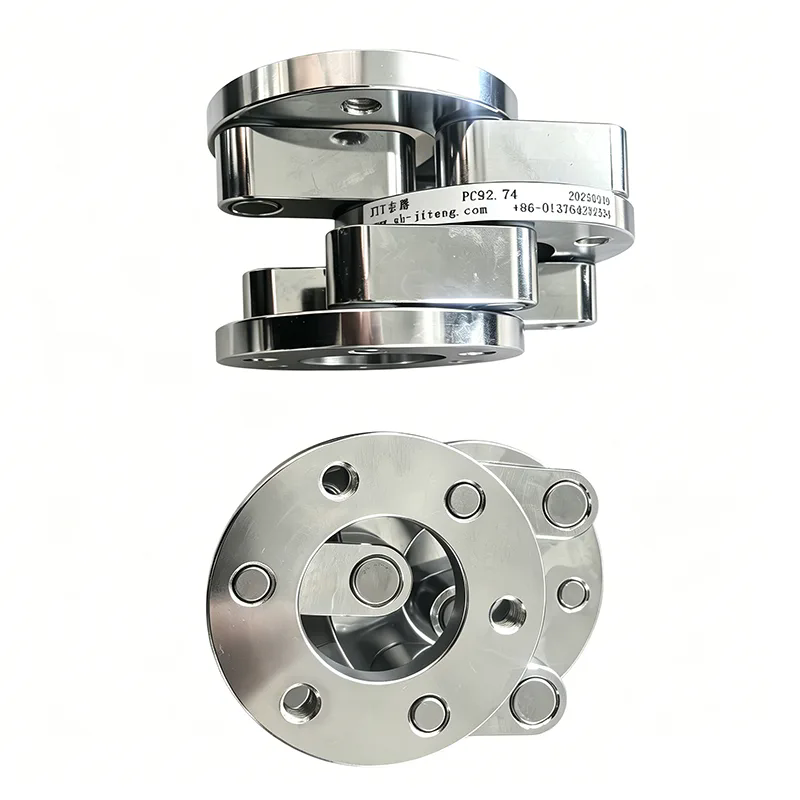
A practical maintenance program should include routine inspection, alignment verification, wear monitoring, and timely replacement of damaged components. These actions help prevent unexpected downtime and maintain stable power transmission performance.
| Maintenance Item | Recommended Action | Benefits |
|---|---|---|
| Visual Inspection | Check cracks, deformation, corrosion, and loose fasteners regularly | Detects early-stage problems before major failures occur |
| Alignment Check | Measure shaft alignment and correct installation deviations | Reduces vibration and improves coupling efficiency |
| Wear Monitoring | Inspect flexible elements, hubs, and connection parts | Prevents sudden breakdown caused by component fatigue |
| Lubrication Management | Apply suitable lubricant according to operating conditions | Reduces friction and extends component life |
Many industrial failures are not caused by poor product quality but by incorrect installation or insufficient maintenance. Establishing a clear inspection schedule allows operators to identify abnormal conditions early and maintain reliable equipment operation.
What Problems Can an Industrial Coupling Solve?
Industrial equipment often faces challenges caused by mechanical stress, vibration, misalignment, and changing operating conditions. An Industrial Coupling provides an effective solution by creating a reliable connection between rotating components while allowing controlled movement and compensation.
The following are common problems that industrial couplings help solve:
- Excessive vibration: Flexible coupling designs can absorb shock loads and reduce vibration transmission between connected machines.
- Shaft misalignment: Couplings compensate for angular, parallel, or axial misalignment to protect connected equipment.
- Unexpected downtime: Reliable torque transmission reduces mechanical failures and improves system availability.
- Equipment wear: Proper coupling selection minimizes stress on bearings, shafts, motors, and gear systems.
- Complex operating environments: Specialized coupling designs can work under high temperature, heavy load, or demanding industrial conditions.
For industries where continuous operation is critical, choosing the right coupling technology is an important part of improving equipment reliability.
How to Select the Right Industrial Coupling?
Selecting an Industrial Coupling requires careful consideration of application requirements rather than simply choosing a standard model. The correct coupling should match the equipment's torque, speed, operating environment, and installation conditions.
| Selection Factor | Questions to Consider | Impact on Performance |
|---|---|---|
| Torque Capacity | What is the maximum torque required by the equipment? | Ensures safe and stable power transmission |
| Operating Speed | What rotational speed will the coupling handle? | Prevents excessive stress and overheating |
| Misalignment Capability | How much shaft movement needs compensation? | Protects connected components |
| Working Environment | Are there temperature, dust, moisture, or chemical factors? | Determines suitable material and design |
| Maintenance Requirements | Does the system require easy inspection or replacement? | Influences operating cost and downtime |
A professional coupling manufacturer can provide technical guidance based on actual working conditions. Engineers should evaluate the complete mechanical system instead of focusing only on coupling size.
Where Are Industrial Couplings Commonly Used?
Industrial Couplings are widely used across different industries because rotating machinery requires reliable torque transmission solutions. From heavy manufacturing equipment to precision mechanical systems, couplings play an important role in maintaining stable operation.
| Industry | Typical Equipment | Coupling Requirements |
|---|---|---|
| Manufacturing | Production lines, conveyors, processing machines | Reliable operation and vibration reduction |
| Energy Industry | Pumps, generators, turbines | High torque capacity and durability |
| Mining | Crushers, heavy-duty conveyors | Shock resistance and strong load handling |
| Marine Equipment | Propulsion systems and auxiliary machinery | Corrosion resistance and stable transmission |
| Automation Systems | Servo motors and precision equipment | High accuracy and low backlash |
Different applications require different coupling characteristics. For example, heavy-duty industrial equipment may prioritize strength and impact resistance, while precision automation systems may require high flexibility and accurate motion transmission.
Why Choose Shanghai Jiteng Industrial Coupling Solutions?
Shanghai Jiteng focuses on providing reliable mechanical transmission solutions designed to meet different industrial requirements. With attention to product quality, engineering details, and practical application needs, Shanghai Jiteng helps customers improve equipment stability and operational efficiency.
The company understands that every industrial system has different requirements. Factors such as load conditions, working environment, speed, and installation space can influence coupling performance. Therefore, professional selection and customized solutions are important for achieving the best results.
- Designed for reliable torque transmission performance
- Suitable for various industrial machinery applications
- Focus on durability and operational stability
- Supports different application requirements
- Provides professional product solutions for industrial customers
By choosing a suitable Industrial Coupling solution, companies can reduce maintenance challenges, improve equipment reliability, and create more efficient production processes.
How to Install an Industrial Coupling Correctly?
Proper installation is one of the most important factors affecting the performance and service life of an Industrial Coupling. Even a high-performance coupling may fail prematurely if installation procedures are ignored. Incorrect mounting, poor alignment, or unsuitable operating conditions can create additional stress on connected equipment.
Before installation, technicians should carefully review equipment specifications, coupling dimensions, shaft conditions, and operating requirements. A systematic installation process helps ensure stable torque transmission and reduces the possibility of future mechanical problems.
| Installation Step | Description | Purpose |
|---|---|---|
| Check Components | Inspect coupling parts, shafts, keys, and fasteners before assembly | Ensures all components meet application requirements |
| Confirm Alignment | Measure and adjust shaft position before connection | Reduces vibration and uneven loading |
| Install Coupling Parts | Mount hubs and connecting elements according to specifications | Creates a secure mechanical connection |
| Test Operation | Run equipment at low speed and check abnormal conditions | Verifies safe and stable performance |
During installation, excessive force should be avoided because it may damage precision components. Following manufacturer recommendations ensures that the Industrial Coupling performs according to its designed capabilities.
What Materials Are Used for Industrial Couplings?
The material selection of an Industrial Coupling directly affects strength, durability, corrosion resistance, and operating performance. Different industries require different material characteristics depending on working conditions.
| Material Type | Main Characteristics | Common Applications |
|---|---|---|
| Steel | High strength, excellent load capacity, strong durability | Heavy machinery and industrial drive systems |
| Stainless Steel | Good corrosion resistance and stable performance | Food processing, chemical, and marine environments |
| Aluminum Alloy | Lightweight with good mechanical properties | Precision equipment and applications requiring lower inertia |
| Flexible Polymer Materials | Shock absorption and vibration control | Motion control systems and flexible transmission applications |
Selecting the right material helps improve equipment reliability and reduces replacement frequency. Engineers should consider not only mechanical strength but also environmental conditions such as humidity, temperature, and exposure to chemicals.
How Can an Industrial Coupling Reduce Operating Costs?
Equipment downtime and unexpected maintenance are major concerns in industrial production. A properly selected Industrial Coupling can help reduce operating costs by improving machine reliability and minimizing mechanical failures.
A high-quality coupling contributes to cost savings in several ways:
- Reducing equipment damage: By absorbing shock and compensating for misalignment, couplings help protect motors, shafts, and bearings.
- Increasing production efficiency: Stable power transmission supports continuous equipment operation.
- Lowering maintenance frequency: Durable components require fewer replacements and repairs.
- Improving energy efficiency: Proper torque transmission reduces unnecessary mechanical losses.
Although the initial investment in a reliable coupling may be higher than a low-cost alternative, the long-term benefits often provide greater value through reduced downtime and improved productivity.
How Is Industrial Coupling Technology Developing?
Modern industrial requirements continue to increase the demand for more efficient, durable, and intelligent mechanical transmission components. Industrial Coupling technology is evolving to meet these changing needs.
Future developments are expected to focus on:
- Improved lightweight designs that reduce system energy consumption.
- Advanced materials that provide higher strength and longer service life.
- More flexible structures for handling complex operating conditions.
- Better compatibility with automated and intelligent manufacturing systems.
- Enhanced reliability for industries requiring continuous operation.
As industrial equipment becomes more advanced, coupling solutions will continue to play an important role in improving mechanical system performance.
Frequently Asked Questions About Industrial Coupling
What is the main function of an Industrial Coupling?
An Industrial Coupling connects two rotating shafts and transfers torque between them. It also helps compensate for alignment errors, reduce vibration, and protect connected machinery from mechanical stress.
How long does an Industrial Coupling usually last?
The service life depends on factors such as load conditions, installation accuracy, operating environment, maintenance practices, and product quality. Proper selection and regular inspection can significantly extend operating life.
Can an Industrial Coupling handle shaft misalignment?
Yes. Many Industrial Coupling designs are developed to accommodate certain levels of angular, parallel, or axial misalignment. The allowable range depends on the specific coupling structure and application requirements.
How do I know which Industrial Coupling is suitable for my equipment?
The correct choice depends on torque requirements, shaft dimensions, speed, environmental conditions, and maintenance expectations. Consulting an experienced manufacturer can help identify the most suitable solution.
Why is Shanghai Jiteng a reliable choice for Industrial Coupling solutions?
Shanghai Jiteng provides industrial transmission solutions designed around practical application needs. The company focuses on product reliability, engineering quality, and helping customers achieve stable equipment performance in different industrial environments.
Conclusion
An Industrial Coupling is a critical component in modern mechanical transmission systems. It not only transfers power between connected shafts but also helps control vibration, compensate for misalignment, and improve equipment reliability.
Choosing the right coupling requires careful consideration of operating conditions, mechanical requirements, material selection, and maintenance needs. A suitable solution can reduce downtime, improve productivity, and extend the service life of industrial machinery.
Shanghai Jiteng provides professional Industrial Coupling solutions designed to support various industrial applications with reliable performance and practical engineering advantages. If you are looking for a suitable coupling solution for your equipment requirements, please contact us for professional support and customized assistance.