
How to Calibrate Thread Gauges for Accurate Quality Control
2025-12-19
Precision in manufacturing is non-negotiable, and at the heart of dimensional accuracy lies the reliable Thread Gauge. Proper calibration of these critical tools is the cornerstone of effective quality control, ensuring every threaded component meets exact specifications. NERES, a leader in precision measurement, provides not only superior Thread Gauges but also the expertise to maintain their accuracy over time. This guide outlines a professional calibration protocol to safeguard your production quality.
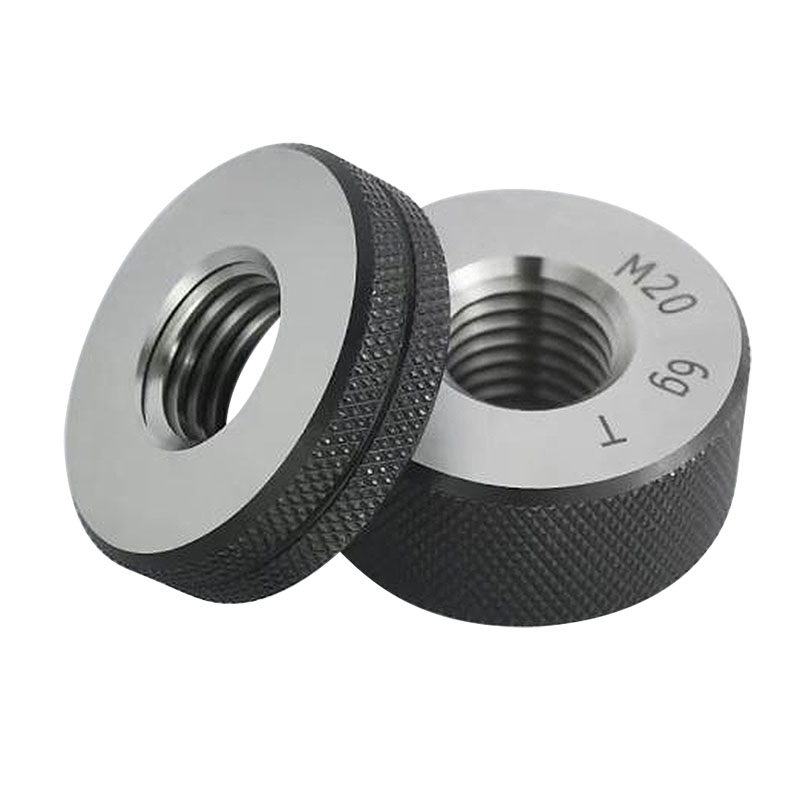
A rigorous calibration process validates that your Thread Gauges perform within defined tolerances. Here is a systematic approach:
-
Preparation & Cleaning: Begin by thoroughly cleaning the gauge with a solvent to remove any oil, dirt, or debris. Inspect for visible damage like nicks or wear.
-
Environmental Stabilization: Allow the gauge and your reference standards to acclimate in a controlled environment (typically 20°C / 68°F) to prevent thermal expansion errors.
-
Master Calibration: Use a certified master gauge or a precision thread measurement system as your reference standard.
-
Dimensional Verification: Carefully check critical parameters against the master. For plug gauges, this includes major diameter, pitch diameter, and thread form. For ring gauges, the check is against a master plug.
-
Documentation & Labeling: Record all measurements. Attach a calibration label stating the date, due date, technician, and conformance status.
NERES Thread Gauges are engineered for longevity and consistent performance, featuring superior parameters that simplify calibration.
| Feature | NERES Thread Gauge Specification | Benefit for Calibration & Use |
|---|---|---|
| Material | High-grade tool steel, hardened & stabilized | Exceptional wear resistance, minimizing drift between calibrations. |
| Coating | Optional nitride or chrome plating | Enhanced surface hardness and corrosion protection for sustained accuracy. |
| Tolerance | Manufactured to ASME B1.2, ISO 1502, or custom grades | Clear, traceable standards for reliable master-to-workshop gauge comparison. |
| Traceability | Supplied with full certification from accredited labs | Provides a confident baseline for your in-house calibration routine. |
Thread Gauges FAQ
Q: How often should I calibrate my Thread Gauges?
A: Calibration frequency depends on usage volume, material hardness, and required precision. A common industry standard is annual calibration for gauges in regular use. However, NERES recommends a quarterly check for high-use gauges and immediately after any suspect measurement.
Q: Can I calibrate a damaged Thread Gauge?
A: Minor wear may be reworkable by a specialist, but significant nicks, dents, or thread distortion usually mean the gauge is beyond repair. Using a damaged gauge compromises quality control. NERES offers recalibration and assessment services to determine if a gauge can be saved or needs replacement.
Q: What’s the difference between calibrating a plug gauge and a ring gauge?
A: A thread plug gauge is calibrated by directly measuring its dimensions (e.g., pitch diameter) with a comparator or over wires. A thread ring gauge is calibrated by checking its "acceptance" of a certified master plug gauge. The process for ring gauges is more comparative, verifying its go/no-go function against a known standard.
Maintaining a strict calibration schedule for your Thread Gauges is an investment in flawless production and waste reduction. Don't let unverified tools create costly quality escapes.
Contact us at NERES today to schedule a professional calibration of your gauges or to explore our certified, high-precision Thread Gauge product line. Ensure your measurements are always trustworthy.