
How to Avoid Common Mistakes in Socket Weld Flange Installation
2025-12-31
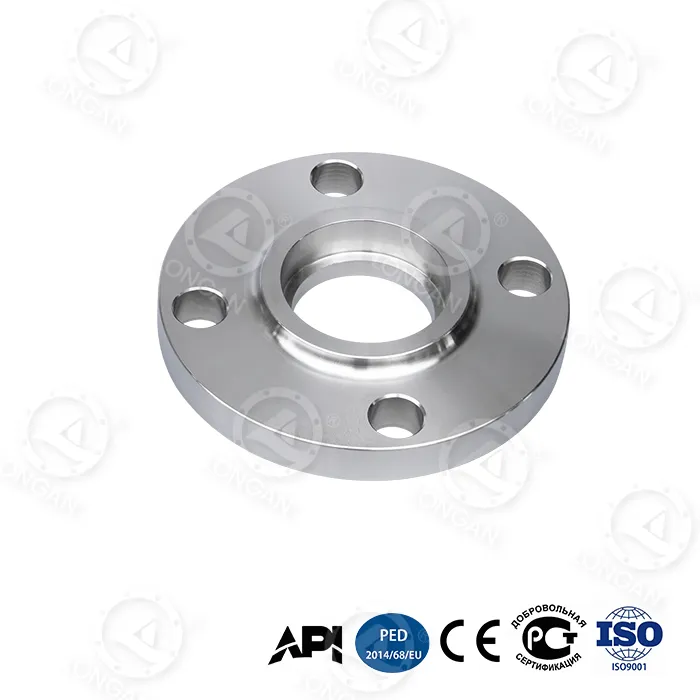
Proper installation is critical for the safety, integrity, and longevity of any piping system. As a leader in precision components, Longan understands that even a small error during the installation of a Socket Weld Flange can lead to leaks, system failure, or catastrophic safety risks. This guide outlines the most common pitfalls and provides expert advice to ensure your Socket Flange connections are flawless and reliable for the long term.
Top 5 Common Socket Weld Flange Installation Mistakes
Avoiding these errors is the first step toward a secure installation:
-
Insufficient Gap for Expansion: Failing to leave a 1/16" to 1/8" gap between the pipe end and the flange shoulder before welding can cause dangerous stress cracks upon heating.
-
Poor Weld Penetration and Quality: Incomplete penetration or weld defects (like porosity or undercut) create weak points that are prone to failure under pressure.
-
Improper Pipe-to-Flange Alignment: Misalignment before welding creates uneven stress distribution and gasket seating issues, leading to leaks.
-
Ignoring Internal Cleaning: Neglecting to remove slag, debris, or oxidation from the weld area inside the Socket Flange can contaminate the entire fluid system.
-
Skipping Post-Weld Inspection: Failing to visually inspect and conduct appropriate Non-Destructive Testing (NDT) on the weld joint leaves critical flaws undetected.
Critical Pre-Installation Checks
Before welding, ensure these parameters are correct:
| Checkpoint | Specification | Purpose |
|---|---|---|
| Material Compatibility | Match flange & pipe material grades (e.g., A105 with A106 Gr.B) | Prevents galvanic corrosion and ensures uniform weld properties. |
| Gap Measurement | 1/16" (1.6mm) minimum gap before welding | Allows for thermal expansion and prevents root cracking. |
| Surface Preparation | Clean, oil-free surfaces within the socket | Ensures a clean, strong weld free of contamination. |
| Alignment | Pipe centered & square to flange face | Guarantees even gasket load and proper bolt-up. |
Socket Flange FAQ
Q: Why is the expansion gap so crucial in a socket weld?
A: The mandatory 1/16" gap is a critical design feature. It prevents the pipe end from bottoming out hard against the flange shoulder. During welding, the heated pipe expands; without this gap, it would exert tremendous stress on the weld root upon cooling, almost certainly causing a brittle fracture and initiating a crack.
Q: Can Socket Weld Flanges be used in corrosive or erosive service?
A: They can be used, but with caution. The inherent small crevice between the pipe and socket can trap corrosive media, leading to accelerated crevice corrosion. For highly corrosive or erosive services, a butt-weld fitting is often recommended. For standard applications, ensuring the material grade (e.g., Stainless Steel 316) matches the service fluid is paramount.
Q: What is the primary advantage of choosing a Socket Weld Flange over other types?
A: The main advantage is its high structural strength and excellent fatigue resistance in small-bore piping (typically NPS 2" and below). It provides smoother flow than a threaded connection and is more rigid and leak-proof for high-pressure, high-vibration applications when installed correctly, making it a preferred choice for critical instrument lines and sampling points.
Achieving a leak-free, durable piping system hinges on using superior components and adhering to meticulous installation standards. By partnering with Longan for your Socket Weld Flange needs, you gain access to products manufactured to exacting specifications, ensuring a perfect fit and weldability from the start. Our technical expertise is an extension of our product quality.
Contact us today to discuss your project specifications or to request our detailed technical guide on welding procedures. Let the Longan team be your trusted partner in building safer, more reliable piping infrastructure.