
How Does Temperature Variation Impact the Performance of Carbon Steel Plate Flanges
2026-03-04
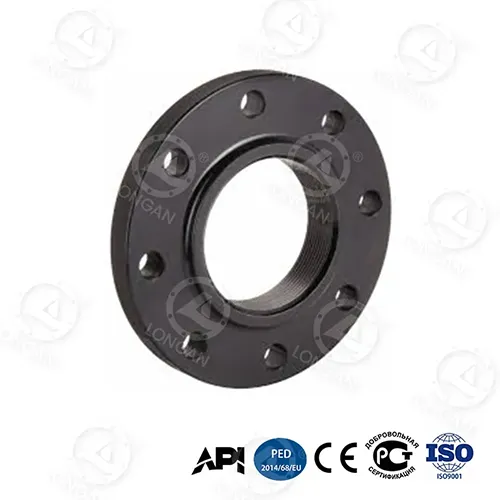
In industrial piping systems, understanding the physical behavior of components under thermal stress is crucial for operational safety. Carbon Steel Plate Type Flange connections are the backbone of many high-stakes industries, including oil and gas, power generation, and chemical processing. At Longan, we recognize that temperature fluctuations are not just an environmental factor but a critical mechanical variable. Whether facing sub-zero climates or high-heat steam lines, thermal expansion and contraction directly influence the bolt load, sealing ability, and structural integrity of the flange.
The Mechanical Effects of Thermal Stress
When temperatures rise, carbon steel expands; when they drop, it contracts. If a piping system is not correctly designed for these dimensional changes, the Carbon Steel Plate Type Flange can experience unintended stress, leading to leaks or material fatigue. The rate of temperature change (thermal cycling) is just as important as the extreme temperatures themselves. Rapid heating can create temperature gradients within the steel, causing differential expansion that warps the flange face.
Key Performance Indicators Affected by Temperature
-
Bolt Tension Loss: At elevated temperatures, bolts can relax (creep), reducing the clamping force on the gasket.
-
Gasket Compression: The flange faces may move apart or compress unevenly as the metal expands, compromising the seal.
-
Material Toughness: At cryogenic temperatures, carbon steel can lose ductility and become brittle.
Material Properties vs. Operating Temperatures
The chemical composition of the steel dictates its survival range. Below is a general guide to how standard carbon steel plates perform across temperature spectrums.
| Temperature Range | Material Behavior | Impact on Carbon Steel Plate Type Flange |
|---|---|---|
| Cryogenic (< -29°C) | Loss of ductility; risk of brittle fracture. | Requires impact-tested materials (e.g., special killed steels). Not suitable for standard A105 flanges. |
| Ambient (20°C - 100°C) | Optimal elasticity and strength. | Standard performance. Minimal dimensional change. Gaskets maintain seal easily. |
| Elevated (200°C - 400°C) | Thermal expansion; reduction in yield strength. | Flange faces expand. Bolts must be re-torqued after initial heat-up to compensate for relaxation. |
| High (>400°C) | Oxidation scaling; potential for creep. | Standard carbon steel begins to scale and lose structural integrity. Transition to alloy steel is recommended. |
Design Considerations for Thermal Integrity
To mitigate the risks associated with temperature swings, engineers must adopt a holistic view of the flange assembly. It is not enough to select a flange with the correct pressure rating; the entire connection strategy must account for thermal movement.
-
Flange Facing: A Serrated finish is critical for high-temperature applications as it bites into the gasket material, preventing blowout during expansion cycles.
-
Bolt Material: Using stud bolts with a different coefficient of thermal expansion than the flange can create thermal tensioning effects.
-
Pipe Support: Proper guides and anchors must be installed to handle the longitudinal expansion of the pipe, preventing excessive bending moments on the flange neck.
FAQ: Carbon Steel Plate Type Flange Common Questions
Q: Can I use a standard Carbon Steel Plate Type Flange in high-temperature steam service?
A: While standard carbon steel plate flanges (such as those made from A105) are common in steam systems up to approximately 425°C, you must consider the pressure derating. As temperature increases, the Maximum Allowable Working Pressure (MAWP) of the flange decreases significantly. For saturated steam lines operating continuously above 400°C, Longan recommends verifying the pressure-temperature ratings per ASME B16.5 and considering a transition to alloy materials if pressures remain high.
Q: How does thermal cycling lead to flange leakage over time?
A: Thermal cycling (repeated heating and cooling) creates a "breathing" effect in the flange joint. Each time the system heats up, the Carbon Steel Plate Type Flange expands, increasing bolt length and potentially lifting the gasket slightly. Upon cooling, the joint contracts. Over many cycles, this movement can cause the gasket to take a permanent compression set or become extruded. Additionally, the bolts may gradually yield, losing the preload necessary to maintain a tight seal.
Q: What precautions are necessary when using Carbon Steel Plate Flanges in freezing environments?
A: When ambient temperatures drop below freezing, especially during system shutdowns, any moisture trapped in the flange joint or piping can freeze and expand, potentially cracking the flange. For cold-service applications, it is vital to ensure the carbon steel material has adequate notch toughness. At Longan, we advise specifying flanges with a normalized heat treatment and Charpy V-Notch (CVN) impact testing if the operating temperature approaches -20°F (-29°C) to prevent brittle failure.
Conclusion
Temperature variation is a formidable challenge that directly impacts the reliability of Carbon Steel Plate Type Flange assemblies. By understanding the principles of thermal expansion, material limits, and bolt behavior, operators can prevent catastrophic failures and ensure long-term system integrity. Selecting a high-quality flange from a trusted manufacturer is the first step in managing these thermal stresses effectively.
Are you designing a system with extreme temperature requirements? Ensure safety and reliability with certified materials. Contact Longan today to discuss your specific application and let our engineers help you select the perfect flange solution.