
How Does Stainless Steel Spring Strip Coil Improve Precision, Durability, and Custom Spring Performance?
2026-09-21
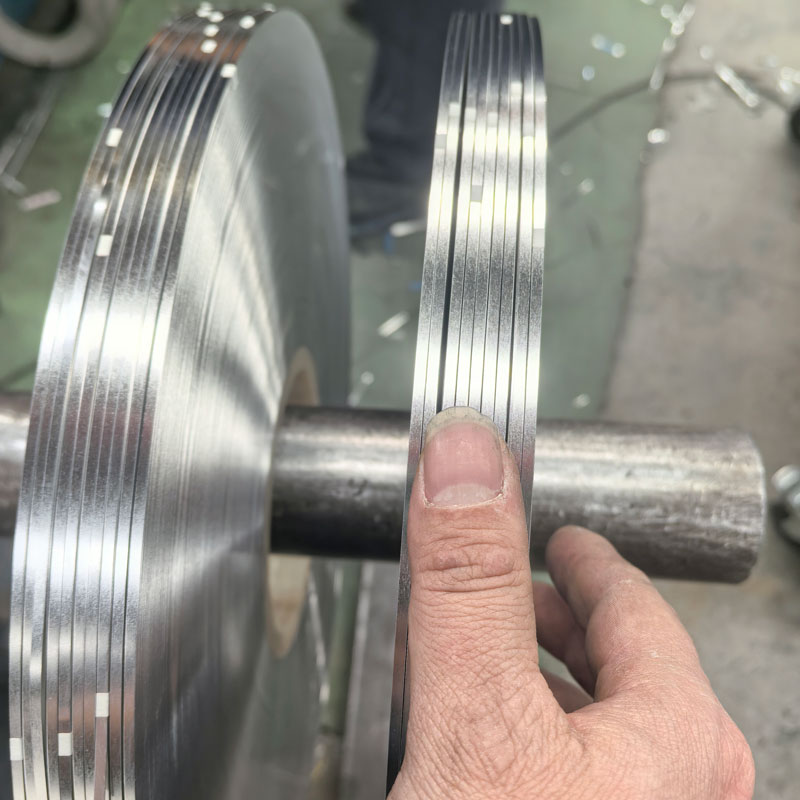
Stainless steel spring materials must balance elasticity, strength, corrosion resistance, dimensional stability, and processing flexibility. Stainless Steel Spring Strip Coil is widely used when manufacturers need a continuous strip that can be formed into springs, clips, retainers, connectors, and other precision components. Among common grades, 301 is particularly suitable for spring applications because cold working can significantly increase its strength and spring-back performance.
For manufacturers and industrial buyers, material selection is only one part of the equation. Thickness, temper, width tolerance, edge condition, surface finish, and forming requirements can all affect the final performance of a spring component. Ningbo Qihong Stainless Steel Co., Ltd. focuses on stainless steel strip solutions that can be adapted to different production requirements, including boat-type customization for customers with specialized component designs.
Why Is Stainless Steel Spring Strip Coil Important?
The primary function of a spring strip is to store and release mechanical energy while returning toward its original shape after deformation. This makes elastic recovery particularly important for components exposed to repeated bending, tension, compression, or winding.
A properly selected Stainless Steel Spring Strip Coil can offer several practical advantages:
- High spring-back: Helps components return consistently after deformation.
- High strength: Supports demanding mechanical applications.
- Corrosion resistance: Suitable for humid, outdoor, industrial, and potentially corrosive environments.
- Dimensional consistency: Important for precision stamping and forming.
- Continuous processing: Coil material supports efficient slitting, stamping, forming, and automated production.
- Design flexibility: Different grades and tempers can be selected according to the required spring performance.
For example, 301 stainless steel can achieve substantially higher strength through cold working. Published ASTM-based data show increasing tensile strength from approximately 862 MPa at 1/4 hard to 1,276 MPa at full hard for Type 301, although actual requirements depend on thickness and applicable specifications.
What Makes the Right Grade and Temper Matter?
Not every stainless steel strip performs identically as a spring. Grade and temper should be selected according to load, forming method, corrosion environment, and required service life.
| Material / Condition | Main Characteristic | Typical Consideration |
|---|---|---|
| 301 1/4 Hard | Good strength and formability | Moderate spring forming |
| 301 1/2 Hard | Higher strength | Clips, retainers, formed springs |
| 301 Full Hard | Very high strength | High-strength spring components |
| 304 | Good corrosion resistance and formability | General formed components |
| 316/316L | Enhanced corrosion resistance | More demanding corrosive environments |
301 is commonly selected when spring-back and high strength are priorities, while 304 can be more suitable when formability and general corrosion resistance are more important.
This is why buyers should not simply specify "stainless steel." A professional specification should consider:
- Stainless steel grade
- Thickness
- Strip width
- Temper or hardness
- Surface finish
- Edge condition
- Dimensional tolerance
- Coil size and packaging
How Does It Improve Manufacturing Efficiency?
Coil-form stainless steel provides a continuous feedstock for automated manufacturing. Instead of processing individual pieces, manufacturers can use coil material for slitting, stamping, bending, winding, and other forming operations.
This can help improve:
- Production continuity
- Material utilization
- Processing efficiency
- Dimensional consistency
- Automated feeding
- Large-volume production capability
For precision spring components, edge quality is also important. Slit, deburred, and rounded-edge conditions can be selected according to the forming and fatigue requirements of the finished component.
Typical Applications
Stainless Steel Spring Strip Coil can be used in a wide range of components, including:
- Constant-force springs
- Flat springs
- Spring clips
- Retaining rings
- Washers
- Electrical contacts
- Connectors
- Automotive components
- Industrial machinery parts
- Precision stamped components
- Marine and outdoor equipment
The combination of strength, elasticity, and corrosion resistance makes stainless spring strip particularly useful when a component must operate repeatedly while maintaining stable mechanical performance.
Which Customization Options Should Buyers Consider?
A major advantage for industrial buyers is the ability to customize the strip according to the final component rather than purchasing a one-size-fits-all material.
Ningbo Qihong Stainless Steel Co., Ltd. can position its Stainless Steel Spring Strip Coil solutions around customized requirements, including:
- Customized thickness
- Customized width
- Customized coil dimensions
- Different stainless steel grades
- Different hardness or temper conditions
- Surface finish requirements
- Edge treatment
- Precision dimensional tolerances
- Application-specific material selection
- Boat-type customization
Why Does Boat-Type Customization Matter?
For customers producing marine equipment, boat components, specialized mechanisms, or uniquely shaped assemblies, standard rectangular strip specifications may not always match the actual design.
Boat-type customization allows the material solution to be developed around the customer's required shape, dimensions, structure, and application conditions. This can reduce unnecessary secondary processing and help manufacturers integrate the spring strip more efficiently into specialized products.
For marine applications in particular, corrosion resistance can be an important consideration because moisture and salt exposure may accelerate material degradation. Certain stainless spring materials are specifically developed for demanding marine and chloride-containing environments.
How Should Buyers Choose a Stainless Steel Spring Strip Coil?
Before placing an order, buyers should define the actual working conditions rather than selecting a grade based only on price.
A practical evaluation can include:
1. Mechanical requirements
Determine the required spring force, working stress, deformation, and cycle frequency.
2. Material requirements
Compare 301, 304, 316L, or other suitable spring materials according to the application.
3. Dimensional requirements
Confirm thickness, width, tolerance, coil dimensions, and edge condition.
4. Environmental requirements
Consider humidity, chemicals, salt exposure, temperature, and outdoor use.
5. Forming requirements
Check whether the strip will be stamped, bent, rolled, wound, or otherwise formed.
6. Customization requirements
For non-standard components, provide drawings, samples, dimensional specifications, or boat-type customization requirements to the supplier.
What Performance Can Manufacturers Expect?
The final performance of a spring component depends on more than the stainless steel grade. Material temper, thickness, geometry, bending radius, working stress, and manufacturing process all influence service behavior.
Therefore, a reliable supplier should focus on material consistency and application matching, rather than simply supplying a nominal grade.
For Ningbo Qihong Stainless Steel Co., Ltd., this creates an opportunity to provide more than standard stainless steel coil: customized material solutions can help customers develop spring components around their actual production needs.
FAQ
What is Stainless Steel Spring Strip Coil?
It is stainless steel strip supplied in coil form and designed for applications requiring elastic recovery, strength, corrosion resistance, and precision forming.
Which stainless steel is commonly used for spring strip?
301 is widely used for spring applications because it can develop high strength through cold working. 304 and 316/316L may be selected when formability or corrosion resistance is more important.
Can spring strip be customized?
Yes. Width, thickness, temper, finish, edge condition, coil dimensions, and other specifications can be customized according to production requirements.
Is boat-type customization available?
For specialized applications, Ningbo Qihong Stainless Steel Co., Ltd. can develop customized strip solutions around customer drawings, dimensions, and application requirements, including boat-type customization where required.
What information should I provide when requesting a quotation?
It is helpful to provide the required grade, thickness, width, temper, surface finish, quantity, coil requirements, application, and any drawing or customized shape requirements.
Final Thoughts
A high-quality Stainless Steel Spring Strip Coil is not simply a piece of stainless steel in coil form. Its real value comes from the combination of appropriate grade, controlled temper, dimensional precision, surface quality, processing performance, and customization capability. For spring manufacturers and industrial buyers, selecting the right specification can contribute to more stable forming, reliable spring-back, longer component service, and efficient production.
Ningbo Qihong Stainless Steel Co., Ltd. provides customized stainless steel strip solutions for different industrial requirements, with particular attention to precision specifications and boat-type customization. If you are looking for a suitable material solution for springs, clips, connectors, marine components, or other customized applications, contact us to discuss your required dimensions, material grade, temper, and application.