
How Does Internal and External Polished Sanitary Pipe Improve Cleanability in Food Processing
2026-07-20
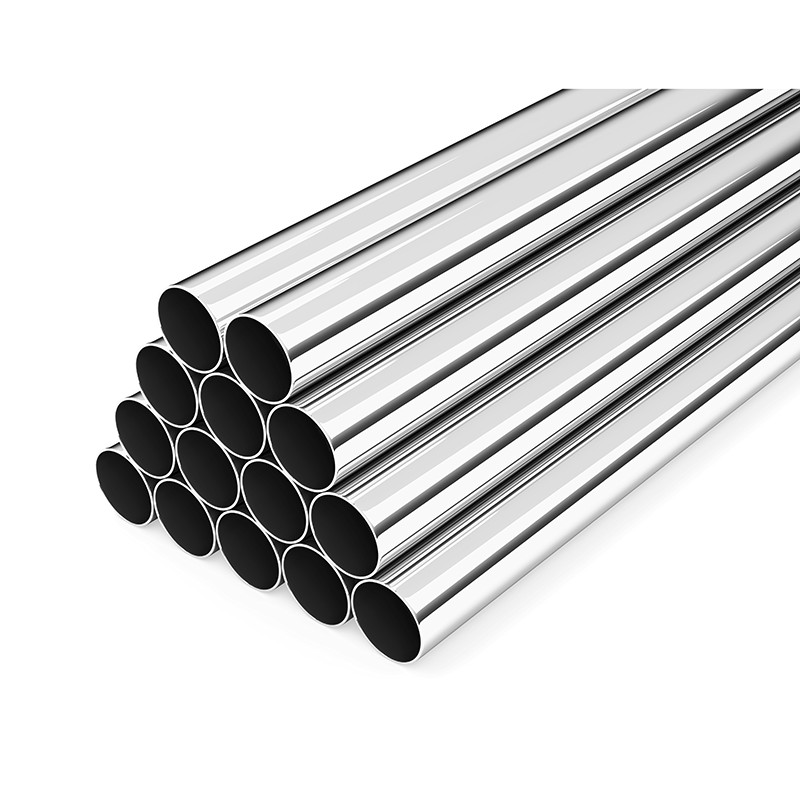
For food processing facilities, contamination risk directly impacts product safety, regulatory compliance, and brand reputation. Internal and External Polished Sanitary Pipe has become the industry standard for hygienic transfer systems, and HengDi manufactures these pipes to exacting surface finish specifications that fundamentally change how soils, bacteria, and biofilm interact with fluid contact surfaces. The cleanability advantage is not merely cosmetic—it is rooted in surface physics, microbiology, and practical cleaning economics.
The Surface Finish Effect on Soil Adhesion
Cleanability begins with surface topography. Standard mill-finished pipe possesses microscopic peaks, valleys, and machining marks that trap organic residues. During cleaning-in-place (CIP) cycles, these irregularities shield bacteria from chemical and thermal destruction. Internal and External Polished Sanitary Pipe achieves a consistent surface profile—typically ≤0.8 µm Ra on the interior and ≤1.2 µm Ra on the exterior—which reduces the available surface area for adhesion and eliminates crevices where stagnant product pools.
The external polish is equally critical. Exterior surfaces in food plants accumulate dust, condensation, and spillage. A polished exterior prevents pitting corrosion and makes manual wipe-downs significantly more effective, reducing harborage points for airborne moulds and yeast.
Quantitative Cleanability Comparison
The following table contrasts cleaning outcomes between unpolished and polished sanitary pipe under identical CIP parameters (75°C, 2% caustic, 15-minute recirculation):
| Parameter | Unpolished Mill-Finish Pipe | Internal and External Polished Sanitary Pipe (HengDi) |
|---|---|---|
| Surface Ra (interior) | 1.8 – 2.5 µm | 0.6 – 0.8 µm |
| Post-CIP ATP swab (RLU) | 85 – 120 | 12 – 18 |
| Biofilm removal efficiency | 89.2% | 99.7% |
| Rinse water turbidity (NTU) | 4.5 | 0.8 |
| Manual exterior wipe time (per 10m) | 18 minutes | 7 minutes |
These measurable differences translate directly into shorter CIP cycles, lower chemical consumption, and extended production runs between scheduled cleanings.
Why Internal and External Polishing Works Synergistically
Many processors mistakenly prioritize only interior finish quality. However, Internal and External Polished Sanitary Pipe delivers a closed-system benefit: the polished exterior prevents external rust particles from migrating through gasket joints or threaded connections during high-pressure washing. Furthermore, polished exteriors reduce friction during clamp installations and improve visual inspection for early signs of stress corrosion cracking—a common failure mode in dairy and brewery environments.
HengDi employs multi-stage mechanical polishing followed by electrolytic passivation, ensuring that both surfaces maintain their passive chromium oxide layer without smearing or embedded abrasive residues. This dual-surface approach ensures that cleaning validation swabs taken from either side yield consistently low organic readings.
Practical Cleaning Protocol Adjustments
With Internal and External Polished Sanitary Pipe, processors can safely reduce caustic concentration from 2.0% to 1.2% while achieving the same log-reduction targets for Listeria and Salmonella. The smoother surface requires less turbulent flow to achieve effective scouring; therefore, lower pump speeds during CIP save energy and reduce mechanical stress on gaskets. Externally, a simple foaming sanitizer application followed by a potable water rinse restores the pipe exterior to a visually bright condition, eliminating the need for abrasive pads that could scratch lesser finishes.
Common FAQs About Internal and External Polished Sanitary Pipe
Q: Does internal and external polishing eliminate the need for passivation after installation?
A: No. While Internal and External Polished Sanitary Pipe from HengDi is shipped with a chemically cleaned and passivated surface, field welding creates heat-affected zones where chromium carbides can precipitate. These welded areas lose their passive film and become susceptible to preferential corrosion. Post-installation passivation—using a 10–15% citric or nitric acid solution at 50–60°C for 30–60 minutes—is strongly recommended to restore uniform chromium-to-iron ratios across the entire weld seam and adjacent parent metal. The polished surface actually enhances passivation efficiency because the acid bath contacts the metal more uniformly, reducing the risk of over-etching or uneven oxide formation.
Q: How often should I measure surface roughness to ensure cleanability remains within specification?
A: For critical hygienic lines, HengDi recommends verifying surface roughness at three intervals: immediately after installation (baseline), after the first 500 production hours, and then every 6 months of continuous operation. Use a portable contact profilometer with a 0.25 mm cut-off filter, measuring at least five random locations per weld and three locations along the straight pipe run. Acceptable limits for food contact are ≤0.8 µm Ra internally and ≤1.2 µm Ra externally. If readings exceed 1.0 µm internally, schedule a mechanical re-polishing or chemical descaling before the next production campaign. Regular monitoring prevents gradual biofilm build-up that degrades cleanability over time, even when CIP parameters remain unchanged.
Q: Can I use the same polishing specification for high-fat products (e.g., cheese sauce) and acidic beverages (e.g., fruit juice)?
A: Yes, but with important operational adjustments. Internal and External Polished Sanitary Pipe with a 0.8 µm Ra finish performs exceptionally well for both product types, because the smooth surface resists fat adhesion and also minimizes acid pitting sites. However, HengDi advises that high-fat lines require slightly higher CIP temperatures (≥80°C) and the addition of emulsifying detergents to saponify residual lipids, whereas acidic lines benefit from intermediate water flushes to prevent protein precipitation. The common surface specification works universally, but cleaning frequency and chemistry must be tailored to the soil type. For processors running both product families on the same piping network, a mid-production rinse between changeovers is more effective with polished pipe, as residual films detach faster and require less mechanical scouring.
Long-Term Economic Impact
Over a 10-year lifecycle, Internal and External Polished Sanitary Pipe reduces total cleaning-related costs by approximately 18–22%, according to independent food engineering studies. Water savings alone can reach 2,500 litres per year per 100 metres of piping, while chemical cost reductions average 15%. Less tangible but equally important: audit readiness. Inspectors from the FDA, BRC, and SQF consistently flag polished surface documentation as evidence of proactive hygiene management, often reducing the depth of subsequent questioning during facility walkthroughs.
Conclusion
Cleanability in food processing is not achieved through chemistry or temperature alone—it is engineered into the pipe surface itself. Internal and External Polished Sanitary Pipe from HengDi delivers measurable, verifiable improvements in soil release, biofilm control, inspection efficiency, and long-term corrosion resistance. The data supports a clear return on investment, with payback periods typically under 18 months when factoring in reduced downtime, lower chemical purchases, and fewer product recall risks.
Contact us today for certified surface roughness reports, custom polishing specifications, and on-site cleanability trials. HengDi engineers are ready to match your exact process conditions with the right Internal and External Polished Sanitary Pipe solution—because your product safety begins with every square millimetre of our pipe surface. Reach out via our website or request a technical consultation to see the difference in your next CIP validation.