
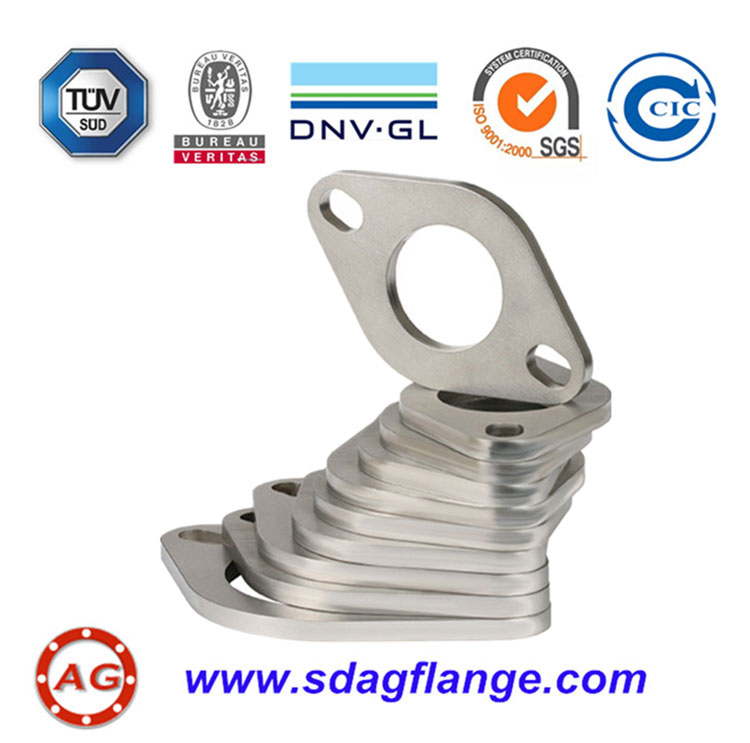
An Oval ZINC Plated Flange is designed to combine the practical geometry of an oval flange with the corrosion protection of a zinc-plated steel surface. For engineers, distributors, and purchasing teams, the real challenge is not simply finding a flange that fits. The flange must also match the connection dimensions, material requirements, pressure conditions, installation method, surface-finish expectations, and service environment. This guide explains the key considerations behind specification, manufacturing, inspection, installation, and sourcing so that buyers can make technically sound decisions and avoid costly compatibility problems.
Understanding the Oval ZINC Plated Flange
A flange is more than a simple piece of metal with bolt holes. It is an engineered interface that connects components while helping maintain alignment, mechanical stability, and, where applicable, sealing performance. An oval flange uses an elongated profile rather than a conventional circular outline. Depending on the design, this geometry can be useful where installation space, mounting orientation, or connection layout calls for a different footprint.
The addition of a zinc-plated surface introduces another important consideration: corrosion protection. Zinc plating deposits a protective zinc layer over the steel surface. Zinc is more active than steel, so the coating can provide sacrificial protection while also acting as a barrier against moisture and oxidation. The actual service performance depends on coating specification, surface preparation, supplementary treatment, exposure conditions, and handling.
Oval forged flanges are available in different standards, dimensions, pressure classes, facing configurations, and materials. Some manufacturers offer zinc plating as one of several surface-treatment options alongside protective paint and galvanizing. This means the correct product should always be selected from the actual engineering drawing or applicable standard rather than from the product name alone.
Key Advantages in Industrial Applications
The value of an Oval ZINC Plated Flange comes from the interaction between geometry, material, surface treatment, and manufacturing accuracy. When those four factors are properly matched to the application, the component can simplify installation while providing a practical level of surface protection.
Corrosion Protection
Zinc plating helps protect carbon-steel surfaces from moisture and oxidation. The coating specification should be selected according to the environment rather than assuming that every zinc-plated finish provides the same level of protection.
Compact Connection Geometry
An oval profile can provide useful mounting flexibility where a round flange does not match the available installation envelope or existing connection arrangement.
Controlled Surface Finish
Compared with an uncoated carbon-steel surface, zinc plating provides a more finished appearance and a defined corrosion-protection system, provided the coating is properly specified and inspected.
Forged Construction
Where the component is manufactured through forging, the production route can support the required mechanical properties and dimensional integrity when combined with suitable heat treatment and inspection controls.
These benefits should not be interpreted as a universal recommendation for every environment. Severe outdoor exposure, marine conditions, chemical exposure, high-temperature service, or highly critical assemblies may require a different material or coating system. The coating must always be evaluated against the complete operating environment.
How to Specify the Correct Flange
One of the most common purchasing problems is sending a supplier only the product name. “Oval ZINC Plated Flange” describes the general product, but it does not contain enough information to manufacture a technically controlled component.
A better approach is to prepare a complete specification package. The following information should normally be reviewed before requesting a quotation:
- Flange type: Define whether the design is threaded, welding, integral, loose, or another configuration.
- Applicable standard: State the required dimensional or product standard instead of assuming that suppliers use the same design basis.
- Nominal size: Provide DN, NPS, or the exact dimensions shown on the drawing.
- Pressure rating: Specify the required pressure class or PN rating where applicable.
- Material: Identify the steel grade and any required mechanical or chemical-property requirements.
- Facing: Confirm flat face, raised face, threaded interface, gasket arrangement, or another specified configuration.
- Surface treatment: Define zinc plating type, thickness or applicable coating specification, passivation, and inspection requirements.
- Quantity and packaging: State order quantity and any requirements for protection during transportation and storage.
Dimensions and Fit: Details That Matter
Dimensional compatibility is often the first practical hurdle when replacing or sourcing an oval flange. A part can appear visually correct while still failing during installation because one critical dimension is different.
| Dimension / Feature | Why It Matters | What the Buyer Should Confirm |
|---|---|---|
| Overall length and width | Determines whether the flange fits the available installation space. | Exact drawing dimensions and allowable tolerance. |
| Bolt-hole pattern | Controls compatibility with the mating component. | Hole quantity, diameter, center distance, and orientation. |
| Flange thickness | Affects assembly dimensions and mechanical behavior. | Nominal thickness and tolerance. |
| Bore or internal diameter | Must match the connected pipe, tube, or component. | Bore size, tolerance, and surface condition. |
| Facing geometry | Influences gasket contact and mating compatibility. | Face type, finish, flatness, and sealing arrangement. |
| Thread dimensions | Incorrect thread form can prevent assembly or affect joint performance. | Thread standard, size, pitch, and gauge requirements. |
Tolerances should also be considered after coating. Zinc plating adds material to the surface, so critical mating dimensions and threaded areas need to be evaluated as part of the manufacturing process. For precision assemblies, the supplier should understand which dimensions are functionally critical before plating rather than treating coating as an unrelated final step.
Material and Zinc Plating Considerations
Choosing the base material and surface treatment should be treated as two connected decisions. A suitable zinc-plated flange starts with a steel grade that can meet the required strength, toughness, machinability, and service conditions.
Common engineering specifications may involve carbon steel or other steel grades depending on the application. The exact grade should come from the project specification rather than being selected simply because it is frequently used for similar parts.
Zinc Plating Is Not One Universal Finish
Electroplated zinc coatings can be specified in different thickness classes and may use supplementary passivation or sealing treatments. ASTM B633, for example, establishes requirements for electrodeposited zinc coatings on iron and steel and includes different coating thickness classifications. ISO-based coating specifications are also commonly encountered in international supply chains.
Therefore, the purchase order should avoid vague wording such as “zinc plated as standard.” Instead, specify the applicable standard, coating class or minimum thickness, supplementary finish where required, and inspection method.
| Requirement | Typical Specification Question | Why It Matters |
|---|---|---|
| Base steel | Which grade is required? | Determines mechanical and chemical requirements. |
| Zinc coating | Which standard and coating class? | Creates a measurable corrosion-protection requirement. |
| Passivation | Is a supplementary finish required? | Can influence corrosion performance and appearance. |
| Critical dimensions | Which dimensions must remain within tolerance after plating? | Helps prevent assembly problems. |
| Inspection | How will coating and dimensions be verified? | Turns a purchasing requirement into an objective acceptance criterion. |
Another important point is environmental suitability. Zinc-plated carbon steel can be practical for many indoor, sheltered, and moderately exposed applications, but it should not automatically be treated as equivalent to hot-dip galvanizing or a higher-performance coating system. Marine, splash-zone, aggressive chemical, and continuously wet environments may require a different corrosion-control strategy.
Manufacturing and Quality Control: Where Reliability Begins
A flange's final appearance does not tell the complete quality story. A professional manufacturing process should control the product from raw material through forging, heat treatment, machining, surface treatment, inspection, and packaging.
1. Raw Material Verification
Material certificates, heat numbers, chemical composition, and mechanical-property requirements should be checked according to the applicable specification. Traceability is particularly important for industrial orders where documentation is part of the customer's acceptance process.
2. Forging and Heat Treatment
The forging process should be controlled for appropriate temperature, deformation, and dimensional consistency. Where heat treatment is required, parameters should be established according to the material grade and technical specification.
3. Machining
Machining must establish the final bore, bolt holes, threads, faces, and other functional surfaces. Critical dimensions should be inspected with calibrated measuring equipment rather than relying solely on visual checks.
4. Surface Preparation and Zinc Plating
The surface needs to be appropriately cleaned and prepared before plating. Coating uniformity, appearance, thickness, adhesion, and supplementary treatment should be controlled according to the specified process.
5. Final Inspection
Final inspection should cover dimensions, visual condition, coating requirements, thread fit where applicable, and documentation. For larger or technically critical orders, customers may also define inspection plans, sampling requirements, third-party inspection, or specific test reports.
Installation and Maintenance Tips
Even a correctly manufactured flange can perform poorly if installation conditions are not controlled. Before assembly, inspect the flange for transportation damage, excessive scratches, contamination, distortion, or coating damage.
- Verify the flange dimensions and bolt-hole arrangement against the mating component before installation.
- Check that the mating faces are clean and free from debris that could interfere with alignment or sealing.
- Use the specified gasket and compatible fasteners for the application.
- Apply the required tightening procedure and torque requirements specified by the equipment or engineering documentation.
- Avoid unnecessary impact or aggressive handling that could damage the zinc coating.
- Inspect exposed assemblies periodically when they operate in humid or corrosive environments.
- Repair or protect damaged coating areas according to the approved maintenance procedure.
Special care is also needed when zinc-coated components are assembled with dissimilar metals. In the presence of moisture or another electrolyte, galvanic corrosion can occur between dissimilar metallic materials. The complete assembly—not just the flange itself—should therefore be evaluated when selecting materials and protective measures.
Where Can an Oval ZINC Plated Flange Be Used?
The exact application depends on the flange design, material, pressure rating, dimensions, and applicable standard. Subject to engineering approval, oval zinc-plated flanges may be considered for a range of industrial and mechanical connection applications.
General Machinery
Useful for mechanical assemblies where a corrosion-protected steel connection and a compact mounting geometry are required.
Pipe and Tube Assemblies
Suitable designs can be incorporated into piping or tubing connections when dimensions and pressure requirements are correctly matched.
Industrial Equipment
Can be specified for equipment exposed to normal indoor humidity or controlled industrial environments where zinc plating is appropriate.
Maintenance and Replacement Parts
Custom or replacement flanges can help restore existing equipment when the original geometry, bolt pattern, and material requirements are clearly documented.
For demanding applications, engineers should assess temperature, pressure, chemical exposure, humidity, vibration, loading, sealing requirements, and expected service life before approving the flange design and coating system.
A Practical Purchasing Checklist for Buyers
Purchasing teams often face delays because technical information is distributed across drawings, emails, supplier quotations, and inspection documents. A standardized checklist can make supplier communication considerably more efficient.
| Before Ordering | Information to Prepare |
|---|---|
| Product identification | Oval ZINC Plated Flange, drawing number, revision, quantity. |
| Dimensions | Overall dimensions, thickness, bore, holes, center distances, threads, tolerances. |
| Material | Steel grade, material standard, heat-treatment requirements. |
| Surface treatment | Zinc-plating standard, coating class or thickness, passivation/sealing requirements. |
| Service conditions | Indoor/outdoor exposure, humidity, chemicals, temperature, pressure, vibration. |
| Quality documents | Material certificate, dimensional report, coating report, inspection report, or other required records. |
| Packaging | Rust prevention, protective wrapping, labeling, pallet requirements, export packaging. |
The most useful supplier is not necessarily the one that provides the shortest quotation. A capable manufacturing partner should be able to identify missing specifications, review drawings, explain manufacturing limitations, confirm coating requirements, and provide inspection documentation that matches the agreed purchase specification.
Frequently Asked Questions About Oval ZINC Plated Flanges
What is an Oval ZINC Plated Flange?
It is a flange with an oval or elongated profile and a zinc-plated steel surface. The exact design can vary according to the applicable standard, dimensions, connection type, material, and application.
Is zinc plating suitable for outdoor applications?
It can be suitable for some sheltered or moderately exposed environments, but suitability depends on coating specification and actual exposure. Continuously wet, marine, splash-zone, or aggressive chemical environments may require a more robust corrosion-protection system.
Does zinc plating affect flange dimensions?
Yes. A plated coating adds material to the surface. The effect may be particularly relevant to threads, close-fitting surfaces, and other critical dimensions. These requirements should be considered during manufacturing rather than after plating.
Can an oval flange be customized?
Depending on the manufacturer and production capability, customized dimensions, materials, surface treatments, hole patterns, and other features may be possible. A detailed engineering drawing is the best starting point for determining feasibility.
Which information should be included in an RFQ?
Include the drawing, applicable standard, material grade, dimensions and tolerances, pressure requirements, facing configuration, zinc-plating specification, quantity, inspection requirements, documentation requirements, and packaging expectations.
How can I avoid receiving a flange that looks correct but does not fit?
Do not rely on photographs or product names alone. Confirm the complete dimensional drawing, bolt-hole pattern, bore, thickness, thread details, mating-face configuration, and applicable tolerances before production.
What should be checked when comparing two zinc-plated flange quotations?
Compare the complete technical specification rather than unit price alone. Review material grade, dimensions, manufacturing route, zinc-plating specification, inspection scope, certificates, tolerances, packaging, lead time, and any exclusions in the quotation.
Need a Reliable Oval ZINC Plated Flange Supplier?
Selecting the right flange becomes much easier when the technical requirements are clearly defined from the beginning. Aiguo Forging can support customers with flange manufacturing requirements involving drawings, dimensions, materials, surface treatments, inspection documentation, and customized specifications.
If you are sourcing an Oval ZINC Plated Flange for an existing project, replacement application, equipment manufacturer, or industrial assembly, prepare your drawing and key technical requirements before requesting a quotation. Clear information helps reduce repeated confirmations, prevent dimensional misunderstandings, and establish a more reliable production process.
Have a Drawing or Flange Requirement?
Share your dimensions, material requirements, coating specification, quantity, and application details with Aiguo Forging. Our team can review the technical information and help develop a suitable manufacturing solution for your project.
Contact Us