
How Does an Air Conditioner Bearing Improve HVAC Performance and Reliability?
2026-08-25
Article Summary: An Air Conditioner Bearing is a small but critical component inside many air-conditioning and HVAC systems. It supports rotating shafts, reduces friction, controls vibration, and helps motors, fans, compressors, and other moving assemblies operate smoothly. Selecting an unsuitable bearing can result in excessive noise, overheating, vibration, premature wear, and unexpected equipment downtime. This guide explains how an Air Conditioner Bearing works, what factors affect its service life, how to identify failure symptoms, and how to select the right bearing for demanding air-conditioning applications.
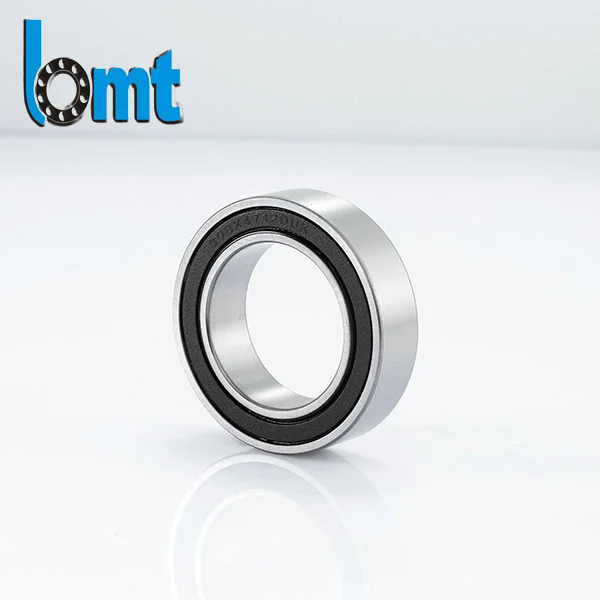
Table of Contents
- What Is an Air Conditioner Bearing?
- Why Is an Air Conditioner Bearing Important?
- How Does an Air Conditioner Bearing Work?
- What Factors Affect Bearing Performance?
- How Can You Recognize Air Conditioner Bearing Failure?
- How Should You Choose the Right Air Conditioner Bearing?
- How Can You Extend Air Conditioner Bearing Service Life?
- Common Air Conditioner Bearing Requirements
- Why Consider Ningbo Demy (D&M) Bearings Co., Ltd.?
- Frequently Asked Questions
- Conclusion
What Is an Air Conditioner Bearing?
An Air Conditioner Bearing is a precision mechanical component designed to support rotating parts in air-conditioning equipment. Depending on the equipment design, bearings may be used in compressor assemblies, fan motors, blower systems, pulleys, shafts, and other rotating mechanisms.
The primary job of a bearing is straightforward: it allows relative movement between components while minimizing friction and controlling mechanical loads. However, the operating environment of HVAC equipment makes bearing selection more demanding than it may initially appear.
Air-conditioning equipment can operate for long periods, sometimes continuously during hot seasons. Bearings may experience high rotational speeds, fluctuating temperatures, vibration, moisture, electrical motor effects, and varying radial or axial loads. A bearing must therefore provide more than basic rotation.
A properly selected bearing can contribute to:
- Smoother shaft rotation
- Lower mechanical friction
- Reduced vibration and operating noise
- More stable motor or compressor operation
- Better resistance to operating temperature changes
- Longer maintenance intervals
- Reduced risk of secondary component damage
For manufacturers and maintenance professionals, the bearing should therefore be treated as a performance-critical component rather than an inexpensive replacement part.
Why Is an Air Conditioner Bearing Important?
Air-conditioning systems depend on rotating machinery. A motor must turn a shaft, a compressor must operate through repeated cycles, and fans or blowers must maintain consistent rotation. Any increase in mechanical resistance can affect the entire system.
When a bearing is in good condition, rolling elements move smoothly along their raceways, allowing the rotating assembly to operate with controlled friction. When the bearing deteriorates, friction and vibration can increase rapidly.
This can create several practical problems:
| Potential Bearing Problem | Possible Equipment Effect | Maintenance Concern |
|---|---|---|
| Excessive friction | Higher energy consumption and heat | Inspect lubrication and bearing condition |
| Raceway damage | Noise, vibration, and unstable rotation | Replace the damaged bearing |
| Insufficient lubrication | Temperature rise and accelerated wear | Check lubricant type and quantity |
| Contamination | Premature surface damage | Check seals and surrounding environment |
| Incorrect installation | Shortened service life and abnormal noise | Verify mounting procedure and fit |
| Incorrect bearing specification | Overloading or dimensional mismatch | Review application requirements |
In severe cases, bearing deterioration can affect the motor shaft, compressor assembly, fan structure, seals, or housing. Replacing a bearing before secondary damage occurs is usually much less disruptive than waiting for a complete mechanical failure.
How Does an Air Conditioner Bearing Work?
The operating principle of a rolling bearing is based on reducing sliding friction by introducing rolling elements between two rings. Depending on the bearing design, balls or rollers travel between the inner and outer raceways while the inner ring rotates relative to the outer ring.
In an air-conditioning application, the bearing transfers loads from the rotating shaft to the stationary housing while allowing controlled rotational movement.
A typical operating sequence can be understood in four stages:
- Load transfer: The shaft and rotating assembly place radial, axial, or combined loads on the bearing.
- Rolling motion: Balls or other rolling elements move between precision raceways.
- Friction control: Proper internal geometry and lubrication reduce resistance during rotation.
- Heat management: Correct bearing selection and lubrication help control operating temperature.
Seals or shields may also be used depending on the bearing design. These components help protect the internal rolling elements and lubricant from contaminants while retaining lubrication within the bearing.
For automotive air-conditioning compressor applications, specialized bearing configurations may be required because the bearing must accommodate high-speed rotation and demanding operating conditions. For example, the BMT product range includes models such as 30BG05S5G, alongside other application-specific air-conditioner bearing specifications.
What Factors Affect Bearing Performance?
The actual service life of an Air Conditioner Bearing depends on more than the nominal bearing size. Application conditions, installation quality, lubrication, load, speed, temperature, and contamination all influence performance.
1. Operating Speed
High rotational speed increases the importance of internal bearing geometry, lubrication, cage design, and heat dissipation. A bearing intended for a slower application should not automatically be used in a high-speed compressor or motor assembly.
Excessive speed can increase frictional heat and may accelerate lubricant degradation. The bearing should therefore be selected according to the actual rotational speed rather than simply matching the shaft diameter.
2. Load Conditions
Bearings may experience radial loads, axial loads, or a combination of both. The correct load rating should be considered alongside the actual operating conditions.
An undersized bearing may suffer accelerated fatigue, while an unnecessarily oversized bearing may introduce dimensional, installation, or cost complications. The most suitable solution is the one that matches the actual mechanical requirements.
3. Temperature
Temperature changes are common in HVAC equipment. A bearing may experience heat generated by rotation, nearby components, ambient temperature changes, and continuous operation.
Elevated temperatures can affect lubricant viscosity and may accelerate material or seal degradation. For this reason, the bearing, lubricant, and operating environment need to be considered as one system.
4. Lubrication
Lubrication creates a protective film between contacting surfaces and helps control friction and wear. Too little lubricant can increase friction and surface damage, while excessive or unsuitable lubricant can also create problems, particularly in high-speed applications.
The lubricant should be compatible with the bearing design and expected temperature and speed range. Relubrication requirements also depend on the bearing construction and application.
5. Contamination and Humidity
Dust, moisture, particles, and other contaminants can enter poorly protected bearing assemblies. These contaminants can damage raceways and rolling elements over time.
Where environmental exposure is significant, appropriate sealing, shielding, material selection, and maintenance practices become particularly important.
How Can You Recognize Air Conditioner Bearing Failure?
Bearing failure rarely happens without warning. In many cases, abnormal operating characteristics appear before complete failure.
Common warning signs include:
- Unusual noise: Humming, squealing, rattling, clicking, or grinding can indicate bearing or lubrication problems.
- Increased vibration: Excessive vibration may result from raceway damage, contamination, incorrect mounting, or bearing wear.
- Abnormal temperature: A significant temperature increase can indicate excessive friction, insufficient lubrication, overload, or internal damage.
- Reduced equipment efficiency: Increased mechanical resistance can affect motor performance and overall system operation.
- Lubricant leakage: Unexpected grease leakage may indicate a seal, lubrication, or installation problem.
- Unstable rotation: Rough or inconsistent rotation can indicate internal bearing damage.
Air-conditioner bearing failure indicators can include abnormal noise, vibration, motor overheating, reduced cooling performance, and lubricant leakage. Prompt inspection is important because continued operation with a severely damaged bearing can cause additional damage to connected components.
Maintenance personnel should investigate the underlying cause rather than simply replacing the bearing. If a bearing fails repeatedly, the real problem may be incorrect alignment, excessive load, contamination, poor lubrication, improper installation, or an unsuitable bearing specification.
How Should You Choose the Right Air Conditioner Bearing?
Choosing the right bearing starts with the application rather than the part number alone. A replacement bearing should match the mechanical, dimensional, environmental, and operating requirements of the equipment.
Key Selection Checklist
- Bore diameter: Confirm the shaft diameter and required inner-ring fit.
- Outer diameter: Verify compatibility with the housing or mounting structure.
- Width: Check available installation space and axial positioning.
- Load capacity: Evaluate expected radial and axial loads.
- Rotational speed: Confirm that the bearing is suitable for the required operating speed.
- Temperature range: Consider both ambient temperature and heat generated during operation.
- Lubrication: Select an appropriate lubricant and lubrication arrangement.
- Sealing: Consider whether sealed or shielded construction is appropriate.
- Material: Select materials according to operating conditions and corrosion requirements.
- Noise requirements: Low-noise applications require appropriate precision and quality control.
- Installation method: Confirm the required mounting tolerances and procedures.
Dimensional compatibility is particularly important. Air-conditioner bearing product ranges can include multiple models with similar bore diameters but different outside diameters, widths, reference codes, and internal configurations. The BMT range, for example, includes models with bore sizes around 30–40 mm and varying outside diameters and widths.
Common Air Conditioner Bearing Requirements
| Requirement | Why It Matters | What to Verify |
|---|---|---|
| Dimensional accuracy | Ensures proper shaft and housing fit | Bore, outside diameter, and width |
| Low vibration | Improves smoothness and user comfort | Balance, precision, internal clearance |
| Low noise | Important for passenger vehicles and indoor HVAC equipment | Manufacturing precision and surface quality |
| High-speed capability | Supports fast motor or compressor rotation | Speed rating and lubrication |
| Temperature resistance | Helps maintain stable performance during prolonged operation | Material, lubricant, and seal compatibility |
| Contamination protection | Reduces premature wear | Seal or shield configuration |
| Consistent quality | Reduces variation between production batches | Inspection and quality-control procedures |
How Can You Extend Air Conditioner Bearing Service Life?
Even a high-quality bearing can fail prematurely if installation and operating conditions are poor. Preventive maintenance should therefore focus on the complete bearing system.
Inspect Before Installation
Check the bearing packaging, identification, dimensions, and visible condition before installation. Do not install a component with visible damage, corrosion, contamination, or incorrect specifications.
Use the Correct Installation Technique
Improper mounting can create microscopic damage that later develops into noise, vibration, or fatigue failure. Installation tools should apply force to the appropriate bearing ring rather than transferring unnecessary force through the rolling elements.
Maintain Correct Alignment
Misalignment can introduce additional loads and cause uneven stress across the bearing. Shaft, housing, and bearing alignment should be checked when recurring failures occur.
Monitor Operating Conditions
Routine monitoring of temperature, vibration, and noise can reveal developing problems before they become severe. A change from the equipment's normal operating condition deserves investigation.
Control Contamination
Keep the bearing and surrounding assembly clean during installation and maintenance. Dust, metal particles, water, and other contaminants can significantly reduce bearing life.
Review Lubrication
Use the specified lubricant and follow the recommended quantity and maintenance interval. Avoid mixing incompatible greases unless compatibility has been confirmed.
Manufacturers commonly emphasize that bearing service life is influenced by operating conditions, load, lubrication, and maintenance. In suitable conditions, long service life is achievable, but high humidity, overload, poor ventilation, or inadequate maintenance can shorten it considerably.
Why Consider Ningbo Demy (D&M) Bearings Co., Ltd.?
Ningbo Demy (D&M) Bearings Co., Ltd. specializes in bearing manufacturing and supply for automotive, industrial, agricultural, motorcycle, and other applications. Its Air Conditioner Bearing range is intended for demanding rotating applications where dimensional consistency, smooth operation, durability, and reliable performance are important.
For automotive air-conditioning compressor applications, specialized products such as the 30BG05S5G are designed around requirements including high-speed operation, low operating noise, and long-term service. The manufacturer's product information also states that its production operates under ISO 9001 and IATF 16949 quality management systems and that the company has more than 20 years of manufacturing experience.
For buyers, working directly with an experienced bearing manufacturer can make specification verification easier. Instead of selecting a replacement solely from a similar-looking bearing, customers can provide the application information and confirm dimensions, operating conditions, and required performance characteristics before purchasing.
When evaluating a supplier, consider:
- Manufacturing experience
- Quality-management practices
- Available bearing configurations
- Dimensional consistency
- Application knowledge
- Production capacity
- Inspection and testing procedures
- Ability to support OEM and replacement requirements
- Communication and technical support
A reliable supply chain is particularly important for compressor manufacturers, HVAC equipment producers, automotive aftermarket distributors, and maintenance organizations that require consistent bearing availability.
Frequently Asked Questions
What is the main function of an Air Conditioner Bearing?
The main function is to support rotating components while reducing friction and controlling radial or axial loads. Depending on the equipment, the bearing may support a motor, compressor, fan, shaft, or related rotating assembly.
How long can an Air Conditioner Bearing last?
There is no single service-life value for every application. Bearing life depends on load, speed, lubrication, temperature, contamination, installation quality, and maintenance. Under appropriate operating conditions, bearings can provide many years of service, while overload or poor lubrication can shorten their life significantly.
What causes an Air Conditioner Bearing to become noisy?
Common causes include insufficient or degraded lubrication, contamination, raceway damage, rolling-element wear, excessive clearance, incorrect installation, misalignment, or excessive loading.
Can a damaged bearing reduce air-conditioning performance?
Yes. Increased bearing friction can make a motor or compressor work harder, increase heat generation, and contribute to vibration. Depending on the equipment, this may eventually affect overall system performance and reliability.
How do I know which bearing model to order?
Start by identifying the existing bearing number and verifying its dimensions. Then confirm the bore diameter, outside diameter, width, load, speed, temperature, sealing arrangement, and application. If the original bearing number is unavailable, provide the equipment and shaft information to a qualified bearing supplier for specification assistance.
Are sealed bearings suitable for air-conditioning applications?
Sealed bearings can be suitable when the application requires protection against dust, moisture, and lubricant loss. However, the appropriate sealing configuration depends on the equipment design, operating temperature, speed, and lubrication requirements.
Why does the bearing overheat?
Possible causes include excessive load, insufficient lubrication, excessive lubricant, incorrect bearing fit, misalignment, contamination, or operation beyond the bearing's intended speed and temperature range.
Should I replace only the bearing when failure occurs?
Not always. The bearing should be replaced when damaged, but the root cause should also be investigated. Check the shaft, housing, alignment, lubrication, load, seals, and surrounding components. Otherwise, the replacement bearing may experience the same failure again.
Conclusion
An Air Conditioner Bearing plays a fundamental role in maintaining smooth and reliable rotation within HVAC and automotive air-conditioning equipment. Although the component is relatively small, its condition can influence noise, vibration, temperature, energy use, maintenance requirements, and overall equipment reliability.
The best bearing choice should be based on the complete application rather than price or dimensions alone. Bore and outside diameter are essential, but speed, load, temperature, lubrication, sealing, contamination, installation, and expected service conditions also need to be evaluated.
For manufacturers, distributors, and maintenance teams, choosing a qualified supplier can reduce specification errors and improve supply consistency. Ningbo Demy (D&M) Bearings Co., Ltd. provides Air Conditioner Bearing solutions for demanding applications and offers a range of bearing configurations for different equipment requirements.
Looking for the right Air Conditioner Bearing for your compressor, motor, or HVAC application? Share your bearing number, dimensions, operating conditions, or equipment requirements with Ningbo Demy (D&M) Bearings Co., Ltd. and contact us for professional product support and a suitable bearing solution.