
How Does A Welding Flange Differ From Other Flange Types
2026-01-08
In the complex world of piping systems, selecting the correct flange is crucial for ensuring integrity, safety, and performance. While numerous flange types exist, the Welding Flange, particularly the weld neck variant, stands out for critical applications. Understanding its distinct characteristics compared to other common flanges is essential for engineers and procurement specialists. At Longan, we specialize in providing high-performance piping components, and a clear grasp of these differences ensures you specify the right part for your project’s demands.
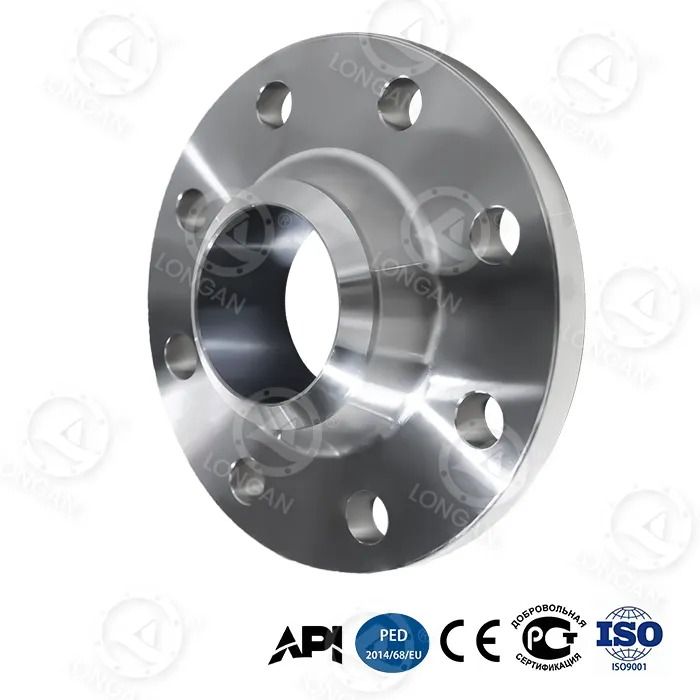
The primary distinction of a Welding Flange lies in its permanent connection method. Unlike other types, it is butt-welded directly to the pipe, creating a robust, leak-proof joint ideal for high-pressure and high-temperature systems. This integral connection minimizes stress concentration. Let's compare it with other prevalent types:
Key Differences at a Glance:
-
Connection Method: Welded vs. Bolted.
-
Pressure Rating: Excellent for high-pressure vs. Varies.
-
Installation: Permanent, requires welding vs. Often easier, non-permanent.
| Feature | Welding Flange (e.g., Weld Neck) | Slip-On Flange | Threaded Flange | Blind Flange |
|---|---|---|---|---|
| Primary Connection | Butt Weld | Fillet Weld (Inside & Outside) | Screw Threads | Bolting Only |
| Pressure Integrity | Excellent | Good | Moderate | N/A (Closes off ends) |
| Fatigue Resistance | High (Smooth bore transition) | Moderate | Low | N/A |
| Best Application | High-P/T, Cyclic Loading | Low/Medium Pressure | Low Pressure, Non-Welded | System Isolation |
Welding Flange FAQ
What is the main advantage of a Welding Flange?
The main advantage is its superior strength and leak resistance in demanding service conditions. The welded neck provides a continuous metal structure from pipe to flange, effectively reducing turbulence and erosion while offering exceptional fatigue performance under bending stresses.
Can a Welding Flange be used for low-pressure applications?
While technically possible, it is often not cost-effective. The welding process increases installation time and cost. For simple, low-pressure systems, alternatives like slip-on or threaded flanges from a reputable supplier like Longan may provide a more economical solution without compromising safety.
How do I ensure a proper weld on a Welding Flange?
Ensuring a proper weld requires qualified personnel, correct welding procedures (WPS), and suitable materials. The pipe end and flange neck must be properly beveled and aligned. Post-weld inspections, such as visual testing (VT) or radiographic testing (RT), are critical to verify joint integrity and prevent future failures.
Choosing the correct flange type is a foundational decision impacting your system's lifetime cost and reliability. For severe service conditions involving high pressures, temperatures, or dynamic loads, the Welding Flange is often the unequivocal choice due to its durable, permanent connection.
Contact us at Longan today. Our engineering support team can help you analyze your application requirements and specify the optimal Welding Flange and piping solutions, ensuring your project's success from design to installation.