
How Does a Tension Spring for Sensors Improve Precision and Reliability?
2026-09-03
A Tension Spring for Sensors may be a small mechanical component, but its influence on sensor performance can be significant. In sensing systems, springs can provide controlled tensile force, maintain mechanical contact, compensate for movement, and help keep components in a stable operating position. A tension spring generally works by resisting extension and generating a restoring force, with its performance determined by factors such as material, wire diameter, coil geometry, initial tension, and working length. For manufacturers developing automotive, industrial, electronic, or customized sensing equipment, selecting the right spring is therefore important for both functional stability and long-term durability.
What Is a Tension Spring for Sensors?
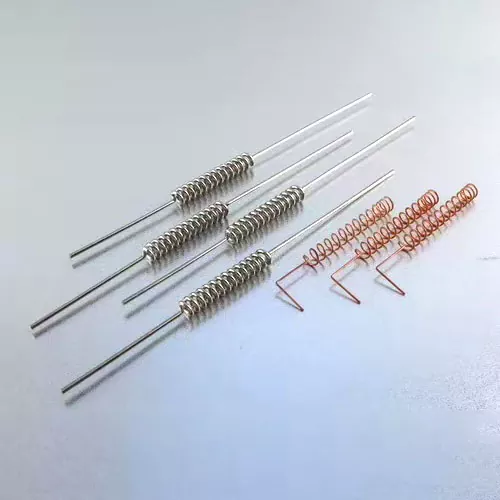
A Tension Spring for Sensors is an extension-type spring designed to generate tensile force when stretched. Its two ends are commonly manufactured with hooks, loops, or other customized connection structures so that the spring can be attached to a sensor assembly or related mechanical component.
The basic load relationship can be expressed as:
F = F₀ + k × ΔL
where:
-
F = working tensile force
-
F₀ = initial tension
-
k = spring rate
-
ΔL = spring extension
This relationship is particularly important in sensor applications because an unsuitable spring rate or excessive extension can affect mechanical movement and, consequently, measurement consistency. Engineering references also show that spring stiffness is strongly influenced by wire diameter and coil geometry.
Why Is the Spring Important in Sensor Assemblies?
Sensors often need to detect changes in position, force, displacement, vibration, or other physical conditions. The mechanical structure surrounding the sensing element must remain sufficiently stable while still allowing the required movement.
A properly engineered tension spring can provide several important functions:
| Function | Benefit to Sensor Systems |
|---|---|
| Controlled tension | Maintains a predictable mechanical force |
| Position retention | Helps keep components in the intended position |
| Movement compensation | Accommodates small mechanical changes |
| Force transmission | Transfers tensile force between components |
| Vibration management | Helps maintain mechanical contact |
| Reset function | Returns a moving component toward its original position |
The spring therefore acts as more than a simple fastening component. It can become an important part of the mechanical interface between the sensor and the equipment.
Key Performance Factors to Consider
Choosing a suitable spring requires more than matching its external dimensions. Engineers should evaluate the complete working environment.
1. Material Selection
Stainless steel is often attractive where corrosion resistance and stable mechanical performance are important. AISI 304 stainless steel, for example, is commonly available for extension springs, while other spring steels can be selected for different load and fatigue requirements.
For applications exposed to humidity, outdoor conditions, or potentially corrosive environments, material selection becomes particularly important.
2. Initial Tension
Extension springs can have different initial tension values even when their basic dimensions appear similar. Initial tension determines the force required before the coils begin to extend.
For a sensor mechanism, excessive initial tension may restrict movement, while insufficient tension may fail to maintain the required mechanical relationship.
3. Spring Rate
The spring rate determines how force changes as the spring extends. A stable and appropriately selected spring rate can help produce predictable mechanical behavior.
For example, commercial extension springs may be specified by both initial tension and spring rate, demonstrating why these parameters should be considered together rather than relying only on free length or outer diameter.
4. Hook and End Design
The ends of the spring are critical because they transfer force to the surrounding components. Depending on the application, designers may require side hooks, extended hooks, loops, S-shaped ends, or other connection structures.
A customized end design can improve installation efficiency and help prevent unwanted movement or interference.
What Makes Customization Valuable?
Standard springs can be suitable for general applications, but sensor assemblies frequently have highly specific dimensional and force requirements. The available installation space may be limited, while the required tensile force, working stroke, connection position, and mounting direction can vary from one project to another.
Xiamen Lijingda Hardware Products Co., Ltd. focuses on precision hardware products and can provide customized spring solutions according to customer drawings and technical requirements. Its product range includes Tension Spring for Sensors and other precision metal components. This customization capability allows customers to specify important parameters such as dimensions, material, spring force, hook configuration, and installation structure.
Ship-Type Customization: A Distinct Advantage
One particularly valuable advantage is support for ship-type customization.
Different vessel types can have substantially different equipment structures, installation environments, vibration conditions, available space, and maintenance requirements. A spring designed for one marine sensing assembly may not necessarily be suitable for another.
For customers working with marine equipment, shipbuilding projects, vessel monitoring systems, or sensor assemblies installed on different ship types, Xiamen Lijingda Hardware Products Co., Ltd. supports ship-type customization. Springs can be developed around the specific requirements of different vessel structures and equipment configurations rather than relying exclusively on a generic standard component.
This approach can help customers address:
-
Different ship types and equipment layouts
-
Limited installation space
-
Marine humidity and corrosion concerns
-
Specific tensile-force requirements
-
Customized hook and mounting structures
-
Different sensor installation positions
-
OEM replacement and project-specific requirements
For marine projects, this flexibility can simplify component integration and reduce the need for customers to redesign surrounding structures merely to accommodate a standard spring.
How Does a Customized Spring Improve Application Results?
A well-designed Tension Spring for Sensors can deliver practical benefits throughout the product lifecycle.
More consistent mechanical performance:
The spring can be matched to the required force and displacement range instead of being selected solely according to approximate dimensions.
Better installation compatibility:
Customized end structures and dimensions can make the spring easier to integrate into the existing sensor assembly.
Improved application flexibility:
OEM customers can request different materials, dimensions, loads, and configurations for different products or projects.
Better suitability for specialized environments:
Material and surface-treatment choices can be considered according to operating conditions.
Reduced development compromises:
Instead of modifying the equipment around an unsuitable standard spring, the spring itself can be designed around the equipment.
Tension Spring vs. Standard Spring Selection
| Consideration | Standard Spring | Customized Tension Spring |
|---|---|---|
| Dimensions | Fixed options | Application-specific |
| Spring force | Standardized range | Adjustable to requirements |
| End configuration | Limited | Customizable |
| Sensor integration | General | Designed for specific assemblies |
| Ship-type projects | May require adaptation | Supports ship-type customization |
| OEM requirements | Limited flexibility | High flexibility |
| Prototype development | Fast for standard designs | Suitable for specialized projects |
For high-volume standardized equipment, an off-the-shelf spring can be economical. However, customized springs become more attractive when the project requires precise dimensions, specific force characteristics, specialized mounting structures, or ship-specific adaptation.
How Should Buyers Evaluate a Supplier?
When sourcing a Tension Spring for Sensors, buyers should look beyond price. A capable supplier should understand both spring manufacturing and the mechanical requirements of the customer's application.
Consider these points:
-
Manufacturing capability – Can the supplier produce the required dimensions consistently?
-
Material options – Are suitable spring steel and stainless-steel materials available?
-
Force control – Can initial tension and spring rate be controlled?
-
Customization – Can the supplier manufacture according to drawings or samples?
-
End configurations – Can hooks and loops be customized?
-
Quality inspection – Are dimensional and force-related parameters checked?
-
Marine requirements – Can the supplier support ship-type customization?
-
OEM/ODM service – Can the supplier support prototypes as well as larger production orders?
These factors are especially important when the spring is incorporated into a sensor assembly where a small dimensional deviation can influence the overall mechanical behavior.
Applications of Tension Springs for Sensors
Depending on their specifications, customized tension springs can be used in a broad range of mechanical and sensing systems, including:
-
Automotive sensor assemblies
-
Industrial monitoring equipment
-
Position and displacement sensing mechanisms
-
Electronic equipment
-
Mechanical control systems
-
Marine sensing equipment
-
Shipboard monitoring systems
-
Customized OEM sensor assemblies
-
Precision hardware mechanisms
Because tension springs are available in different materials, dimensions, load ranges, and end configurations, they can be adapted to many specialized applications.
Final Considerations
A Tension Spring for Sensors is a relatively small component, but its force characteristics, dimensions, material, and connection design can directly influence the reliability of a sensor mechanism. Selecting the right spring requires consideration of the complete application rather than simply choosing the closest standard size.
For customers seeking precision components, OEM production, or specialized marine solutions, Xiamen Lijingda Hardware Products Co., Ltd. offers a practical combination of hardware manufacturing capability and customization support. Its ability to develop Tension Spring for Sensors according to customer requirements, including ship-type customization, makes it suitable for projects where standard springs cannot fully satisfy installation or performance needs.
If you are looking for a reliable Tension Spring for Sensors supplier and need customized dimensions, spring force, materials, end configurations, or ship-type solutions, contact us today. Xiamen Lijingda Hardware Products Co., Ltd. can work with your drawings and application requirements to develop a spring solution that fits your equipment more precisely.