
A reliable solar mounting system depends on more than panels, rails, and brackets. The fasteners connecting these components must provide secure mechanical fixation while tolerating outdoor exposure, temperature changes, vibration, wind loads, and long-term environmental stress. A properly selected Solar Fasteners Kit brings compatible fastening components together, simplifies installation, reduces the risk of missing parts, and helps installers achieve consistent mounting quality. This article explains the role of solar fasteners, the common installation challenges they address, how to select the right kit, and how Energet Solar supports dependable photovoltaic mounting applications.
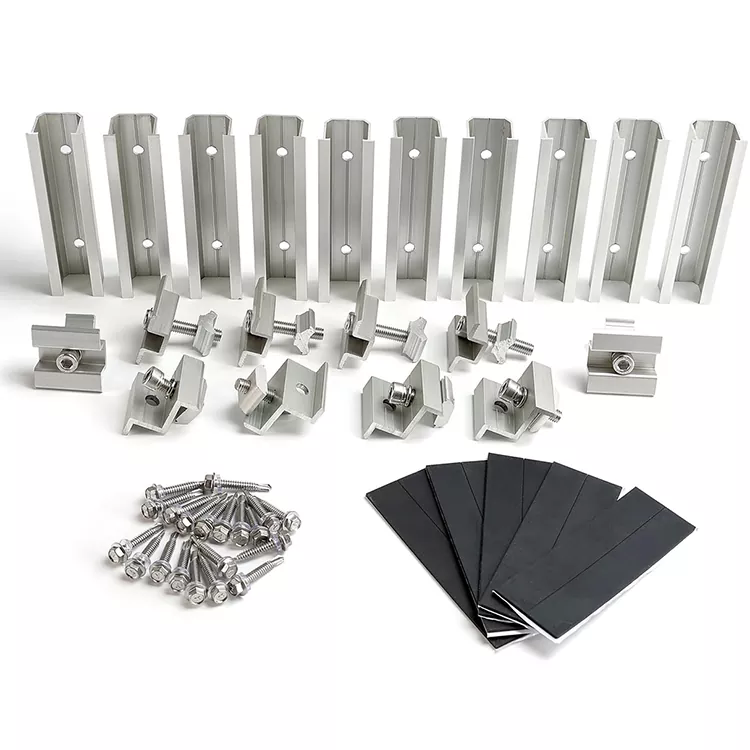
Table of Contents
- Article Outline
- Why Are Solar Fasteners Important?
- What Components Are Included in a Solar Fasteners Kit?
- Which Installation Problems Can a Solar Fasteners Kit Solve?
- How Do Materials Affect Solar Fastener Performance?
- How Can You Select the Right Solar Fasteners Kit?
- How Should Solar Fasteners Be Installed?
- What Common Fastening Mistakes Should Be Avoided?
- How Can Fastener Reliability Be Maintained?
- Why Consider Energet Solar for Solar Fasteners?
- Frequently Asked Questions
- Conclusion
Article Outline
- Understanding the fastening foundation: Why fasteners are essential to structural stability and long-term photovoltaic performance.
- Kit composition: An overview of common nuts, bolts, washers, clamps, threaded components, and mounting accessories.
- Problem solving: How a coordinated kit can reduce installation delays, compatibility issues, corrosion risks, and inconsistent fastening.
- Material selection: Key considerations involving stainless steel, aluminum compatibility, coatings, corrosion resistance, and environmental conditions.
- Installation guidance: Practical considerations for positioning, tightening, alignment, and inspection.
- Purchasing decisions: How project conditions, mounting structure, panel configuration, and environmental exposure influence kit selection.
- Maintenance and FAQs: Long-term inspection practices and answers to common questions from installers and solar project owners.
Why Are Solar Fasteners Important?
A photovoltaic system can generate electricity for decades, but its mechanical mounting structure must remain stable throughout that service life. Solar modules are continuously exposed to wind, rain, snow, ultraviolet radiation, humidity, thermal cycling, and mechanical vibration. The fastening system is responsible for maintaining the connection between the module and its supporting structure under these conditions.
This makes a Solar Fasteners Kit more than a collection of ordinary screws and nuts. Fasteners used in photovoltaic applications need to match the mounting profile, module frame, structural material, and installation method. They must also be suitable for outdoor exposure.
A weak or incompatible fastening connection can create several problems:
- Loose connections caused by vibration or repeated thermal expansion and contraction.
- Movement of solar modules during high-wind conditions.
- Damage to module frames caused by incorrect fastening components.
- Corrosion at connections exposed to moisture or salt-laden air.
- Installation delays caused by missing or incompatible hardware.
- Additional maintenance caused by inconsistent fastening quality.
For commercial, residential, agricultural, industrial, and utility-scale photovoltaic projects, selecting appropriate fastening hardware is therefore an important part of the overall mounting-system design.
What Components Are Included in a Solar Fasteners Kit?
The exact configuration of a Solar Fasteners Kit varies according to the mounting application. A well-organized kit may contain several types of mechanical components designed to work together.
| Component | Typical Function | Important Consideration |
|---|---|---|
| Bolts | Secure mounting rails, brackets, clamps, or structural components | Thread size, length, strength, and material |
| Nuts | Lock bolts and threaded connections in position | Thread compatibility and resistance to loosening |
| Washers | Distribute clamping force and protect contact surfaces | Diameter, thickness, and material compatibility |
| Module Clamps | Secure solar panel frames to mounting rails | Panel frame dimensions and mounting profile |
| T-Nuts | Provide adjustable threaded connection inside mounting rails | Rail channel dimensions and thread specification |
| Threaded Fasteners | Connect brackets and structural mounting components | Load requirements and installation environment |
| Specialized Mounting Hardware | Support specific roof, ground, or structural configurations | System design and installation method |
The advantage of purchasing compatible components as a kit is that installers can reduce the uncertainty associated with sourcing individual pieces from different suppliers. This can make project preparation more predictable and help maintain consistent installation practices across multiple arrays.
Which Installation Problems Can a Solar Fasteners Kit Solve?
Solar installation teams often face practical challenges that are not obvious during the initial design stage. Hardware management is one of them. A project may require thousands of individual fastening components, and even a small mismatch can interrupt installation.
A properly configured kit can address several common pain points.
1. Missing hardware
When bolts, nuts, washers, or specialized fasteners are purchased separately, it becomes easier to overlook a required component. A complete kit can simplify inventory planning and reduce the likelihood of discovering missing hardware after installation has already started.
2. Thread incompatibility
Different components may look similar while using different thread specifications. Using incompatible threads can damage components or prevent proper tightening. Matching hardware within a coordinated kit helps reduce this risk.
3. Installation inconsistency
Large solar projects may involve several installation teams. Standardized fastening components make it easier to establish repeatable installation procedures and inspection criteria.
4. Corrosion concerns
Outdoor fasteners are exposed to moisture and atmospheric pollutants. Coastal projects can be particularly demanding because salt exposure can accelerate corrosion. Selecting suitable materials is therefore essential.
5. Excessive installation time
When workers need to identify and match individual components repeatedly, installation productivity can suffer. Clearly organized fastening kits can simplify preparation and reduce unnecessary handling.
How Do Materials Affect Solar Fastener Performance?
Material selection has a direct influence on fastener durability. Solar mounting structures are generally expected to operate outdoors for many years, so resistance to environmental degradation is an important consideration.
Stainless steel is widely used in solar fastening applications because of its corrosion resistance and mechanical properties. Different stainless-steel grades have different performance characteristics, so the appropriate grade should be selected according to the project environment and applicable technical requirements.
Aluminum components may also be used in photovoltaic mounting structures because aluminum offers low weight and good corrosion resistance. However, designers should consider material compatibility when aluminum structures are combined with stainless-steel fasteners.
Important material-related factors include:
- Exposure to rain and humidity.
- Salt spray in coastal environments.
- Industrial pollutants.
- Temperature fluctuations.
- Potential galvanic corrosion between dissimilar metals.
- Required mechanical strength.
- Expected service life of the mounting system.
Choosing a fastener based only on price can create unnecessary long-term risk. The correct decision should consider the entire installation environment and the expected operating period of the photovoltaic system.
How Can You Select the Right Solar Fasteners Kit?
The right Solar Fasteners Kit depends on the application rather than a universal specification. Before purchasing, installers and project engineers should identify the structural and environmental requirements of the installation.
| Selection Factor | Questions to Consider | Why It Matters |
|---|---|---|
| Mounting Type | Is the system roof-mounted, ground-mounted, or another configuration? | Different structures require different hardware. |
| Panel Frame | What are the frame dimensions and clamp requirements? | Ensures secure module attachment. |
| Rail Profile | What channel and slot dimensions are used? | Determines compatibility with T-nuts and related fasteners. |
| Material | Which metals are used in the mounting structure? | Helps reduce corrosion and compatibility problems. |
| Environmental Conditions | Is the site coastal, humid, snowy, windy, or industrial? | Environmental exposure affects material selection. |
| Load Requirements | What wind, snow, and structural loads must be supported? | Fasteners must be appropriate for the mechanical design. |
| Installation Method | Will installers use hand tools, torque tools, or specialized equipment? | Influences component selection and installation efficiency. |
| Project Quantity | How many modules and fastening points are involved? | Determines kit quantity and inventory requirements. |
It is also important to verify the manufacturer's technical information, dimensions, material specifications, and compatibility before placing a large order. A fastener that works well in one mounting system may not be appropriate for another.
How Should Solar Fasteners Be Installed?
Correct components cannot compensate for poor installation practices. Fastening quality depends on both the hardware and the way it is installed.
Begin with preparation. Confirm that the correct bolts, nuts, washers, clamps, rails, and brackets are available before starting. Separate components by installation stage when possible.
Check alignment. Rails and brackets should be positioned according to the mounting-system design. Misalignment can create unnecessary stress on fasteners and module frames.
Use appropriate tightening procedures. Over-tightening can damage components or deform a solar module frame, while under-tightening may allow movement. Follow the applicable manufacturer's specified torque requirements rather than relying on guesswork.
Inspect connections. After installation, verify that fasteners are properly seated, clamps are correctly positioned, and no components are missing or visibly damaged.
Document installation quality. For larger projects, inspection records can help maintenance teams understand how the system was installed and make future troubleshooting easier.
What Common Fastening Mistakes Should Be Avoided?
Many solar mounting problems originate from relatively simple installation errors. Avoiding these mistakes can improve both reliability and project efficiency.
- Using ordinary hardware without verifying outdoor suitability. Indoor hardware may not provide adequate corrosion resistance for photovoltaic installations.
- Mixing incompatible thread specifications. Always verify thread size and pitch before installation.
- Ignoring material compatibility. Dissimilar metals may require careful consideration to reduce galvanic corrosion risk.
- Over-tightening clamps. Excessive force can damage module frames or mounting components.
- Under-tightening connections. Insufficient clamping force can permit movement under vibration or wind.
- Skipping visual inspection. Small installation errors can become more difficult to correct after the array is completed.
- Selecting hardware only by purchase price. The lowest initial cost does not necessarily represent the lowest lifecycle cost.
- Failing to consider the local environment. Coastal, snowy, humid, and high-wind areas may require different fastening strategies.
How Can Fastener Reliability Be Maintained?
Although solar mounting systems are designed for long-term operation, periodic inspection remains useful, particularly in demanding environments. Maintenance personnel should look for signs of corrosion, loosening, physical damage, unusual movement, or deterioration around fastening points.
A practical inspection program may include:
- Checking exposed fasteners for visible corrosion.
- Inspecting module clamps and rail connections.
- Looking for unusual movement or vibration marks.
- Checking for damaged or missing hardware.
- Inspecting mounting points after severe weather events.
- Recording recurring issues for corrective action.
- Following the maintenance recommendations applicable to the specific mounting system.
Extra attention may be appropriate for photovoltaic installations located near coastlines, industrial facilities, areas with frequent severe storms, or regions with significant seasonal temperature changes.
Why Consider Energet Solar for Solar Fasteners?
Energet Solar provides solar-related mounting and fastening solutions designed around the practical requirements of photovoltaic installation. Its Solar Fasteners Kit product offering is intended to help customers source compatible fastening components for solar mounting applications while simplifying project preparation.
For installers, distributors, engineering companies, and solar project developers, a dependable fastening supplier can provide value beyond the individual hardware components. Consistent specifications, suitable material choices, stable supply, and clear product information can all contribute to smoother project execution.
When evaluating a supplier, buyers should consider more than whether a kit contains the required number of fasteners. Important purchasing questions include:
- Are the components suitable for the intended solar mounting system?
- Are dimensions and thread specifications clearly defined?
- Are materials appropriate for the installation environment?
- Can the supplier support different project requirements?
- Is product quality consistent between batches?
- Can the supplier provide appropriate technical information?
- Can the required quantities be supplied according to the project schedule?
These considerations become particularly important when a project involves a large number of modules. Standardized fastening solutions can help installers reduce procurement complexity while maintaining a consistent approach to mechanical installation.
Frequently Asked Questions
Q1: What is a Solar Fasteners Kit?
A Solar Fasteners Kit is a coordinated collection of fastening components used to secure solar mounting structures and photovoltaic modules. Depending on the application, it may include bolts, nuts, washers, clamps, T-nuts, threaded components, and other mounting hardware.
Q2: Why should solar fasteners be different from ordinary construction fasteners?
Solar fasteners are exposed to outdoor environmental conditions for long periods. They must be selected with consideration for corrosion resistance, mechanical loads, mounting-system compatibility, temperature changes, and installation requirements.
Q3: Are stainless-steel fasteners suitable for solar installations?
Stainless steel is widely used for photovoltaic fastening applications because of its corrosion resistance. However, the appropriate grade and specification should be selected according to the project environment, structural design, and applicable requirements.
Q4: Can one Solar Fasteners Kit be used for every solar project?
No. Solar mounting structures differ in rail profiles, module frames, roof types, structural materials, loading conditions, and installation methods. Fasteners should therefore be selected according to the specific system.
Q5: What happens if solar fasteners are over-tightened?
Excessive tightening can damage threads, deform mounting components, damage module frames, or create excessive mechanical stress. Installation should follow the torque specifications provided for the relevant mounting components.
Q6: How often should solar fasteners be inspected?
The appropriate inspection interval depends on the mounting system, environment, project requirements, and maintenance program. Visual inspections can be particularly valuable after severe weather or when signs of movement, corrosion, or damage are observed.
Q7: Are solar fasteners suitable for coastal installations?
They can be, provided the selected materials and protective measures are appropriate for the marine environment. Coastal locations typically require greater attention to corrosion resistance because salt and humidity can accelerate material degradation.
Q8: Why is a complete fastening kit useful for large solar projects?
A complete kit can simplify procurement, reduce the number of individual components that need to be sourced, improve inventory control, and help installation teams use consistent hardware throughout a project.
Q9: What information should be checked before ordering a Solar Fasteners Kit?
Buyers should verify the mounting type, rail dimensions, module frame configuration, thread specifications, fastener dimensions, material, environmental conditions, mechanical requirements, quantity, and installation method.
Q10: Can Energet Solar support different solar fastening requirements?
Energet Solar provides solar fastening and mounting-related products for photovoltaic applications. Customers should communicate their specific mounting structure, component dimensions, environmental conditions, quantity, and project requirements to determine the appropriate solution.
Conclusion
A dependable photovoltaic mounting system starts with the details. Although solar fasteners are relatively small components, they play an essential role in connecting modules and structural elements and maintaining mechanical stability over years of outdoor exposure.
Choosing a suitable Solar Fasteners Kit can help address common project challenges such as incompatible hardware, missing components, installation delays, corrosion concerns, and inconsistent fastening practices. The best solution should be selected according to the mounting structure, environmental conditions, material compatibility, load requirements, and installation method rather than price alone.
For solar installers, distributors, and project developers seeking a practical fastening solution, Energet Solar can be considered as a supplier for photovoltaic fastening and mounting applications. A carefully selected kit, combined with correct installation and periodic inspection, provides a stronger foundation for reliable solar projects.
Planning a solar installation or sourcing reliable photovoltaic fastening components? Discuss your mounting requirements, project conditions, quantities, and application needs with Energet Solar today. Contact us to explore a suitable Solar Fasteners Kit for your next solar project.