
How Does a Single Step Motor Shaft Improve Motion Accuracy and Mechanical Performance?
2026-10-30
A reliable motion transmission system depends on more than just the motor itself. The shaft plays an essential role in transferring rotational force, maintaining mechanical stability, and ensuring accurate movement throughout the operating process. A Single Step Motor Shaft is an important precision component designed to connect a motor with other mechanical elements, helping convert motor output into controlled movement. Its dimensional accuracy, material quality, surface finish, and structural strength directly influence the overall performance of the equipment.
For manufacturers of automation equipment, industrial machinery, and precision motion systems, choosing a suitable shaft is essential for achieving consistent operation and reducing maintenance requirements. Ningbo Guanshuo Precision Hardware Co., Ltd. focuses on precision hardware manufacturing, providing components designed to meet different mechanical application requirements.
What Is a Single Step Motor Shaft?
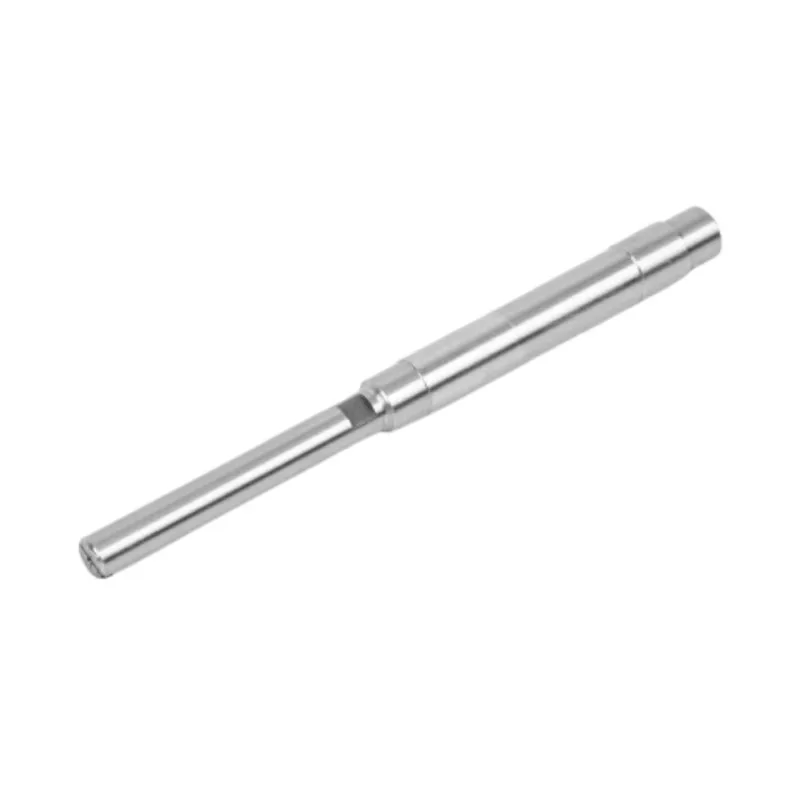
A Single Step Motor Shaft is a mechanical transmission component featuring a stepped or single-level shaft structure, depending on its specific design configuration. It is commonly used to transfer torque from a motor to connected components such as gears, pulleys, couplings, and other transmission parts.
The shaft must maintain accurate dimensions and reliable mechanical properties to ensure proper assembly and stable rotation. Even small dimensional deviations can affect alignment, increase vibration, or reduce transmission efficiency.
Its main characteristics include:
-
Dimensional precision: Supports accurate assembly and proper component positioning.
-
Mechanical strength: Withstands rotational forces and operational loads.
-
Surface quality: Helps reduce friction and unnecessary wear at contact points.
-
Structural stability: Maintains reliable performance during continuous operation.
-
Application flexibility: Can be manufactured according to different equipment requirements.
Why Is a Single Step Motor Shaft Important?
Although a motor shaft may appear to be a relatively simple component, it has a direct influence on the performance of an entire mechanical system.
1. Ensuring Accurate Power Transmission
The primary function of a Single Step Motor Shaft is to transfer rotational power from the motor to the connected mechanism. Accurate shaft dimensions help maintain proper connections and minimize unnecessary movement between components.
In precision applications, stable torque transmission is particularly important because inconsistent mechanical movement can affect positioning accuracy and production quality.
2. Improving Mechanical Stability
A shaft with suitable material properties and dimensional accuracy helps maintain stable rotation. Proper concentricity and alignment can reduce vibration, noise, and uneven loading during operation.
This is especially valuable in automated equipment that operates continuously or requires repetitive positioning.
3. Reducing Wear and Maintenance
Poorly manufactured shafts may cause excessive friction, misalignment, or premature wear in connected components. A precision-machined Single Step Motor Shaft helps improve contact conditions and supports longer service life when properly designed and installed.
For equipment manufacturers, this can contribute to lower maintenance costs and improved production efficiency.
4. Supporting Compact Mechanical Designs
Modern machinery increasingly requires compact structures without compromising performance. A properly designed motor shaft can accommodate specific installation spaces and transmission configurations, helping engineers optimize equipment layouts.
What Applications Use a Single Step Motor Shaft?
Single Step Motor Shafts are suitable for various mechanical and industrial applications where reliable rotational transmission is required.
| Application | Main Function |
|---|---|
| Automation equipment | Transfers motor power to moving mechanisms |
| Industrial machinery | Supports rotational transmission |
| Robotics | Connects motors with mechanical drive components |
| Electrical equipment | Provides mechanical output connections |
| Precision instruments | Supports controlled rotational movement |
| Small drive systems | Enables compact mechanical transmission |
Different applications require different shaft specifications. Factors such as rotational speed, torque, operating environment, installation dimensions, and load conditions should be considered before selecting a suitable product.
Which Factors Should You Consider When Choosing a Single Step Motor Shaft?
Selecting the right shaft is essential for achieving reliable mechanical performance. Buyers and equipment manufacturers should evaluate several important factors.
1. Material Selection
Material selection affects strength, hardness, wear resistance, and machinability. Depending on the application, carbon steel, stainless steel, or other engineering materials may be considered.
2. Dimensional Tolerance
Shaft diameter, length, geometric accuracy, and connection dimensions must match the corresponding motor and transmission components. Proper tolerances help prevent assembly problems and excessive mechanical clearance.
3. Surface Finish
A smooth and consistent surface finish can reduce friction and improve the contact conditions between the shaft and connected components.
4. Manufacturing Precision
Precision machining is important for maintaining dimensional consistency and ensuring that each shaft meets the required technical specifications.
5. Customization Capability
For OEM equipment manufacturers, customized dimensions, materials, and machining requirements can help ensure compatibility with specific mechanical designs.
How Does Precision Manufacturing Improve Shaft Performance?
The manufacturing process plays a significant role in determining the final quality of a Single Step Motor Shaft.
Depending on the design, production may involve several machining and inspection procedures:
-
Raw material preparation: Selecting appropriate materials according to mechanical requirements.
-
Turning and machining: Processing the shaft to achieve the specified dimensions.
-
Surface finishing: Improving surface quality and dimensional consistency.
-
Quality inspection: Checking critical dimensions and identifying manufacturing deviations.
-
Final verification: Ensuring that finished components meet the agreed specifications.
Consistent quality control helps reduce dimensional variations between batches, which is particularly important for manufacturers purchasing components in bulk.
Why Choose Ningbo Guanshuo Precision Hardware Co., Ltd.?
Finding a dependable precision hardware manufacturer is an important part of building a stable supply chain. Ningbo Guanshuo Precision Hardware Co., Ltd. focuses on precision hardware components and manufacturing solutions for industrial customers.
When sourcing a Single Step Motor Shaft, buyers should prioritize suppliers that understand machining accuracy, material requirements, and practical assembly conditions.
Working with an experienced manufacturing partner can bring several advantages:
-
Precision-oriented production: Attention to dimensional accuracy and product consistency.
-
Application-based solutions: Product specifications can be evaluated according to actual equipment requirements.
-
Quality-focused manufacturing: Inspection procedures help maintain consistent product standards.
-
B2B supply support: Manufacturing cooperation can support the sourcing needs of industrial equipment producers.
Whether you need standard shaft components or customized precision hardware, choosing the right manufacturing partner can help improve procurement efficiency and product reliability.
Conclusion: Choosing the Right Single Step Motor Shaft for Reliable Performance
A Single Step Motor Shaft is more than a simple connecting component. It plays an important role in torque transmission, mechanical alignment, rotational stability, and overall equipment performance. Material selection, dimensional accuracy, surface quality, and manufacturing consistency should all be considered when evaluating a suitable product.
For industrial buyers and OEM manufacturers, investing in precision-engineered shaft components can help reduce assembly issues, improve operational stability, and support long-term equipment performance.
Looking for a reliable precision hardware manufacturing partner? Ningbo Guanshuo Precision Hardware Co., Ltd. is ready to discuss your component requirements and customized manufacturing needs. Contact us today to explore suitable Single Step Motor Shaft solutions for your applications and build a more reliable supply chain.