
How Does a Self-Cleaning Pass Box Improve Controlled Material Transfer?
2025-12-26
Article Abstract
A Self-Cleaning Pass Box is a critical cleanroom auxiliary device designed to ensure controlled, contamination-minimized material transfer between clean zones of differing cleanliness grades. This article provides a comprehensive technical explanation of how a Self-Cleaning Pass Box functions, its structural configuration, performance parameters, and its role in regulated industries such as pharmaceuticals, biotechnology, electronics, and medical manufacturing. Through structured analysis, frequently asked questions, and future-oriented discussion, this content aims to support informed selection and application while aligning with current search behavior and professional reading habits.
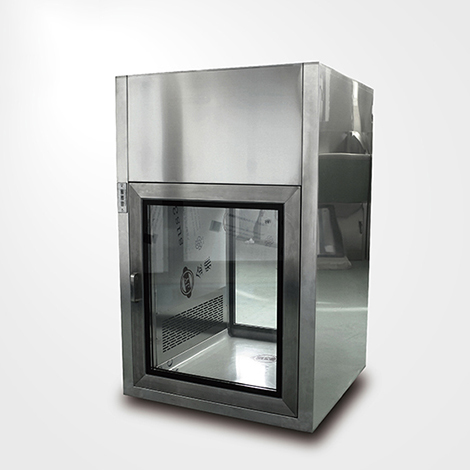
Table of Contents
- 1. How Does a Self-Cleaning Pass Box Work in Cleanroom Systems?
- 2. How Are Technical Parameters Defined for a Self-Cleaning Pass Box?
- 3. How Should a Self-Cleaning Pass Box Be Selected and Applied?
- 4. How Will Self-Cleaning Pass Box Technology Evolve?
Outline
- Operational principles and core structure
- Technical specifications and configuration logic
- Application scenarios and selection considerations
- Industry development and long-term relevance
1. How Does a Self-Cleaning Pass Box Work in Cleanroom Systems?
A Self-Cleaning Pass Box is engineered to act as an intermediary chamber for transferring materials between cleanroom areas while maintaining environmental integrity. Unlike standard static pass boxes, this system integrates active air filtration and internal circulation to remove surface particulates before transfer completion.
The working principle is based on vertical or horizontal unidirectional airflow generated by an integrated fan-filter unit (FFU). Air is drawn through a high-efficiency particulate air (HEPA) filter, achieving a filtration efficiency of ≥99.99% at 0.3 μm. During operation, the chamber undergoes a preset self-cleaning cycle, ensuring airborne contaminants are continuously diluted and removed.
Interlocking door mechanisms prevent simultaneous opening, eliminating direct airflow exchange between clean zones. This design supports compliance with ISO 14644 and GMP cleanroom requirements and ensures repeatable, verifiable material transfer processes.
2. How Are Technical Parameters Defined for a Self-Cleaning Pass Box?
Technical parameters determine whether a Self-Cleaning Pass Box can meet specific cleanliness, load, and operational demands. These parameters are typically standardized but can be customized to align with project-specific validation protocols.
| Parameter | Specification Range |
|---|---|
| External Dimensions (W×H×D) | 700×700×700 mm to 1000×1000×1000 mm |
| Internal Chamber Material | SUS304 / SUS316L Stainless Steel |
| Airflow Type | Vertical Laminar / Horizontal Laminar |
| HEPA Filter Efficiency | ≥99.99% @ 0.3 μm |
| Air Velocity | 0.36–0.54 m/s |
| Noise Level | ≤65 dB |
| Interlock System | Mechanical or Electronic Interlock |
| Power Supply | AC 220V / 50Hz or AC 110V / 60Hz |
These parameters collectively influence airflow stability, particle removal efficiency, and operational reliability. Material selection ensures chemical resistance and ease of cleaning, while airflow velocity is calibrated to balance turbulence control with effective particle displacement.
3. How Should a Self-Cleaning Pass Box Be Selected and Applied?
Selection should be guided by cleanroom classification, material transfer frequency, and regulatory obligations. Pharmaceutical and biotechnology facilities often require higher-grade filtration and validation-ready documentation, while electronics manufacturing may prioritize electrostatic control and vibration stability.
Installation location is equally important. Wall-mounted configurations are common, ensuring flush integration between adjacent rooms. Operational protocols typically include timed self-cleaning cycles, routine filter integrity testing, and surface sanitation schedules.
Common Questions About Self-Cleaning Pass Box
Q: How long does a self-cleaning cycle typically take?
A: A standard self-cleaning cycle usually ranges from 10 to 30 minutes, depending on airflow volume, chamber size, and cleanliness requirements. Adjustable timers allow alignment with operational workflows.
Q: How often should HEPA filters be replaced?
A: HEPA filter replacement is determined by differential pressure readings and validation results. Under normal conditions, replacement intervals range from 12 to 24 months, subject to environmental load and usage frequency.
Q: Can a Self-Cleaning Pass Box be used between different ISO classes?
A: Yes. The system is specifically designed to facilitate transfers between clean zones of differing ISO classifications by maintaining directional airflow and preventing cross-contamination.
4. How Will Self-Cleaning Pass Box Technology Evolve?
Future development is expected to focus on intelligent control systems, real-time particle monitoring, and energy optimization. Integration with building management systems (BMS) and cleanroom monitoring platforms will enable predictive maintenance and automated compliance reporting.
Materials innovation will further enhance corrosion resistance and antimicrobial performance, supporting long-term stability in high-sensitivity environments. As regulatory expectations increase, standardized validation support and digital documentation will become baseline requirements.
Within this evolving landscape, manufacturers such as Jinda continue to refine structural precision, airflow control accuracy, and compliance adaptability to support global cleanroom infrastructure demands.
For tailored configurations, technical consultation, or project-specific solutions, interested parties are encouraged to contact us to discuss application requirements and system integration strategies.