
How Does a High-Performance Roots Blower Transform Industrial Efficiency?
2025-12-10
A Roots Blower is a positive-displacement, oil-free air-moving device widely used in pneumatic conveying, wastewater aeration, vacuum packaging, fish farming, industrial combustion, dust collection, and various manufacturing processes that require stable, pulsation-free air supply. Its core principle relies on two synchronized rotors rotating in opposite directions to deliver constant airflow at a fixed volume, regardless of system pressure fluctuations. This stable delivery makes it especially valuable in applications where consistent pressure and reliability are non-negotiable.
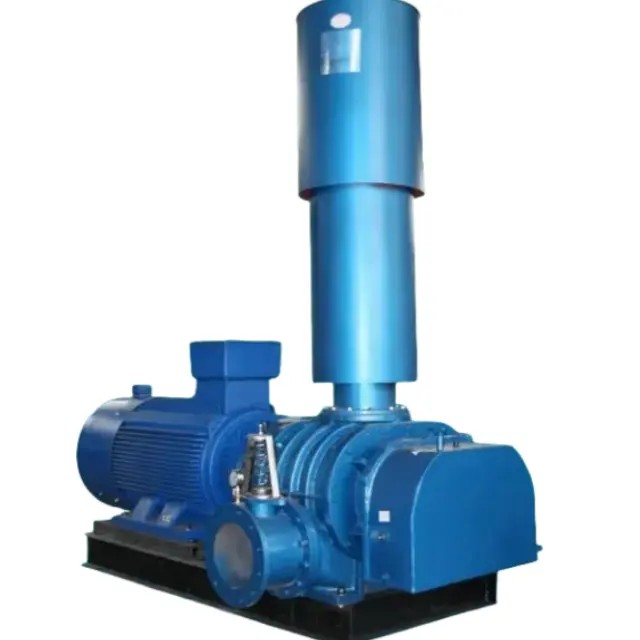
To support technical clarity, below is a professional parameter breakdown for typical industrial Roots Blower models:
| Parameter Category | Technical Specifications |
|---|---|
| Airflow Range | 0.6–430 m³/min |
| Pressure Rise | 9.8–98 kPa |
| Motor Power | 0.75–500 kW |
| Rotor Type | 2-lobe / 3-lobe |
| Lubrication | Oil-bath gear lubrication, air chamber oil-free |
| Noise Level | ≤75 dB(A) with silencer configuration |
| Cooling Method | Air cooling or water cooling (depending on model) |
| Drive Method | Belt drive / coupling drive |
| Material Options | Cast iron, ductile iron, stainless steel for corrosive environments |
| Typical Applications | Wastewater aeration, pneumatic conveying, vacuum systems, aquaculture, gas combustion, industrial drying, dust filtration |
Each section is designed for high search visibility, clear industrial relevance, and easy reading for local English-speaking audiences.
How Does a Roots Blower Work and Why Is Its Operating Principle So Critical?
1. How Does a Roots Blower Maintain Constant Airflow Under Pressure Changes?
A Roots Blower operates based on positive displacement. As the rotors spin, they trap a fixed amount of air and move it from the inlet to the outlet. Because the volume of air moved per rotation is constant, the flow remains stable even when the system pressure varies. This is especially important in aeration, conveying, and combustion systems where airflow consistency directly affects process reliability.
The absence of internal compression ensures low mechanical stress, longer equipment life, and minimal maintenance requirements. As a result, many industries prioritize Roots Blowers when they need steady airflow instead of variable output.
2. How Does the Rotor Design Influence Efficiency and Noise Levels?
Modern 3-lobe rotors reduce pressure pulsation compared with older 2-lobe types, which significantly lowers vibration and noise. Synchronized timing gears ensure the rotors never touch, eliminating internal wear and preventing contamination. Industrial operators benefit from longer life cycles, reduced downtime, and better energy efficiency.
3. How Does a Roots Blower Stay Oil-Free?
Only the gear chamber requires lubrication, while the air chamber remains fully isolated. This prevents oil from entering the airflow and makes the blower ideal for sensitive applications such as food production, medical equipment, and wastewater aeration.
Common FAQs About Roots Blowers (1 of 2)
Q: How long can a Roots Blower operate continuously?
A: Under proper installation and routine maintenance, a high-quality Roots Blower can operate continuously for 24 hours a day in applications such as wastewater aeration or pneumatic conveying. With stable lubrication, clean intake filtration, and temperature control, many units run for 5–10 years without major repairs. Longevity depends on rotor balance, bearing quality, and cooling configuration.
How Do Roots Blowers Compare to Centrifugal Blowers and Screw Compressors?
1. How Does a Roots Blower Deliver Advantages in Low-Pressure Applications?
Compared with centrifugal blowers, Roots Blowers maintain stable airflow even when pipeline resistance fluctuates. Centrifugal blowers experience dramatic performance drops under changing pressure conditions, making them unsuitable for applications that demand constant flow.
Roots Blowers excel in:
-
Wastewater aeration, where tank conditions constantly change
-
Pneumatic conveying, where pipeline resistance varies by material load
-
Combustion systems, where consistent air supply directly affects flame stability
Their low-speed, positive-displacement operation offers durability and simplicity unmatched by centrifugal alternatives.
2. How Does a Roots Blower Achieve Lower Maintenance Costs?
Screw compressors require oil injection, tight tolerances, and frequent monitoring. In contrast, Roots Blowers have fewer moving parts, no internal contact, and isolated lubrication systems. As a result, operating costs remain low over long periods.
3. How Does Energy Efficiency Differ Among These Technologies?
At very low pressures, Roots Blowers typically outperform screw compressors in energy consumption. Their efficiency drops at higher pressures, but in the 9.8–58 kPa range, they provide an optimal balance of energy use, reliability, and maintenance savings.
Common FAQs About Roots Blowers (2 of 2)
Q: How should a Roots Blower be sized for wastewater aeration?
A: Sizing depends on tank dimensions, required dissolved oxygen levels, biomass loading, diffuser efficiency, and operating depth. Engineers typically calculate the total oxygen demand, convert it to required airflow, and then match it with a Roots Blower capable of delivering the needed volume at the associated backpressure. Oversizing increases energy consumption, while undersizing can lead to insufficient aeration performance. Professionals often use safety factors of 10–20% to ensure stable long-term operation.
How Do Industry Leaders Select the Right Roots Blower for Their Application?
1. How Does Installation Environment Impact Blower Selection?
Different industries and facilities require specific configurations:
-
High-temperature environments → Water-cooled Roots Blower
-
Dusty industrial plants → Enhanced filtration and protection covers
-
Corrosive chemical facilities → Stainless steel housings
-
Aquaculture farms → Noise-reduced and energy-efficient models
Understanding ambient conditions ensures stable efficiency and long operating life.
2. How Does Pressure Requirement Influence Blower Structure?
Higher pressures require stronger casings, better sealing structures, and optimized rotors. For pneumatic conveying, engineers assess pipeline length, material density, and transport speed before selecting blower pressure ratings.
3. How Does Airflow Demand Drive Motor Power Selection?
Airflow directly determines motor size. A mismatch between airflow and motor power can lead to overheating, instability, or energy waste. Professional configuration ensures efficiency, safety, and compliance with industrial standards.
4. How Do Accessories Improve System Performance?
Key accessories include:
-
Silencers to reduce noise
-
Check valves to protect against reverse rotation
-
Pressure relief valves to avoid overload
-
Flexible joints to absorb vibration
-
Intake filters to protect rotors
A complete system increases safety and minimizes long-term operational risk.
How Will Future Trends Shape the Development of Roots Blower Technology?
1. How Will Energy-Saving Innovations Drive New Designs?
With rising energy costs, manufacturers are developing:
-
Aerodynamic 3-lobe and 4-lobe rotor profiles
-
High-efficiency motors (IE4/IE5)
-
Variable-frequency drive (VFD) control systems
-
Lighter and stronger materials with improved heat resistance
These improvements significantly reduce energy consumption and extend operational life.
2. How Will Digital Monitoring Improve Performance?
Smart sensors now allow facilities to track:
-
Temperature
-
Pressure
-
Vibration
-
Real-time energy consumption
-
Motor load
Predictive maintenance minimizes downtime and extends service life.
3. How Will Environmental Regulations Influence Blower Technology?
Future wastewater and air-quality standards require equipment with:
-
Lower noise
-
Higher energy efficiency
-
Reduced emissions in gas-handling systems
-
Oil-free, contamination-free operation
Roots Blowers are well-positioned to meet these evolving standards due to their simple, oil-free air delivery structure.
4. How Will Industry Demand Evolve?
Growing sectors include:
-
Wastewater treatment facilities
-
Food and agricultural processing
-
Semiconductor and pharmaceutical production
-
Clean energy combustion systems
-
Powder conveying and industrial material handling
Roots Blowers will remain indispensable in industries requiring stable, reliable airflow.
How Does a Reliable Roots Blower Support Long-Term Industrial Success?
A high-performance Roots Blower provides reliable, oil-free, constant airflow for critical industrial applications. Its durability, predictable performance, and low maintenance requirements make it an essential component in wastewater aeration, pneumatic conveying, combustion support, aquaculture, and more. With advances in rotor design, digital monitoring, and energy-saving technology, Roots Blowers continue to evolve, supporting greater efficiency and sustainability across global industries.
For decades, Lano has supplied high-quality Roots Blowers engineered for long-term stability, strong output, and dependable performance in demanding environments. To learn more about customized solutions or technical specifications tailored to your application, contact us for detailed consultation and professional support.